Why millions of people want to go back to 2016
Posted on: 16 January 2026
The first viral trend of 2026 isn't a dance, a filter, or an absurd challenge. It's nostalgia. Searches for "2016" on TikTok surged 452% in the first week of the year, millions of users are posting decade-old photos captioned "2026 is the new 2016," and celebrities from Hailey Bieber to Charlie Puth have joined the chorus. The obvious question: why 2016 specifically?
The surface answer points to Generation Z. Those who were fifteen in 2016 are now twenty-five: the classic age when nostalgia for adolescence kicks in. It's a documented cycle, predictable, almost mechanical. Every generation idealises the years when they were old enough to form memories but young enough to have no responsibilities. Nothing new here.
But there's something more interesting beneath the surface. And it's revealed by a phrase that keeps appearing in the nostalgic posts: "I wasn't thinking about the algorithm." A content creator told Newsweek that in 2016 she "was just posting blurry flash photos, random outfits in front of a white wall and fun, candid moments with my friends" without wondering whether they would "do well." She was living first, posting later. Today the sequence has reversed.
The turning point was March 2016. That month, Instagram announced the shift from a chronological feed to an algorithmic one. The official justification: users were missing 70% of posts, including almost half of those from close friends. The solution: a system that decided for you what deserved to be seen. Twitter followed suit months later. The feed stopped being a mirror of what your friends were doing and became a selection of what the platform thought you wanted to see.
It was a silent transition. No one took to the streets. No public debate. But something changed in the relationship between people and social media. Before March 2016, if you posted something, everyone who followed you would see it; it was simply a matter of when they scrolled. Afterwards, you had to compete for visibility. Engagement became currency, the algorithm became judge, and user behaviour adapted accordingly.
Anyone who studies systems recognises this pattern. When you change the rules of a game, the players change strategy. It's inevitable; they don't even need to be conscious of it. The algorithm rewarded content that generated reactions, so users began creating content designed to generate reactions. The algorithm penalised posts that didn't hold attention, so users stopped sharing mundane moments from their daily lives. The feed filled with optimised performances instead of authentic fragments.
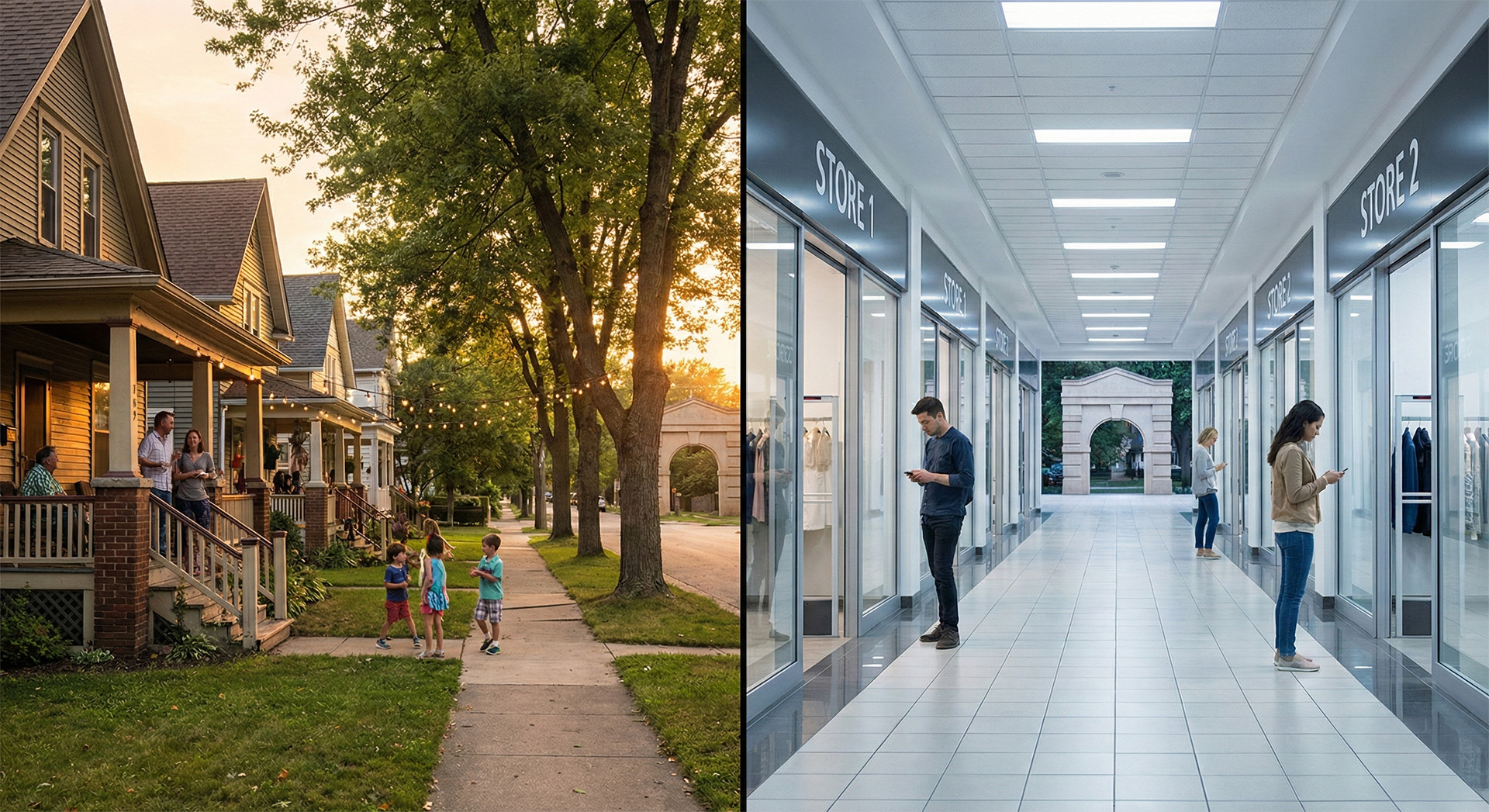
The nostalgia for 2016 isn't therefore nostalgia for a particular year. It's nostalgia for a model of interaction that no longer exists. An era when, as Glamour writes, "Instagram, Facebook and Twitter still felt vaguely personalised and safe. You actually saw updates from your friends rather than a cacophony of screaming, angry strangers." It was the last version of the internet that resembled a neighbourhood, before it became a shopping centre designed to maximise dwell time.
The mechanism is the same one that operates in other contexts when a system shifts from serving its users to serving its owners. The transition is gradual, almost imperceptible, and by the time you notice, it's already too late to turn back. Users in 2026 cannot have the chronological feed of 2016 back, even if platforms technically allow it. Too many economic incentives work against it. Too much infrastructure has been built around the algorithmic model. Too many behaviours have adapted to the new regime.
What they can do, and are doing, is a collective ritual of mourning disguised as celebration. Posting photos from 2016 with vintage filters and songs from that era brings nothing back, but it creates a moment of shared recognition: we were there, it was different, we know it. It serves the same function as school reunions or Facebook groups dedicated to "those who grew up in the eighties." They don't change the present, but they validate the perception that something has changed.
The test of this interpretation is simple. If the nostalgia were purely generational, the most shared content would be personal photos accompanied by individual memories. If instead it concerns the model of interaction, we should see explicit references to how platforms used to work. And that's exactly what emerges from the most viral posts: not just "look how I was," but "look how I used to post," "look what I felt like sharing before I had to think about performance."
There's a lesson here for anyone who designs systems, digital or otherwise. When you optimise for a metric, you get that metric. Instagram's algorithm optimised for engagement, and engagement is exactly what it got. But engagement is not the same thing as satisfaction, and it's certainly not the same thing as the human connection people originally sought on these platforms. Ten years later, millions of users are expressing through a viral trend what they cannot articulate any other way: that something was lost in the transaction.
The final paradox is that this very trend is being amplified and distributed by the same algorithmic system people are mourning the loss of. The algorithm has learnt that nostalgia generates engagement, so it promotes nostalgic content, so more people see it, so more people participate. The snake bites its own tail. And perhaps that's precisely the point: you can't go back to 2016, but you can at least share with millions of algorithm-selected strangers the memory of when your posts were only seen by your friends.