When the rescuers empty the temple
Posted on: 13 December 2025
In February 2025, when Emmanuel Macron urgently summoned European leaders to Paris after the Munich Security Conference debacle, he did something no textbook on European integration would have predicted: he built an operational military alliance that deliberately excludes Brussels institutions.
Not out of hostility. Out of necessity.
The Coalition of the Willing, now 34 countries with Franco-British command, headquarters in Paris and a coordination centre in Kyiv, exists because the European Union doesn't have a red telephone. It has no military command structures. No rapid response operational capability. No way to make wartime decisions when a single member state can block everything with a veto.
The irony is surgical: those who want to save physical Europe must bypass institutional Europe. The centurions leave the walls because the Senate is paralysed by its own standing orders.
Meanwhile, two hundred kilometres away, the Belgian government is holding €210 billion of frozen Russian assets hostage. Not out of malice, but out of rationality. Because the Union's architecture socialises benefits, everyone applauds sanctions against Moscow, whilst privatising risks, only Brussels pays if Russia sues and wins.
Two cases. One pattern. A diagnosis nobody wants to make out loud.
The European Union is not being dismantled by its enemies. It is being hollowed out by its most committed defenders, forced to work around it in order to act. And every functional bypass that solves an urgent problem removes another piece of legitimacy from the central institution.
The node that strangles
To understand what is happening to the European Union, one must start with an anonymous building in Brussels' financial district. It's called Euroclear, a clearing house that most European citizens have never heard of. Yet it is the node through which much of the continent's financial plumbing flows.
When the West froze the Russian Central Bank's assets after the invasion of Ukraine, roughly €185 billion ended up on Euroclear's servers. Another €25 billion is scattered across France, Germany, Sweden, Cyprus. But the bulk sits there, in Belgium, in a jurisdiction that never asked to become the front line of economic warfare against Moscow.
The European Commission, with the enthusiasm of those spending other people's money, proposed using these frozen assets as collateral for a €140 billion loan to Ukraine. A loan Kyiv would repay only when Russia pays war damages, which is to say probably never. On paper, an elegant idea. In practice, a risk transfer disguised as solidarity.
Belgium said no.
Not because it is pro-Russian, not because it doesn't want to help Ukraine. Because its technocrats can read a balance sheet. If Russia sues and an international tribunal rules in its favour, if Moscow seizes Belgian assets in third jurisdictions, if Euroclear loses the reputation for neutrality that makes it useful to the global financial system, the bill goes to Brussels. Not Berlin, not Paris, not the European Commission. Belgium, alone, with a potential liability equivalent to half its annual GDP.
Belgian Foreign Minister Maxime Prévot put it with rare diplomatic clarity: it is not acceptable to use the money and leave us alone to face the risks. Translated from diplomatese: if you want to socialise benefits, you must socialise consequences.
The Union's response was predictable. Ursula von der Leyen proposed a mechanism of guarantees, common budget backstops, bilateral contributions from member states. But the proposed guarantees don't cover all costs, aren't immediately callable, and depend on the goodwill of 27 governments that might change their minds when the bill actually arrives.
Belgium continued to say no. And since it holds the critical node, its no outweighs twenty-six yeses.
This is the pattern the European architecture systematically produces. When costs are diffuse and benefits are visible, everyone signs. When costs are concentrated and risks are real, whoever holds the match refuses to light it.
This is not national selfishness. It is structural rationality in a badly designed system.
The escape from paralysis
Whilst Brussels negotiated guarantees with Belgium, something more significant was happening elsewhere.
After the Trump administration announced direct negotiations with Moscow without consulting either Europeans or Ukrainians, after the Munich Conference turned into a transatlantic ice bath, European leaders faced a choice: remain inside a decision-making system requiring unanimity from 27 countries, or build something that works.
They chose the latter.
Within weeks, France and the United Kingdom assembled a parallel structure. Not a declaration of intent, not another summit with group photographs. A genuine operational architecture: joint command, shared military planning, hundreds of officers working on deployment scenarios, a multinational force ready to enter Ukraine when there is a ceasefire to enforce.
The Coalition of the Willing now includes 34 countries. It meets regularly in Paris, London, and by video conference. It has produced more operational decisions in six months than the European Union has produced in three years on the Ukraine question.
And it is no accident that it operates outside Brussels structures.
Analysts say it openly: there is little added value in organising this coalition within the European framework. The Union has no planning and command structures. It lacks the necessary military capabilities. It has no intelligence assets. And above all, it has Hungary, which can block any decision with a veto.
The United Kingdom, with its considerable military capabilities, is not even a member of the Union. But it co-chairs the coalition alongside France. This intergovernmental format allows London to demonstrate its value for European security in a flexible and agile manner, something impossible within the treaties.
The result is a paradox no architect of European integration foresaw. The countries most committed to Europe's defence are building the structures to achieve it outside institutional Europe. Not out of hostility towards Brussels, but because Brussels is not equipped for the task.
Water always finds a channel. And when the main channel is blocked, it carves new ones.
The architecture of non-decision
The problem is not that the European Union has enemies. It is that it has an architecture designed for a world that no longer exists.
The Union was born to guarantee peace through economic interdependence and permanent political compromise. Its decision-making system, built on unanimity for sensitive issues, was perfect for an era when decisions could mature slowly, when external shocks were manageable, when nobody was in a hurry.
That era is over.
Today the Union finds itself crushed between three simultaneous pressures. From the east, a Russia that has decided war is an acceptable instrument of foreign policy. From the west, an America demanding Europeans pay for their own security whilst threatening trade wars. From the south-east, a China dumping its overproduction on European markets as access to the American market closes.
In this context, a system requiring consensus from 27 governments for every important decision is not prudent. It is paralysing.
Mario Draghi wrote it in his competitiveness report: the challenges Europe faces are existential. One year later, his own observatory certified that of 383 recommendations, only eleven per cent had been implemented. Everyone applauds the diagnosis, nobody signs the cheque.
This is not sabotage. It is the logical consequence of a Nash equilibrium in which each member state makes the rational move for itself that produces the worst outcome for all. Germany blocks common debt because its voters don't want to pay for others. France protects its national champions. Eastern countries want more cohesion funds. Each is right from their own perspective. Collectively, they produce paralysis.
And when there is paralysis, those with urgency to act build alternatives.
The museum with the lights on
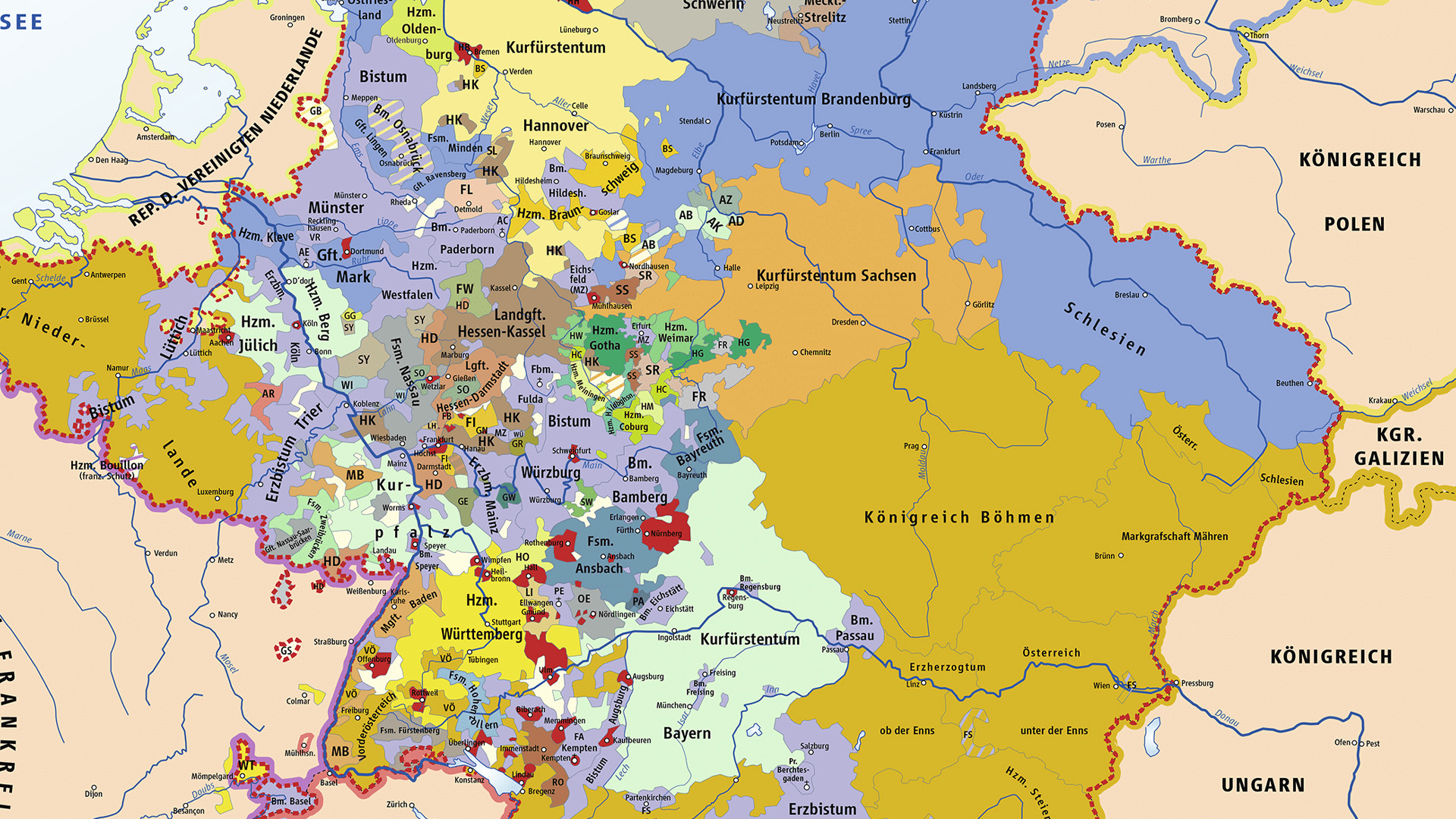
The Holy Roman Empire formally lasted until 1806, centuries after losing any real political substance. Voltaire called it neither holy, nor Roman, nor an empire. But it continued to exist: ceremonies, titles, claims to legitimacy that nobody took seriously but nobody had any interest in formally demolishing.
The European Union could follow the same trajectory.
There will be no moment when someone declares the end of the European project. Instead, there will be a progressive functional hollowing out. The flags will continue to fly. Summits will continue to produce communiqués. Directives on courgette diameter will continue to be issued.
But real power, the kind that decides war and peace, that moves capital and weapons, will migrate to ad hoc networks built by those in a hurry to decide. Coalitions of the willing. Bilateral agreements. Structures that exist because they work, not because someone foresaw them in a treaty.
The final irony is that this hollowing out will not be the work of Europe's enemies. Viktor Orbán can block decisions, but he cannot build alternatives. Marine Le Pen can deliver sovereignist rhetoric, but she lacks the means to replace the institutions she criticises.
Those hollowing out the Union are its most committed defenders. Macron building military alliances outside the treaties because inside the treaties nothing can be decided. Starmer co-chairing a security coalition that bypasses Brussels entirely. Governments that, one after another, discover that to do anything important they must leave the European meeting room and organise elsewhere.
Every bypass solves an immediate problem and creates a structural one. Every ad hoc solution that works demonstrates that the official architecture does not. Every success of the Coalition of the Willing is an implicit failure of the Union as a security actor.
No conspiracy is needed to dismantle a system. An architecture that makes decision impossible is quite enough. Reality does the rest, and reality is always in a hurry and will not wait for 27 governments to find a compromise.
The European Union is not dying. It is becoming a museum. A museum with the lights on, the wardens in uniform, and visitors still paying for tickets. But life, real life, is already elsewhere.