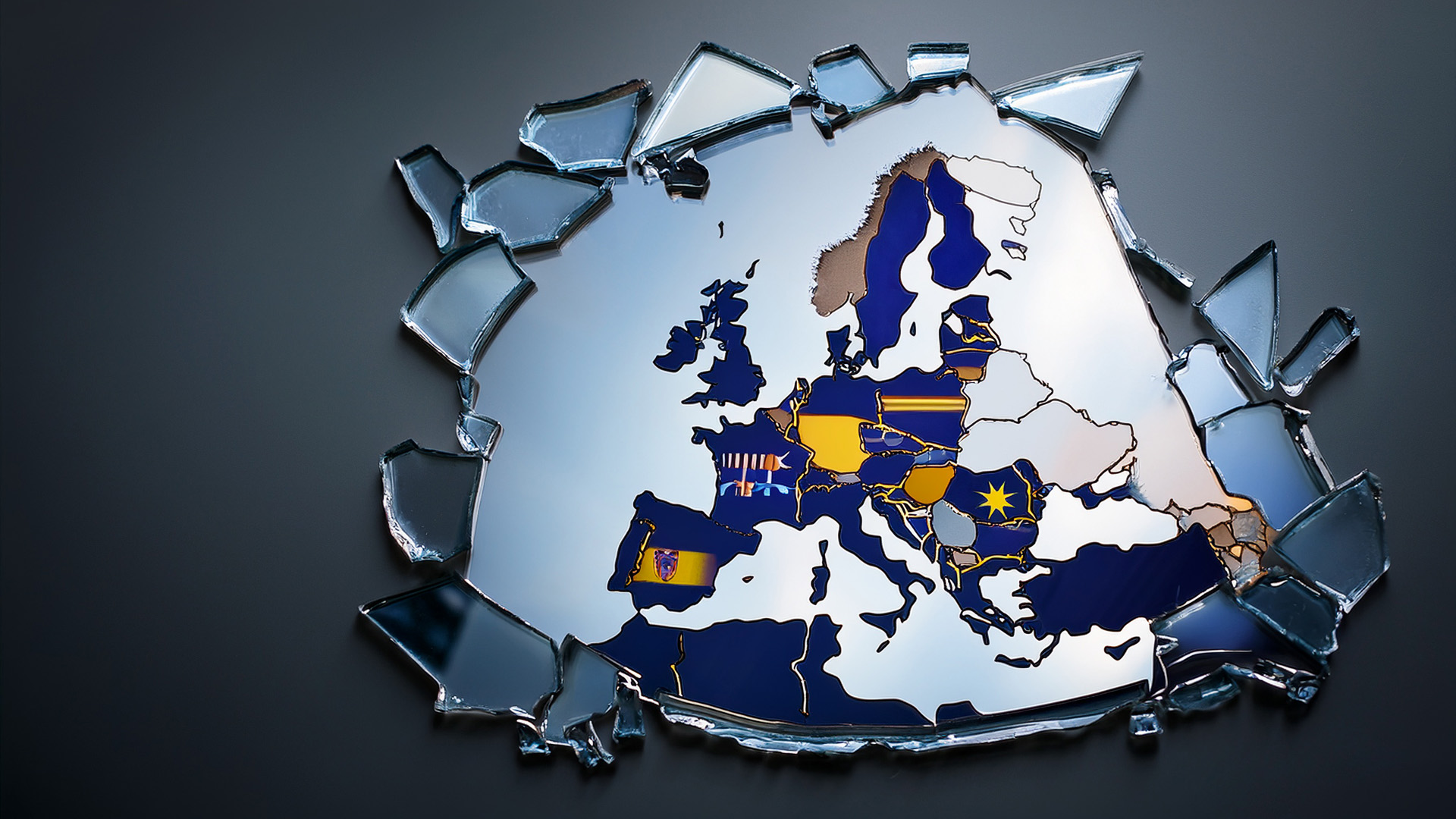
When the bill arrives
Posted on: 19 March 2026
Three years ago, Europe made one of the most consequential and expensive decisions in its recent history: to walk away from Russian gas. The narrative that accompanied it was flawless. Energy independence. Solidarity with Ukraine. An accelerated transition toward renewables. A civilisational choice, many said, not merely a matter of convenience.
Nobody was lying. The problem is that the choice carried an implicit price tag that was never fully declared: it worked as long as the rest of the global energy system remained stable enough to keep the cost bearable. It was a covered bet, not a structural reform. And the Strait of Hormuz, over the past three weeks, has called that bet.
Britain, watching from the outside, might be tempted to treat this as a continental problem. It is not. The same LNG markets that Europe is now scrambling to access are the ones UK importers compete in. The same price signals that are straining German industry and Greek household budgets are moving through British energy bills. The geography of the crisis is Middle Eastern. The economics are universal.
The numbers are unambiguous. Europe entered 2026 with gas storage at 46 billion cubic metres at the end of February, against 60 in 2025 and 77 in 2024. That trajectory was visible for months, not days. On 2 March, an Iranian strike on QatarEnergy's Ras Laffan facilities halted production and triggered a force majeure declaration, sending European gas benchmarks up more than 50 per cent within days. Even if the conflict ended tomorrow, restoring Qatari output would take weeks, possibly months. Summer refill operations are already compromised. The markets have priced this in. Policymakers are still catching up.
Into this context, Brussels convened an emergency energy ministers' meeting on 16 March and assembled a menu of short-term measures: tax cuts for consumers and industry, state support schemes, a potential revision of the EU emissions trading system, a possible gas price cap. Poland objected to touching the ETS because those revenues fund its national budget. Italy demanded sweeping EU intervention. Germany, in the meantime, restricted petrol station price changes to once per day. Gestures dressed as policy.
The point is not that these measures are wrong. Some may cushion the immediate impact. The point is that none of them addresses the structure of the problem, because addressing the structure of the problem would require doing something that three years of post-invasion rhetoric have made politically unsayable.
Bart De Wever, the Belgian prime minister, said it anyway. In an interview with the newspaper L'Echo, he argued that Europe must normalise relations with Russia and regain access to cheap energy. He added that the strategy of simultaneously arming Ukraine and attempting to strangle the Russian economy had become unworkable without full American backing. And then he said what is, at this particular moment, the most revealing sentence in the entire debate: "In private, European leaders agree with me, but no one dares to say it out loud."
The response was immediate and entirely predictable. Kaja Kallas, the EU's foreign policy chief, said she did not see that appetite behind closed doors and warned that returning to business as usual with Moscow would produce more wars. Energy Commissioner Dan Jorgensen declared the bloc would not import "as much as one molecule" from Russia going forward. De Wever's own foreign minister distanced himself, suggesting the remarks sent a signal of weakness. De Wever subsequently walked parts of it back, clarifying he was speaking of normalisation after a peace settlement, not immediate capitulation.
The script is familiar to anyone who has watched institutional consensus fray under pressure. Someone says publicly what many think privately. The system responds with ritual indignation. The speaker partially retreats. The official position holds, unchanged on paper. But the crack is visible.
The question worth asking is not whether De Wever is right on the merits. It is what the mechanism reveals. When the gap between public position and private conviction grows wide enough to produce leaks to the press, the system is no longer holding by conviction: it is holding by institutional inertia and the perceived political cost of the alternative. These equilibria persist as long as the cost of the status quo remains lower than the cost of change. The energy shock is shifting that calculation.
The good faith with which European leadership constructed its post-2022 position does not alter the incentive structure now operating on it. Institutions do not respond to intentions. They respond to pressures. And the pressure at this moment runs in one direction: prices rising, elections approaching, industry under strain, and the technically fastest solution being precisely the one that three years of carefully constructed rhetoric placed beyond reach.
This is not an argument that the Russian option will be taken, nor that it would be cost-free strategically. It is an observation that the durability of the European position no longer depends on the strength of its convictions, but on the length of the shock and the capacity of individual governments to absorb the domestic political cost. These are entirely different variables, and far less within Brussels' control than the official communiqués suggest.
The real test is not Thursday's summit. Summits produce declarations. The test is the next sixty days: how many more De Wevers emerge, and from what political weight. If he remains an isolated voice, the system holds. If others follow, the system is already moving, and the official positions are simply managing the delay before that movement becomes visible.
From the outside, Britain has a clearer view of this dynamic than most. It has spent six years learning, at considerable cost, that the distance between a declared political position and the underlying economic reality is not a matter of principle. It is a matter of time.
Systems do not lie. Declarations do.