What the labels never managed
Posted on: 3 June 2026
Britain has spent a generation perfecting the art of telling people what is good for them. The traffic-light label on the front of the packet, the Soft Drinks Industry Levy, the Change4Life campaigns, the calorie counts now printed on restaurant menus: all of it rests on a single conviction, that a better-informed shopper becomes a better shopper, and that the job of anyone designing the rules is to make the consequences legible. It is a comfortable conviction, because it leaves the autonomy of the chooser untouched. Give people the facts and they will do the sensible thing.
The past eighteen months suggest the conviction was mistaken, or at least insufficient, and the clearest evidence is sitting in an unlikely place: the price of a Belgian potato.
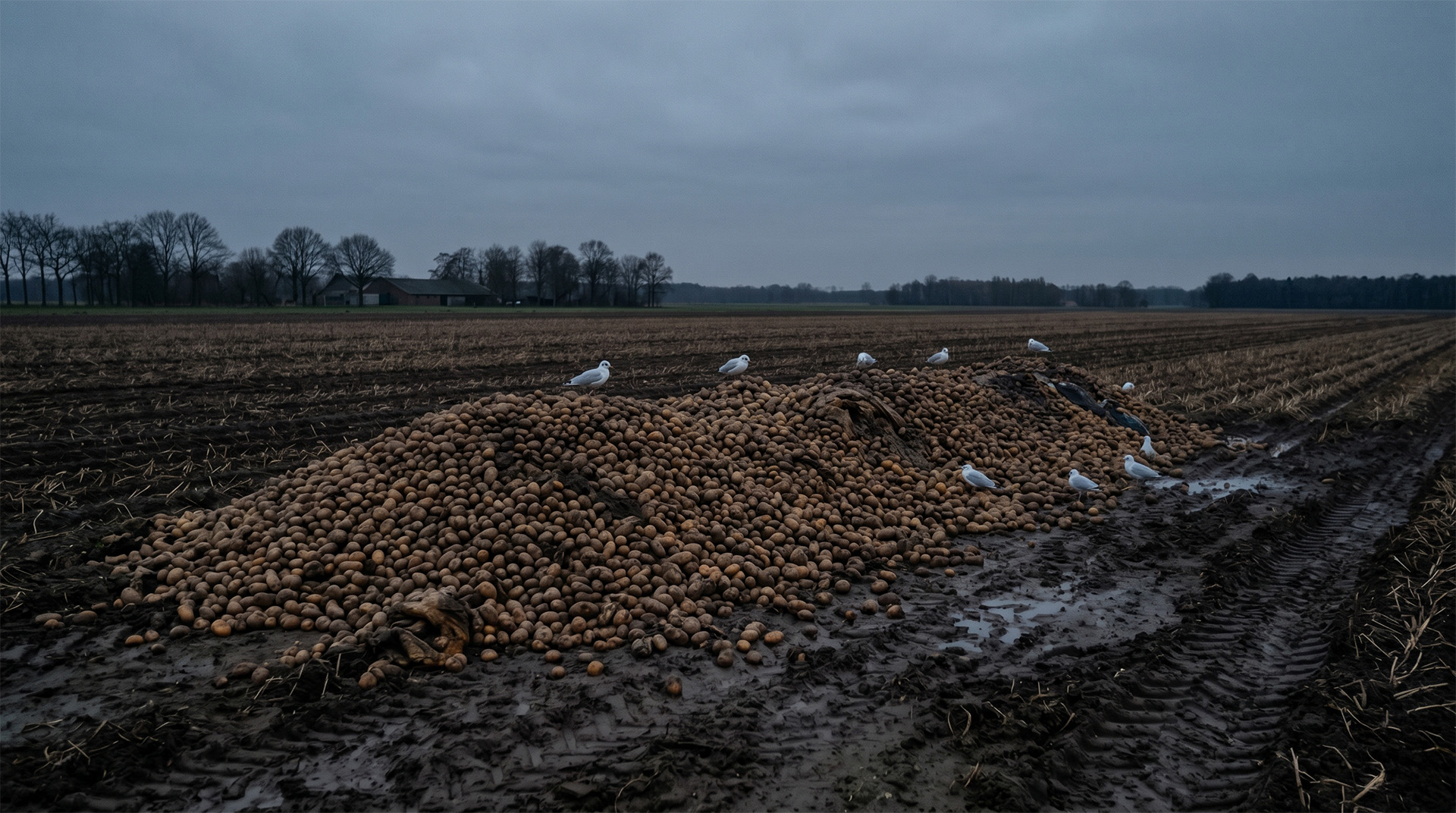
On the Belgian spot market the price of a frying potato has fallen to zero euros a tonne. Three years ago the same tonne fetched 600. That is not, despite appearances, an agricultural story. Or it is one only on the surface, because underneath that figure, which reads like a misprint, something is moving that should interest anyone who has ever tried to change another person's behaviour. The thing that bent the curve of food consumption was not information. It was a molecule.
GLP-1 receptor agonists, the drugs born to treat diabetes and now used at scale against obesity, do not inform anyone of anything. They remove the appetite. According to data gathered by the analytics firm Circana, a patient beginning therapy ends up eating between 700 and 1,000 fewer calories a day, and does so without deciding to and without any exercise of willpower; the familiar ritual of the diet that collapses by February never even begins, because the hunger does not arrive. And once the hunger does not arrive, the entire industrial model built on impulse, on the small craving satisfied at the till without a second thought, begins to vibrate at a different frequency.
Salted snacks are down by roughly 10 per cent, with similar falls across confectionery and baked goods, while the worldwide growth in demand for crisps has halved, from 5 per cent to 2.5 per cent a year. In Spain a study of consumers on GLP-1s records a 17 per cent drop in chocolate and 13 per cent in crisps, with wine and beer each retreating by more than 10 points. A household spending panel measures an overall contraction of 5 per cent within six months of starting treatment, and the figure that unsettles the easy objection is this: in higher-income households the fall runs past 8 per cent. This is not poverty and it is not the cost of living. It is chemistry outbidding the wallet over what ends up in the basket.
The industry has already grasped it. The Magnum Ice Cream Company closed the first quarter of 2026 with revenues of 1.77 billion euros, and the analysts are watching less the ice cream sold today than the ice cream that may not sell in five years. Mars spent 800 million dollars buying a maker of high-protein, low-carbohydrate ready meals. These are the moves of a business that has stopped hoping demand will return to what it was and started reformulating the product around a consumer who eats less and differently.
And this is where the episode stops being about potatoes and starts being about how behaviour is actually corrected. For decades obesity rose while the labels grew more detailed and the campaigns more insistent; awareness climbed and the problem climbed with it. Information does one thing only. It warns you that the choice you are about to make is the wrong one, but it does not stop you making it, and in the sophisticated decision-maker it often makes matters worse, because it hands him the vocabulary to justify today's exception to himself before he justifies it to anyone else. I have seen it endlessly in rooms where people know perfectly well what they ought to do and do not do it. Knowing was almost never the bottleneck.
There is a precedent worth holding onto, and it is tobacco. The warning on the packet has been there since the Sixties, larger and starker by the decade, all the way to the blackened lungs and the rotten teeth printed on the box. The smoker always knew, and consumption kept rising for a generation. What finally bent it was not knowledge but architecture: the 2007 indoor ban that removed the act from social space, the plain packaging and the duty escalator that changed the environment around the cigarette rather than the mind of the person smoking it. There too the knowing was not the problem. The problem was that knowing does not touch the impulse.
The molecule works for the same reason as the smoking ban: it does not go through the head. It does not persuade, it does not educate, it does not hold anyone responsible; it acts upstream, on the impulse, before it becomes a decision. It is the difference between building a guardrail and putting up a sign that asks you not to lean over the edge. The sign assumes a rational chooser who reads it and restrains himself. The guardrail works regardless of what that chooser happens to think or decide in the moment. Forty years of food policy have put up ever more legible signs. An injectable pen has built a guardrail, and consumption has shifted, for the first time, in earnest.
None of this is peculiar to food. The same wager repeats wherever we try to improve behaviour by explaining it. Financial education never cut bad borrowing the way automatic enrolment into a pension did, a British invention of 2012 that quietly opts people in and leaves them only the small effort of opting out: architecture deciding by default. Road deaths did not fall because campaigns asked drivers to take care, but because the seatbelt was made compulsory in 1983 and the airbag was built into the car, physical constraints that work even with the most distracted driver at the wheel. Always the same shape: the sign that instructs set against the railing that binds.
I would rather flag the crack in this story myself than leave the reader to find it. The same Circana figures show the cut in consumption is violent in the first months but tends to drift back towards the baseline by the end of the first year of treatment. If the effect dissipates at the level of the individual, then the guardrail is not permanent; it is a push that spends its force. The thesis holds on one condition only, that mass adoption and the steady inflow of new patients keep aggregate demand depressed even as the veterans of the therapy drift slowly back to old habits. That is a working hypothesis, not a settled fact, and it is precisely the point on which this analysis can be falsified over the next two years: if food demand recovers while GLP-1 penetration goes on rising, I am wrong and the people calling it a passing fashion were right.
And the potato at zero euros, in fairness, is not down to Ozempic or Wegovy alone. The trade analysts, from NEPG to DCA Market Intelligence, point to a double blow: demand growing at half its former pace and acreage expanded to excess in the fat years. The correction is already under way, with Belgian growers cutting hectares for the 2026/27 season. GLP-1 is one of the two blows, not the only one, but it is the one nobody had priced in, because nobody plans a growing season around the pharmacology of someone else's appetite.
What stays with me, in the end, is not the surprise of the potato price. It is the discomfort of a wager I shared for a long time, inside food and well beyond it: the idea that informing people better is enough to make them behave better. It was the gentle version of the problem, the one that coerced nobody and never asked those who design the rules to take responsibility for limiting anyone's freedom. The molecule refutes it in the bluntest way available, because behaviour moved in earnest only when something stopped asking the will for permission. I cannot say whether that is good news. I can say it changes the question worth asking whenever we set out to correct a stubborn behaviour: not "how do we explain it to them better", but "where can we remove the choice rather than merely illuminate it".