What Abu Dhabi paid for
Posted on: 27 July 2026
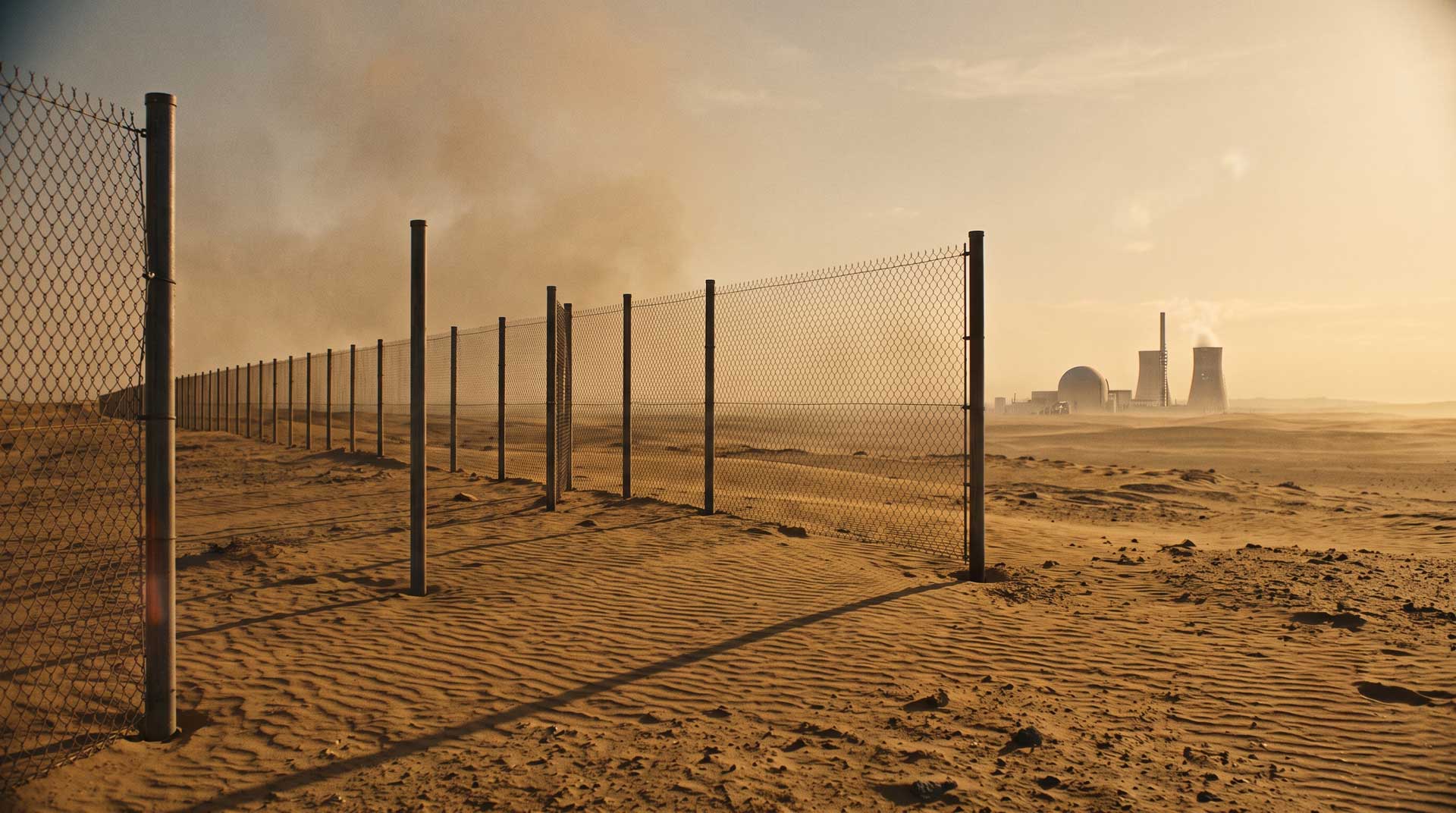
In May 2009 the United Arab Emirates signed a nuclear cooperation agreement with the United States and accepted terms no American partner had accepted before, giving up permanently the right to enrich uranium on its own territory or to reprocess spent fuel, and ratifying the Additional Protocol that grants inspectors access to undeclared sites. In exchange it received American technology and a phrase that would be repeated for the next seventeen years as though it described a category of international law rather than the outcome of a negotiation. The gold standard. Barakah, four Korean-built units producing 5.6 gigawatts on the coast west of Abu Dhabi, still operates within those limits today, and the government that agreed to them has spent the better part of two decades being cited approvingly in policy papers as the model the region ought to follow.
On 22 July the American energy secretary Chris Wright and the Saudi energy minister Abdulaziz bin Salman signed a thirty-year civil nuclear agreement in Washington containing none of it. No prohibition on enrichment, according to officials and sources briefed on the text quoted by CNN; no prohibition on reprocessing; and in place of the Additional Protocol a bilateral safeguards arrangement covering only those facilities where American cooperation actually takes place, which is to say a fraction of the Saudi nuclear estate. The predictable objection arrived within hours. Senator Edward Markey, who had written to Marco Rubio in November 2025 asking that the gold standard form the basis of any agreement with Riyadh, described the outcome as a nuclear Wild West. He is right on the facts. The trouble is that the hypocrisy reading, which is the reading almost everyone has reached for given that American aircraft are at this moment striking Iran precisely to stop it enriching, explains remarkably little about how the thing actually came apart.
What makes the week worth attention is not the concession. It is what the concession reveals about the seventeen years that preceded it. Jordan, Egypt and Turkey had all refused those same terms years ago, invoking Article IV of the Non-Proliferation Treaty, which recognises the sovereign right of every signatory to the peaceful use of atomic energy, enrichment included. Buyers refusing the gold standard is not the novelty of this week; buyers refusing it is the constant. What changed is that this time the seller sold anyway.
The gold standard was never a norm. It appears in no treaty, binds no one who has not individually agreed to it and has no enforcement body. It was a contractual term, which is to say a condition a supplier can impose for as long as it remains the only supplier available. In 2009 a state that wanted American-designed pressurised water reactors, together with the component supply chain, the fuel, the insurance and the export credit that come attached, had to go through Washington and accept what Washington attached to the transaction. By 2026 that is no longer true, and the evidence had been accumulating in the procurement record rather than in the communiqués. Argentina's INVAP contracted in 2019 to build a low-power research reactor at King Abdulaziz University in Jeddah. In 2020 commercial satellite imagery documented construction of a yellowcake extraction facility near Al Ula with assistance from the China National Nuclear Corporation. Rosatom sells turnkey with financing embedded across half the world, and the Koreans had already built Barakah. The agreement's defenders make the point themselves when they explain that the deal was necessary to stop Beijing and Moscow taking the Gulf market, which is an admission of the mechanism delivered in the register of a justification.
British readers have watched a version of this happen to their own capital market, and the parallel is closer than it first appears. The premium listing segment in London required one share one vote, a free float of at least twenty-five per cent and shareholder approval for significant and related party transactions. Those were not statutory obligations in any meaningful sense; they were the price of admission to a pool of capital that companies could not easily reach anywhere else, and for years issuers paid it. Then the pool stopped being unique. Following Lord Hill's listing review in 2021 the Financial Conduct Authority permitted dual class share structures on the premium segment and cut the free float requirement to ten per cent, and in the overhaul that took effect on 29 July 2024 it abolished the premium and standard segments altogether and removed the requirement for shareholder votes on significant and related party transactions. The stated reason was competitiveness with New York and Hong Kong. Nobody argued that the old protections had been wrong on the merits. They had simply become a cost the venue could no longer charge, and the companies that had accepted them for a decade and a half received nothing whatever in return when they were dissolved.
Which brings the argument back to Abu Dhabi, because the party paying for this transition is not Washington. The Emirates accepted a permanent renunciation in exchange for the distinction of being the model, and that distinction now has nothing left to distinguish it from. If Riyadh is permitted to enrich domestically, the neighbour that signed away the right finds itself at a structural disadvantage on the fuel cycle that the 2009 agreement was never drafted to contemplate, and without the reputational capital the renunciation was meant to purchase. Whoever accepts a restrictive supplier standard first pays for it twice, once in the terms themselves and again on the day the standard is abandoned for somebody else. The rule holds for treaties as it holds for licensing agreements, and it bears hardest on the party that behaves better than the others in the absence of any general obligation to do so.
There remains the question that the American debate is currently asking with a certain hopefulness, which is whether Congress can stop it. Formally it can. The agreement now sits before Congress for ninety days of continuous session and enters into force automatically unless both chambers pass a joint resolution of disapproval capable of surviving a presidential veto, which requires two thirds in each. No president has been overridden on a 123 agreement. The 2008 agreement with India drew technically comparable objections from much the same expert community now objecting to this one, and was not blocked.
The interesting question is not whether Congress will find the nerve to use the instrument. It is that the instrument was built not to be used, and the statute contains its own proof. American law provides two tracks: ordinary agreements enter into force unless disapproved by a qualified majority, whereas so-called exempt agreements, meaning those that fail to meet the non-proliferation requirements of section 123, require an affirmative vote of Congress to take effect. As the Arms Control Association records, there is not one exempt agreement in force. Not a single one. When the threshold is approval nothing passes; when the threshold is disapproval everything does. Same subject matter, same legislators, one parameter inverted.
A check that engages only on a supermajority is not failing when it fails to engage. It is behaving as designed, and the design is not an accident of a distracted legislature but the work of the same class of actor the check was nominally intended to restrain. Westminster has no standing to be smug about any of this. Part 2 of the Constitutional Reform and Governance Act 2010, which put the Ponsonby rule on a statutory footing, requires that a treaty be laid before Parliament for twenty-one sitting days and permits either House to resolve against ratification, after which the government may lay a statement explaining why it intends to ratify regardless and restart the clock. The Act guarantees no debate and no vote. In the sixteen years since it came into force the Commons has never once resolved against the ratification of a treaty and the Lords has done so a single time. Nobody in Whitehall regards this as a malfunction, and on the terms by which the procedure was constructed nobody should.
The most telling detail of the week is that Marco Rubio, as a senator, co-sponsored legislation with Markey that would have made any nuclear cooperation with Saudi Arabia conditional on an affirmative congressional vote, which is to say on precisely the track through which nothing has ever passed. As secretary of state he is defending the agreement his own bill would have stopped. Read as personal inconsistency it is a minor story. Read structurally it is the demonstration that the constraint was never drafted to bind the people drafting it, and duly does not.
Twenty-four hours after the Energy Department announced the signature, the president posted on Truth Social that the agreement was completely subordinate to Saudi accession to the Abraham Accords, a condition absent from the signed documents, adding that there would be no enrichment, which contradicts what his own department had said two days earlier. Riyadh has not commented.