The wheel that money cannot buy
Posted on: 2 June 2026
Britain knows what it is to watch a great marque change hands. Jaguar passed from British Leyland to Ford and then to Tata; Aston Martin went from Ford to a procession of consortia to a 2018 flotation that shed most of its value within two years of the opening bell. The lesson a City financier absorbs from a lifetime of this is simple and, as it happens, parochial. A carmaker is a thing you can buy, provided the cheque is large enough and the moment is right. The wheel is always, in the end, for sale.
So imagine such a man looking at Porsche. He has watched the recent years with a mixture of irritation and nostalgia, the Taycan sitting unsold on forecourts, the Chinese share crumbling, the shares down by more than half from their 2022 peak. He has reached a conclusion that strikes him as obvious. They are ruining a jewel by chasing the electric car, and someone with capital and judgement ought to step in, take the controls and return the house to what it was. He has the money. He instructs his bankers to build a position large enough to matter. And this is where his story, instead of beginning, ends. The problem is not the price. The problem is that there is nothing on sale that votes.
Porsche is a set of Russian dolls built for exactly this purpose, three shells, and each one has a wall. The first shell is Porsche AG, the company that actually makes the cars, listed in Frankfurt since September 2022 under the ticker P911, apparently within reach of anyone with deep enough pockets. Except that the only shares traded on the market are the preference shares, which carry no vote. The ordinary shares, the ones that weigh in general meetings, do not circulate. Volkswagen holds 75 per cent of them minus one, Porsche SE 25 per cent plus one. That plus one is not a lawyer's flourish. It is the blocking minority, the veto over any extraordinary decision. Our raider can hoover up the entire existing free float and find himself the proud owner of a dividend stream without a single vote in his pocket. The direct route is shut before it opens.
So he moves to the second shell. If commanding Porsche's ordinary shares means commanding Volkswagen, he will buy Volkswagen. But above Volkswagen sits Porsche SE again, controlling 53.3 per cent of the voting rights while holding only about a third of the capital, and above that still sit the Volkswagen Law and the state of Lower Saxony, with its stake and its statutory blocking minority. Here too, then, the majority of the votes is not for sale. It has been allocated and sealed in advance, withdrawn from the market by political design as much as by corporate engineering.
That leaves the third shell, the family holding company, Porsche SE itself. And it is here that the takeover does not meet an obstacle so much as die. On the market for Porsche SE, once more, only the preference shares change hands. The ordinary voting shares are held exclusively by members of the Porsche and Piëch families. Exclusively in the literal sense of the word, a full hundred per cent, no exception, no voting share purchasable by anyone, at any time, at any price. The 2022 listing, which the world read as Porsche arriving on the stock exchange, was in fact the opposite manoeuvre. It raised tens of billions for the family without surrendering a gram of control. Not a well managed side effect, but the purpose of the exercise.
The upshot is that the only lever into the vote, at every level of the pyramid, is unavailable. The sole conceivable acquisition is not hostile but negotiated. It would mean persuading a faction of the clan to sell the holding company's ordinary shares, and there the capital matters far less than one might think, because on the other side of the table there is no board weighing multiples and control premiums, there are forty and more heirs bound by a shareholder pact and by an almost religious idea of dynastic control. The highest wall is not financial. It is anthropological.
A piece could honourably stop here, satisfied to have explained a mechanism few people understand in detail. But the mechanism on its own is merely a curiosity from a company law textbook. The part that earns the article begins now, and it inverts the financier's premise, because the wheel turned all the same, and it turned without him.
The correction the man imagined he would have to impose with his billions had already been imposed from the inside, and in silence. The 2025 annual results, presented in March, describe a brutal reversal on the electric car. An extraordinary writedown of around 3.9 billion euros cut group operating profit by 92.7 per cent, from 5.6 billion to 413 million, while the automotive division alone fell by 98.3 per cent, from 5.3 billion to 90 million. The Taycan, which was meant to be the future, lost another 22 per cent of its deliveries. The new flagship sport utility vehicle, known internally as K1 and conceived as an electric car, was reborn with combustion and plug-in hybrid power. And there is the detail that carries all the rest, because it is an engineering confession. The sports platform designed and paid for to be electric only is now being re-engineered to take the very combustion engine it was built to exclude. Porsche admits, in sheet metal and software, that the founding premise was wrong.
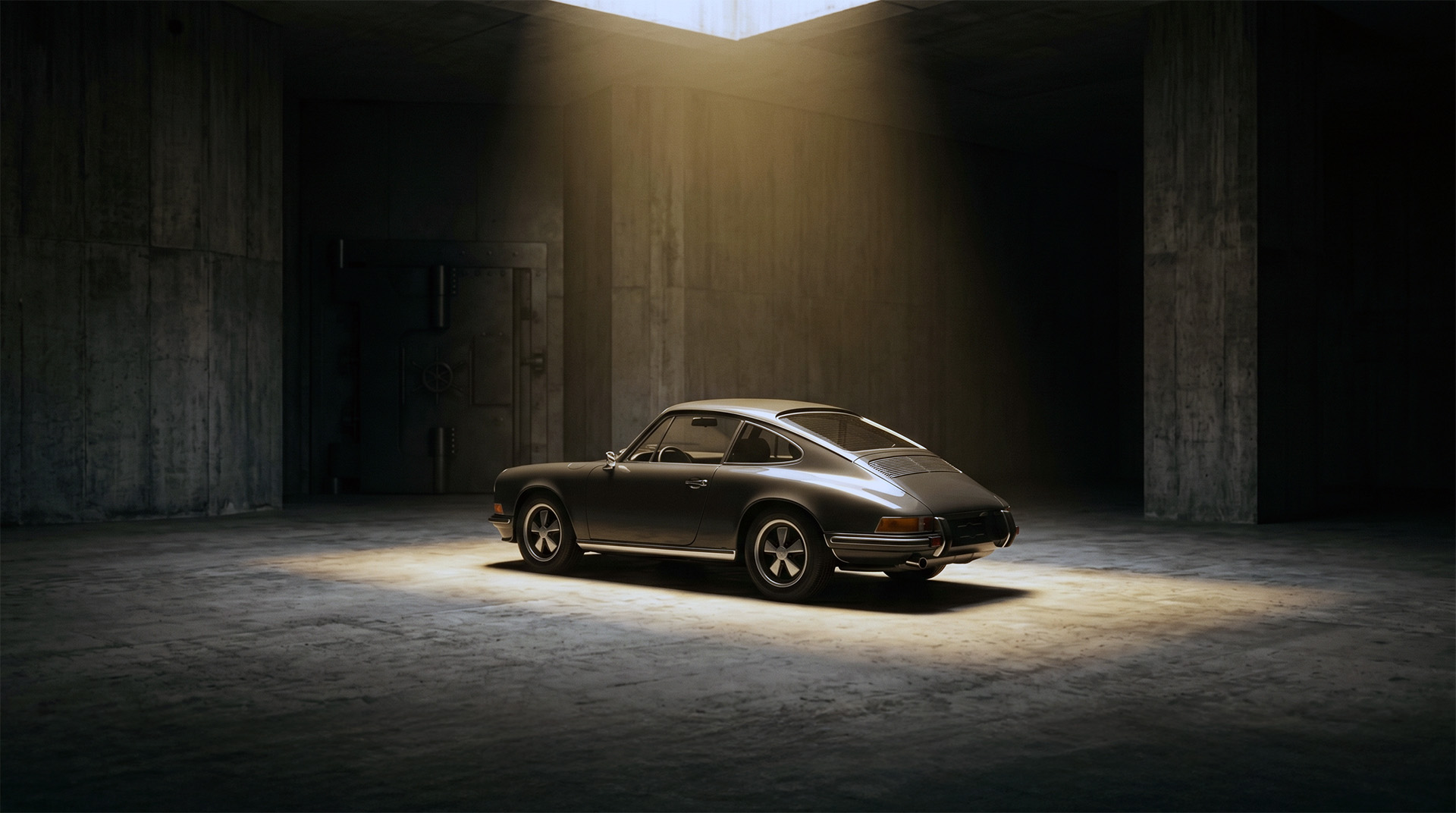
Here is the thesis, set out so that it can be falsified by anyone who cares to try. The very structure that makes Porsche unbuyable is the one that allowed it to treat the electric car as a reversible experiment rather than as a commitment of identity. A manufacturer disciplined by the market, exposed to institutional shareholders with their environmental mandates and to regulatory signalling, stays trapped. It bolts itself publicly to the electric car in order to defend the share price, and unwinding that bet becomes a reputational cost the board cannot afford in front of the analysts every quarter. Porsche, which answers to forty heirs and not to BlackRock, was free to take its 2022 pledge of 80 per cent electric by 2030 for what it was, a working hypothesis, and to dismantle it without press conferences once the Taycan numbers had spoken. Throughout, the 911, the one model to close 2025 with a delivery record, was left untouched and combustion-driven. The holy of holies never left the family, and not by accident.
Anyone wishing to falsify this reading has a clean test in front of them. If insulation from the market were truly the key, we ought to find the same clear-sightedness in every house under sealed family control. We do not. And there lies the only honest way to close.
Because none of this proves that isolation is a good thing. The same wall that allowed this family to correct course would have protected just as well a family too proud to admit the error, and in that case we would have watched the dynasty double down on the electric car to save face, immune to any pressure capable of stopping it. The absence of a market that disciplines you cuts both ways. It does not save you from your mistaken convictions, it only makes them harder to overturn once you finally grasp that they are mistaken. Insulation is a multiplier on the judgement of those in charge, not a substitute for it.
It is the lesson the City financier had not priced in. He was right about the diagnosis and had persuaded himself that this was enough. But what you buy, when you buy a genuinely controlled company, is not a strategy, nor even the power to change one. You buy a dividend, and a wager on forty people you will never sit across the table from.