The uncounted silence
Posted on: 7 August 2026
In April 1992 every major British polling organisation was wrong about the same election in the same direction, and the working party the Market Research Society convened afterwards identified three contributing causes: a late swing, inadequate quota variables and disproportionate refusals. The third of these is the one that has aged into something larger than psephology. Refusal rates in those polls ran high, and interviewers working to quota simply replaced anyone who declined rather than calling back, on the reasonable assumption that a person who says no is interchangeable with the next person who says yes. They were not interchangeable. The people who declined to answer were systematically different from the people who answered, and because their difference never entered the dataset it could not be corrected for, only discovered afterwards by losing.
What the industry took from this, in the end, was the shy Tory: a psychological story about voters who lied. It was the more comfortable explanation, since it located the fault in the respondent rather than in the instrument, and later analysis has treated it far more sceptically than the popular memory suggests. The structural version is duller and more useful. Any measurement system that records the people who respond and discards the people who do not will build a picture that drifts steadily away from reality, and it will do so while producing numbers that look perfectly healthy throughout.
I raise this because it is the exact architecture of a professional social network, and almost nobody who publishes on one appears to have noticed.
Consider what happens when a piece of writing lands in front of a reader who recognises it as thin. That reader does not comment. He does not argue, does not correct, does not explain what is missing. He scrolls, which costs him half a second and leaves no trace whatsoever in the system. Meanwhile the reader who found the piece stimulating, or who wants to be seen by its author, or who simply enjoys having a view, generates a permanent and countable artefact. The consequence is a feedback stream that is structurally incapable of carrying bad news. Approval is visible; discernment is invisible by construction. Not because the discerning audience is polite, but because responding costs something and scrolling costs nothing.
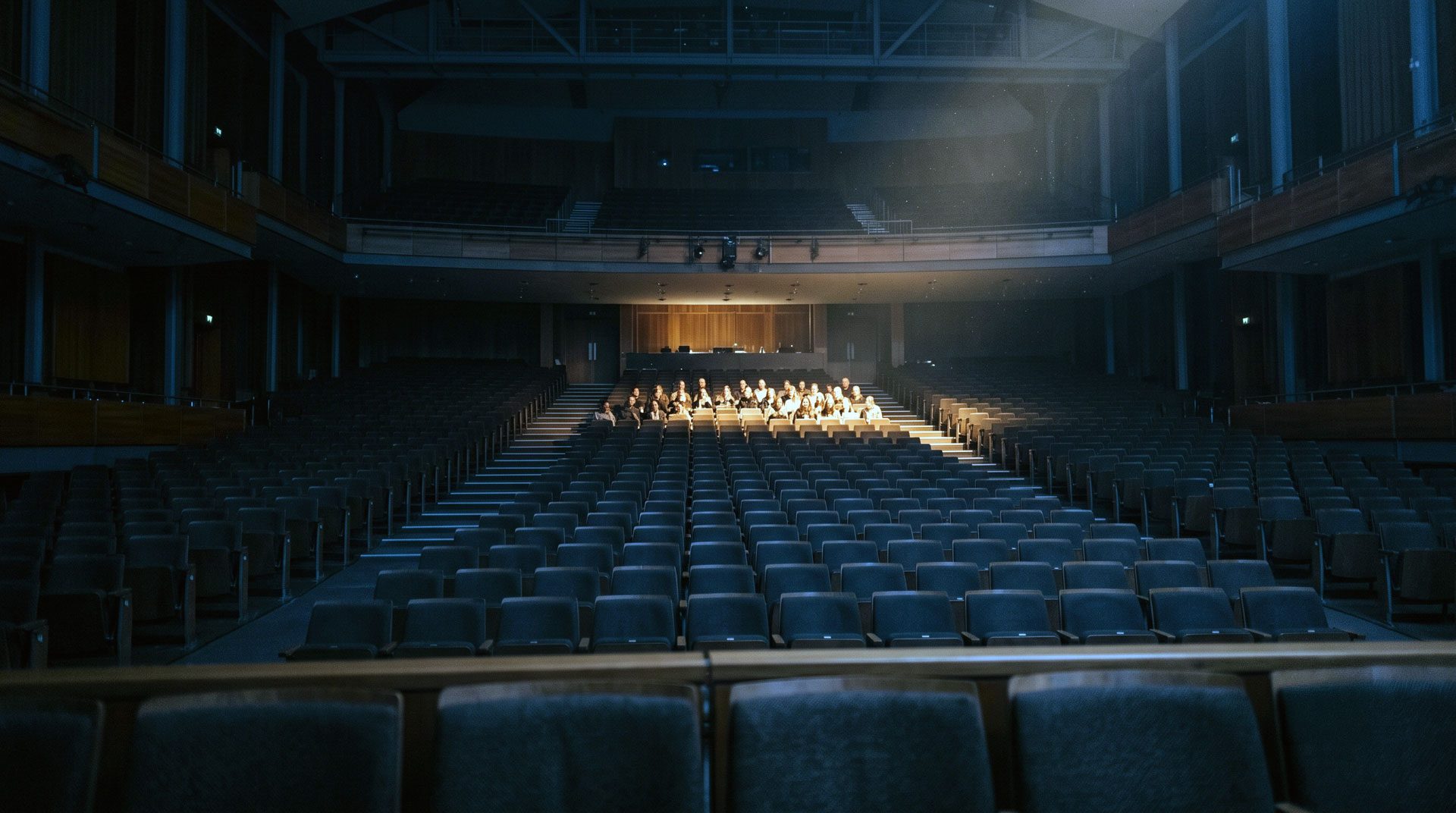
Call it the uncounted silence. It is the real reputational cost of a piece of published work, and it is the only line that appears on no dashboard anywhere.
The unpleasant part is not the observation but what follows from it. An author who wants to improve will use the data he has, since it is the only data there is, and every piece of that data comes from someone who reacted. Each cycle of refinement therefore moves him towards the audience that comments and away from the audience that scrolls past. This is not an error of judgement, it is arithmetic. He is calibrating on a sample selected by the very behaviour he is trying to produce, which is the polling failure of 1992 running continuously and in miniature on several hundred million accounts. The better the method works the narrower the audience becomes, and the fraction of readers who might actually have engaged him professionally thins out in perfect silence. Nobody sends the notification saying they read it and concluded you had nothing to say.
There is a second movement, and it makes the picture less moralising than it sounds. Two entirely different markets share the same platform and appear, from the outside, to be practising the same trade. In the first, what is being sold is a role. A chief technology officer, a sales director, a head of function needs to remain legible to recruiters, to suppliers, to peers in the same industry, and for that purpose depth is beside the point and in fact narrows the reach, while frequency and recognisability are everything. In that market the engagement bait is not a mistake. It is the correct move, executed competently. In the second market what is being sold is judgement, meaning the capacity to see a complicated situation more clearly than the people inside it. There the bait is self-harm, because the qualified buyer uses precisely that signal to decide whether you are worth your fee, and a post that flattens a problem you are supposed to be able to complicate is a public demonstration of the opposite of what you sell.
The two markets have no way of distinguishing themselves visually. They occupy the same feed, use the same formats, report the same metrics, and their numbers appear to be comparable quantities. A person selling judgement who watches a nominal peer collect two million impressions with a list of five mistakes to avoid will tend to conclude that he is doing something wrong. He is in fact looking at the results of a different occupation and reading them as a standard. This is where the system does its worst damage: not in rewarding shallowness, which would at least be legible, but in making the boundary between two economies illegible to the people operating inside them.
The platform, in other words, does not select the best content or the worst. It selects content that produces observable response, which is a third thing bearing no necessary relation to either. Everything else follows.
The obvious objection is that the reputational cost I have described does not exist, and it deserves to be taken seriously rather than waved through. Nobody, so far as I know, has ever lost a mandate on account of a banal post. If that holds generally then the uncounted silence is not a cost at all but an aesthetic irritation experienced by people who read too closely, and the argument collapses. I state the condition because it is the one that would prove me wrong, and I cannot test it with data. What I have is my own behaviour when I am the one doing the assessing, where the signal weighs heavily. That proves nothing about anyone else.
An asymmetry remains, though, which makes the wager lopsided even without evidence. The benefit of a post that performs is immediate, countable and pleasant. The cost, if there is one, is deferred, invisible and attributed elsewhere: the call that never comes gets explained by a slow market, by poor timing, by aggressive competitors. Nobody traces it back to something published eight months earlier. In a structure of that shape the risky behaviour is always rational in the short run and always invisible in the long, which is the minimal definition of a structural trap. It is also, incidentally, why the polling industry needed a catastrophic public failure before it changed anything. Absent the election, the numbers had looked fine for years.
The way out is less dramatic than abandoning the platform, which would be a pose. It consists of declaring the success criterion before publishing rather than inferring it afterwards from whatever the dashboard shows. If I write in order to be engaged by three people with a serious problem, the piece succeeded if those three read it, and the verification is not the analytics but the conversation that appears in the following weeks. If I write to remain visible to my professional category, the numbers are the right measure and depth is a luxury I can indulge when I feel like it. Two occupations, two instruments. The recurring error is performing the first while measuring with the second.
Which brings the thing round to where the pollsters ended up. They eventually learned that a survey needs to ask the right questions of the right people, and that the second half is harder. Anyone publishing to a feed has the same problem and no inquiry coming.