The problem with getting what you asked for
Posted on: 7 March 2026
There is a category of strategic error that differs from ordinary miscalculation in one specific way: it does not arise from underestimating an adversary, but from overestimating one's ability to control the consequences of getting exactly what one wanted. It is the error of the actor who achieves his stated objective and discovers, in the moment after, that the price was not the one agreed.
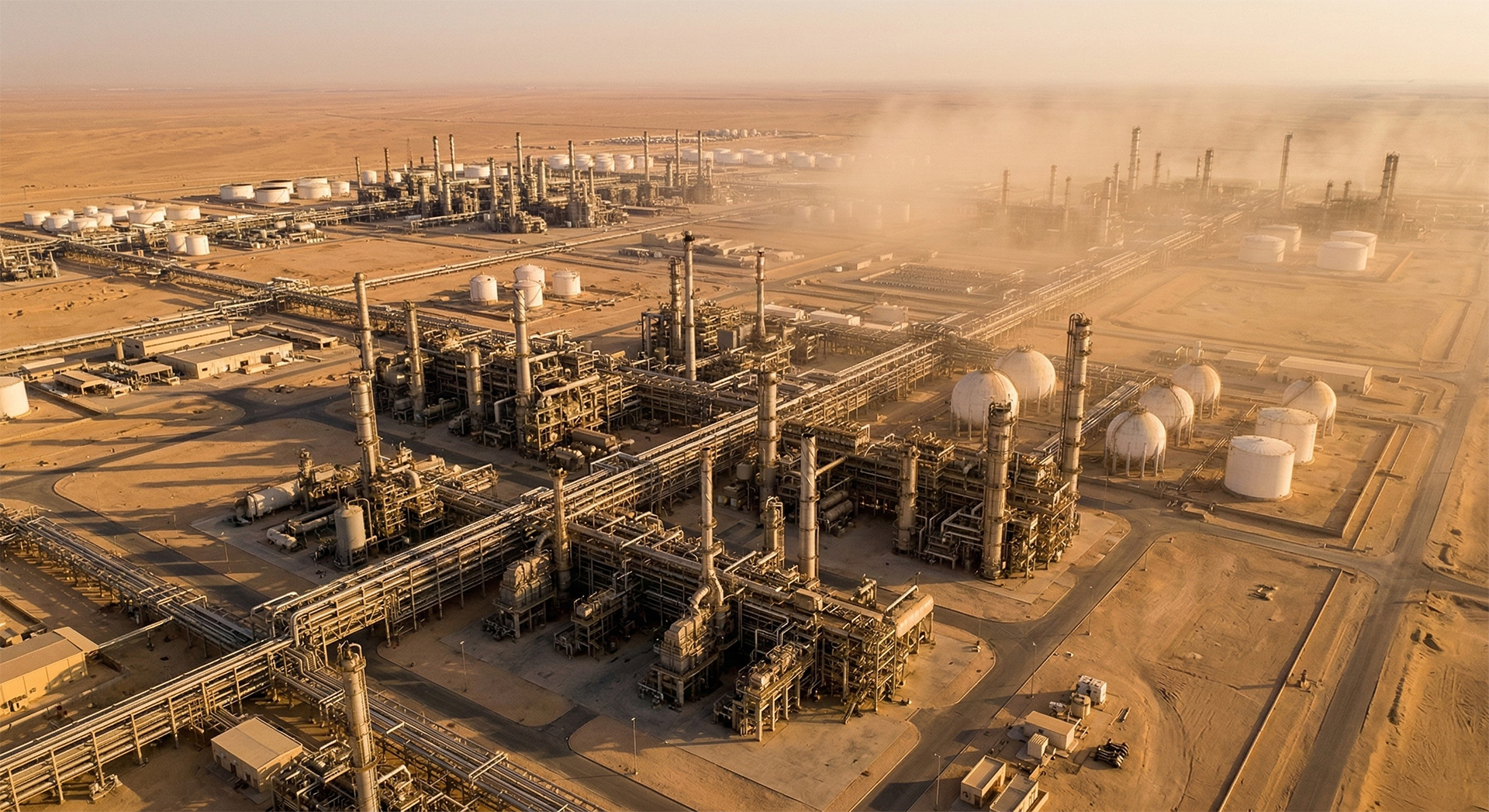
Mohammed bin Salman is inside this error right now. The Washington Post documented, with four sources, that the Saudi crown prince conducted repeated calls with Trump in the weeks before 28 February, pressing him to strike immediately, arguing that Iran would become stronger and more dangerous if Washington hesitated. The strikes came. Iran retaliated. On 2 March, a Shahed-136 drone hit Saudi Aramco's Ras Tanura refinery, taking 550,000 barrels per day of refining capacity offline: the second time in seven years that Saudi energy infrastructure has been hit by Iranian weapons.
Since then, Bloomberg has reported that Saudi Arabia has intensified its direct diplomatic back channel to Tehran, with growing urgency, to contain a conflict that is causing severe economic damage to the kingdom. Same actor. Reversed role. Six days apart.
British readers will find this sequence familiar in structure, if not in geography. The impulse to encourage a powerful ally to act decisively while preserving the appearance of distance is not unique to Riyadh. What is specific to MBS is the particular vulnerability that his positioning has now exposed: a kingdom whose economic transformation programme, whose religious legitimacy, and whose physical infrastructure for water and energy all depend on a degree of regional stability that a war without defined limits is rapidly eroding.
To understand the reversal, it helps to reconstruct what MBS actually wanted, which was not the war itself but a very specific end state: Iran militarised degraded, regime weakened, nuclear threat eliminated, with Saudi Arabia occupying the position of the diplomatic bystander whose hands remained clean while others did the difficult work. It was a plausible scenario on paper. It assumed, however, one thing that has not materialised: that Iran under attack would select its targets according to the same logic with which MBS had constructed his position, striking those directly responsible and sparing those who had only whispered.
Asymmetric strategies do not work that way. Iran under existential pressure has not distinguished between who pulled the trigger and who loaded the weapon. It has selected targets according to a different criterion: maximising distributed pain across as many actors as possible, generating sufficient political pressure that someone, anyone, would move to stop the bombing. Riyadh, Dubai, Manama, Doha, Kuwait City: none of the states struck formally participated in the attack on Iran. All host American bases. All have interests in Iranian weakness. All are now directly exposed to the consequences of a war they did not declare.
The sharpest point of Saudi vulnerability, however, is not Ras Tanura, significant as that is. It is what arrives in seventy-seven days. The Hajj 2026 is scheduled to begin around 24 May. One point eight million pilgrims, the largest coordinated human gathering on the planet, in a region where Iranian missiles have already demonstrated they can reach western Saudi Arabia. More than 130 flights have already been cancelled at Jeddah. Patriot batteries have been deployed to protect Mecca and Medina. Saudi Arabia is custodian of Islam's holiest sites: it is the title that underpins the House of Saud's religious legitimacy alongside its political authority. If the Hajj were seriously disrupted, or worse, if an incident caused casualties among pilgrims, the consequences would cross every diplomatic and religious boundary in the region. This is not a theoretical risk: in 1987, clashes during the Hajj between Iranian pilgrims and Saudi security forces killed more than 400 people and produced a three-year rupture in diplomatic relations between the two countries.
This explains the reversal. MBS has not changed his view of Iran: Saudi state media have abandoned their declared neutrality to describe Tehran openly as an existential threat. But he has understood that the immediate cost of a war without defined limits is incompatible with Vision 2030, with the Hajj, with desalination, with the economic stability on which he has built his modernisation narrative. Riyadh depends for its drinking water on desalination plants that are vulnerable to the same drones that struck Ras Tanura. A city of eight million people without water is not a metaphor: it is a catastrophic evacuation crisis.
There is a further dimension that British readers are positioned to appreciate without much prompting. The United Kingdom has sold billions of pounds worth of arms to Saudi Arabia over the past decade, a relationship that has survived parliamentary opposition, legal challenges and the Khashoggi assassination because successive governments have judged the strategic relationship too important to rupture. British weapons are part of the Saudi defensive architecture that is currently intercepting Iranian missiles over the Eastern Province. The entanglement runs deeper than the current government would prefer to acknowledge publicly, and the question of what obligations that entanglement creates, in a conflict that MBS helped catalyse and is now trying to contain, has not yet been asked in Westminster with any rigour.
The structural mechanism that this situation makes visible is more general than the specific Saudi position and worth naming clearly. Power architectures built around the capacity to manipulate other actors without direct exposure function in conditions of controlled conflict. They fail at the moment the conflict escapes control and the theatre of war expands the radius of consequences beyond the boundaries of original intention. MBS had constructed with patience a position of maximum influence and minimum exposure: relations with Washington, relations with Israel, the 2023 Chinese-brokered rapprochement with Tehran, Vision 2030 as an internal transformation narrative. It was a sophisticated equilibrium. It required all other actors to behave with equivalent sophistication.
Iran under existential attack does not behave with sophistication. It behaves with the logic of an actor that has nothing left to lose in the immediate term and everything to gain from raising costs for anyone who might influence the conflict's end. Striking Ras Tanura is not an Iranian strategic error, as some American analysts have suggested: it is the most direct message available to Riyadh that the price of this war includes the kingdom itself, not merely its adversaries.
Saudi Arabia now occupies a position it did not consciously choose but built one step at a time: too exposed to stand still, too vulnerable to escalate, too implicated to mediate credibly, too dependent on the Americans to contradict them publicly. The back channels to Tehran are buying time and signalling that Riyadh is not an active belligerent. They are not building a peace that MBS has no capacity to impose on either principal combatant.
The Saudi paradox in this war is not a story of hypocrisy, though the temptation to read it that way is understandable. It is a story of strategic architecture that did not account for its own failure: a system built to maximise influence under conditions of managed ambiguity, which proved fragile precisely when ambiguity ended and the conflict demanded clear positions.