The one thing no one is selling you
Posted on: 14 July 2026
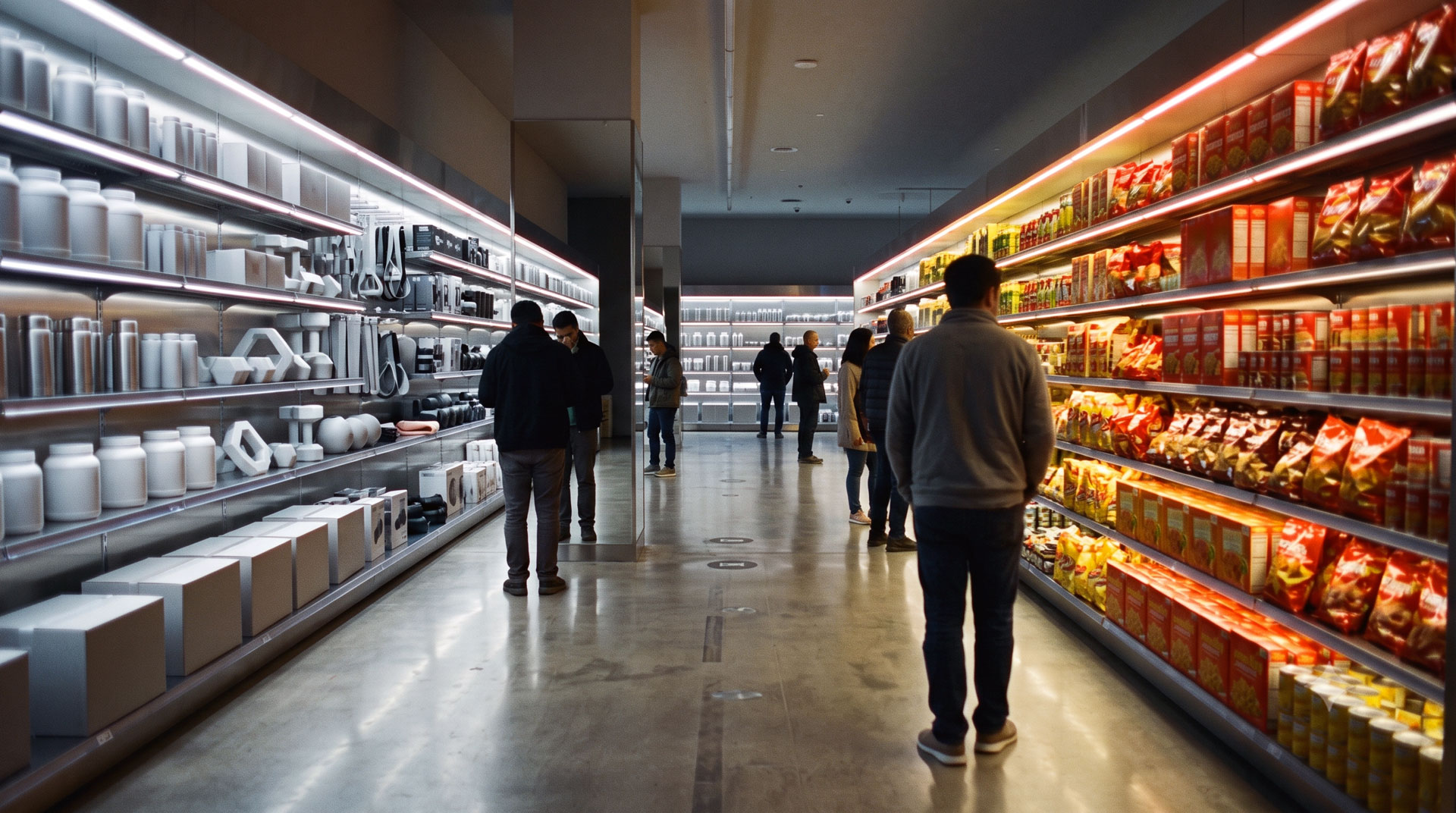
For the best part of two decades the most celebrated body-positivity campaign in the world belonged to a soap company. Dove's Real Beauty, launched by Unilever in 2004 and later extended into a Self-Esteem Project taught in schools, told a generation that self-acceptance was a virtue and that the fashion image was a lie, and it did so while the same corporation sold Magnum, Cornetto and Ben & Jerry's from the freezer aisle of every supermarket in the country. Only this December did Unilever finally hive off its ice cream division into a separate listed company, as though the arrangement had grown too legible to keep beneath one roof. The self-esteem counter and the indulgence counter had been trading in the same building the whole time, and the point was never the contradiction. It was the circulation. Both depend on a single condition, that you think about your body all day long.
Begin with a distinction the conversation tends to skip, because skipping it pays. There is a difference between accepting a fact and applauding a choice. Hair colour, height, a thyroid that slows the metabolism, a disabled body: these are facts, unchosen, and whoever sneers at them has earned the contempt that comes back the other way. Body positivity began there and was right there. It was needed, because the non-conforming body had for years been treated as an aesthetic failing rather than a condition, and that treatment was cruel and stupid in equal measure. None of this is in dispute.
The trouble starts when the logic that shields the fact is quietly stretched to cover the behaviour. At that point "do not demean a person" slides into "do not suggest that what this person does is doing them harm", and the two are welded together as though they were a single proposition. They are not. One defends a person's dignity; the other defends a habit, and a habit has no dignity to defend, only consequences to answer for. The sleight of hand is in the weld, and it is deliberate, because a great deal of comfort and no small amount of revenue depend on our not noticing the seam.
The manoeuvre worth naming is the conversion of a behaviour into an identity. A behaviour you can change; an identity you defend to the last. While eating badly is merely something you do, "eat better" remains advice, unwelcome perhaps but receivable. The moment eating badly becomes who you are, the same two words land as an assault, and whoever offers them is recast as an enemy. This is why the man who goes running and declines a drink can find himself called a zealot or a bore or something considerably less printable, not because he is any of those things, but because the game has already turned a modifiable habit into an untouchable trait, and touching the untouchable is, by definition, an act of violence.
On one point the record should be plain, because it is the point most often lost in the noise. Trying to stay healthy is not a variety of insecurity. It is closer to the most rational use a person can make of the time they have been given. The evidence on movement and strength is not a matter of taste or ideology; a body that trains in earnest carries a different metabolic and cardiovascular signature, a different reserve of energy, a different way of ageing. One need not aspire to the podium, only decline to lie to oneself. Anyone who collapses the care of the body into the tyranny of the mirror is, whether they mean to or not, performing the industry's own work for it, insisting that every attention paid to one's health is a pathology, so that surrender can be dressed up as release. It is a capitulation sold as liberation, and it moves a great deal of product.
Because the real product, in all of this, is neither thinness nor acceptance. The real product is the conviction that the lever does not exist, that your condition is a fate rather than a process. Hate yourself and they will sell you the gym membership, the supplement stack, the meal plan at ninety-nine a month. Be taught to accept yourself regardless of how you actually are and you remain a loyal customer of the very food that delivered you there. In the first case you pay to change, in the second you pay to stay exactly as you were, and in both cases you have bought something. The one item neither counter stocks is the free and awkward truth that works, which is that the lever is real and it is in your hand. No one has ever built a margin on your autonomy. The margins are built on your discomfort, whichever direction it is pointed in.
There is then the argument one hears from those who defend a ruinous way of living by appeal to their rights, and it deserves dismantling because it is badly put. Everyone, it is said, is free to do as they wish with their own body. Quite so, and no one is proposing to forbid anything. But the freedom to choose is not an obligation to applaud the choice, and still less an obligation to pretend that all choices weigh the same. A person poisoning themselves slowly has every right to do so; I have every right to decline to call it a model worth following, and whoever hoists it up as a banner of inclusion is asking for something other than respect. They are asking for endorsement. Respecting a person and marrying their habits are two separate acts, and the prevailing discourse keeps them confused on purpose.
Even the argument that looks sturdiest, the economic one, is frailer than the people wielding it suppose. "I pay for all this through the NHS" has the ring of the obvious, and in part it is, but the account is nowhere near settled. A study published in PLoS Medicine in 2008 by van Baal and colleagues, built on Dutch data, arrives at a genuinely counterintuitive result: taken across an entire lifetime, the highest healthcare costs belong not to the obese or to smokers but to the healthy and the non-smoking. The mechanism is brutal in its simplicity. Those who live well live longer, and go on to accumulate the expensive diseases of old age that the early dead never reach; life expectancy from the age of twenty falls by roughly five years for the obese and seven for the smoker. They cost the system less, not because they are in better shape, but because they are present in the world for less of it. This is not, I should stress, the opposite claim smuggled in through the back door, for that model counts only direct medical expenditure and leaves aside the productivity lost across the working years. The point is narrower and sharper, that resting one's moral irritation on an accounting sum that fails to come out in one's favour is an error, and one worth catching before it hardens into a flag.
And since closing on a question that has no answer has become something of a signature, here is mine. Who benefits from your believing that the lever is not there? Because everything on this particular carousel turns in the same direction. The industry that wants you insecure and the one that wants you resigned present themselves as adversaries, and in truth they share a single equilibrium, the one in which your body remains a permanent problem administered by somebody other than you. The cruelty is not in telling a person they might feel better than they do. The cruelty, the genuine and well-packaged kind, is in teaching them they have no reason to want to.