The eye is trained not purchased
Posted on: 24 March 2026
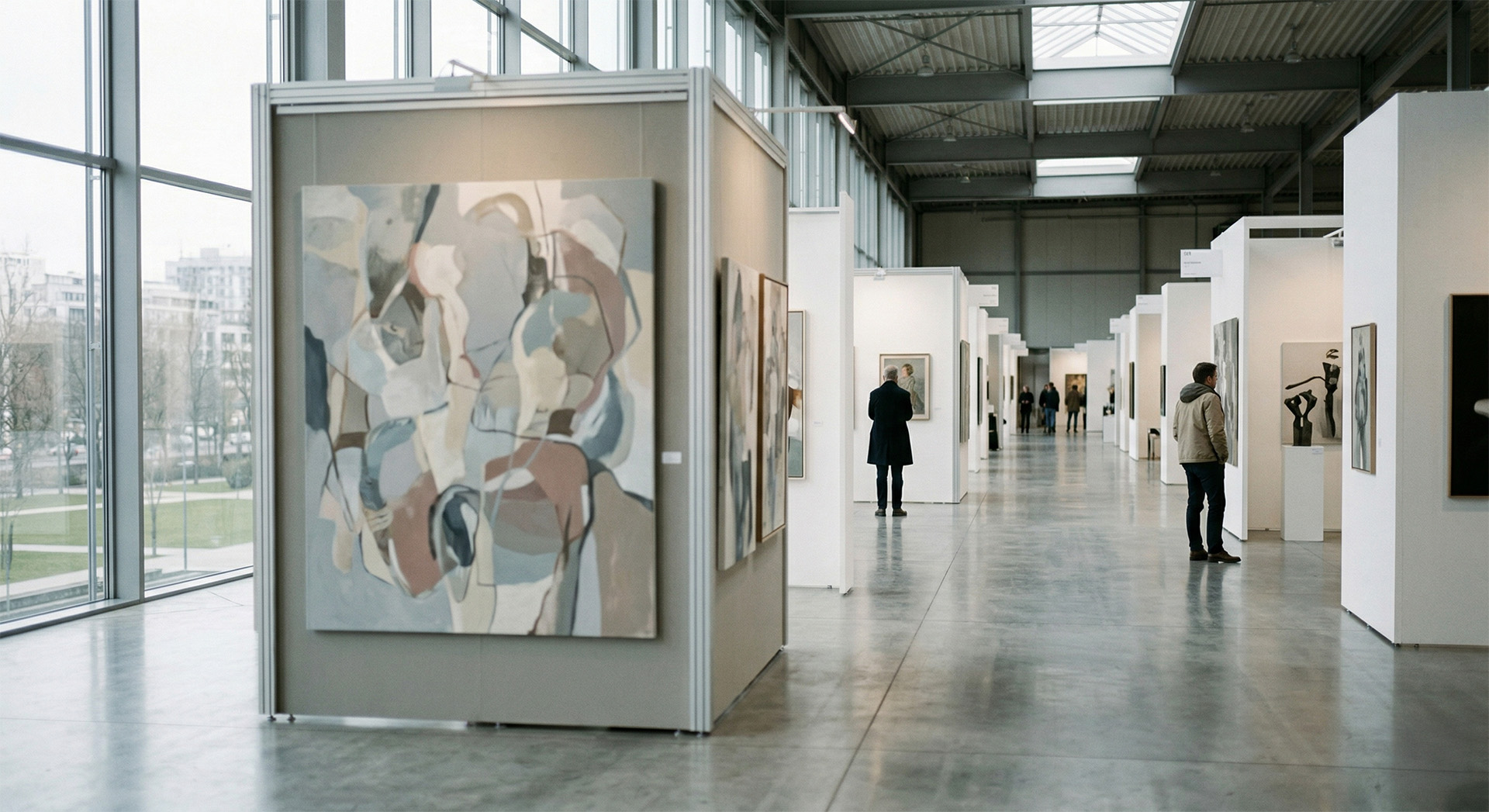
I grew up in a household where art was as ordinary as bread: paintings debated over dinner, galleries visited the way other families went to the supermarket, opinions delivered without ceremony on what held value and what merely held wall space. Which is why I have watched the same scene play out too many times to call it coincidence. At Frieze, at the smaller galleries off Cork Street, at the kind of auction preview where the champagne is better than the small talk: a couple in their sixties pause in front of a mid-sized canvas, nothing immediately striking about it, and spend the better part of twenty minutes in quiet conversation with the dealer. Questions the dealer did not expect. Meanwhile, across the room, a man in a hoodie that costs more than a decent used car photographs a neon installation, posts it before he has finished looking, and signs within the hour. Both are buying art. They are not doing the same thing, and the difference is not what it appears.
The instinctive reading is aesthetic: the first pair have taste, the second does not. It is a satisfying judgment. It is almost always wrong. The real distinction has nothing to do with the quality of the work on the wall. It has to do with time, and with a particular kind of social honesty about which return you are actually seeking.
The couple buying for the long horizon cannot afford social errors. That painting will need to justify itself to people who are not yet born, to a trust, to a foundation, to children who will inherit opinions they did not form themselves. This imposes a ferocious discipline: you must separate what holds value from what appears to hold value right now, which in practice means betting against the room you are standing in. It is cognitively expensive in a very specific way. It requires resisting the consensus of people whose approval you could otherwise enjoy, which is precisely the hardest thing to ask of any social creature, regardless of how much money they have.
The man with the neon installation is doing something entirely rational by his own logic. The work needs to function now: in the entrance of the office, in the photograph, in the dinner conversation as a signal of membership in a certain kind of world. That it may be worth considerably less in a decade is largely irrelevant if it has already delivered the return it was purchased for, which was never financial but social. Calling this ignorance is like criticising someone for buying a Bentley on the grounds that it depreciates. You are measuring the wrong thing entirely.
The market has reorganised itself around this second logic because it is faster, more liquid, more legible. The serious galleries know exactly how to manufacture instant value: the precisely calibrated press release, the institutional show that lends credibility by association, the established collection that provides ballast. It works. Christie's and Sotheby's will tell a different story in twenty years about what actually held, but the people who extracted positional value from the cycle will have long since moved on, and they will not much care.
This series of Tueadsay posts has been exploring practices that share one uncomfortable quality: they require investment before they return anything. Handwriting returns clarity of thought, but only after you have accepted that your hand aches and the pace is slow. A mechanical watch returns a different relationship with time, but only once you have stopped expecting quartz precision. Difficult relationships return depth, but only if you stay through the friction rather than sidestep it. Buying art with a long horizon belongs to exactly this family. The friction is real and layered: you must develop an eye that no price tag will give you, resist the pressure to buy what has already been validated by consensus, and accept that the immediate satisfaction will be limited and the real return will arrive in ways you cannot fully see yet.
Those who operate this way do not announce it. You recognise them by the questions they ask, not by the size of what they buy. They want to know where an artist studied, who they showed with five years ago, what sold and to whom. They are building a map while everyone around them is following a signal that someone else drew. It is slow work. In the room, at the preview, it is almost invisible.
Old money in this country has always understood something that new money tends to learn expensively: the art that announces itself rarely survives the announcement. The pieces that end up in the country house, in the trust, in the foundation, are almost never the ones that dominated the Frieze VIP preview. They are the ones that someone chose quietly, against the room, before the room caught up.
The eye is trained over years, through errors, through the occasional purchase you quietly regret. It is not downloaded, not acquired over a weekend, not signalled by the price of the work you stand in front of. If you know, you are probably already building that map. If you are still looking for the formula, you are optimising for the wrong cycle.