The enclosure of the chance encounter
Posted on: 21 June 2026
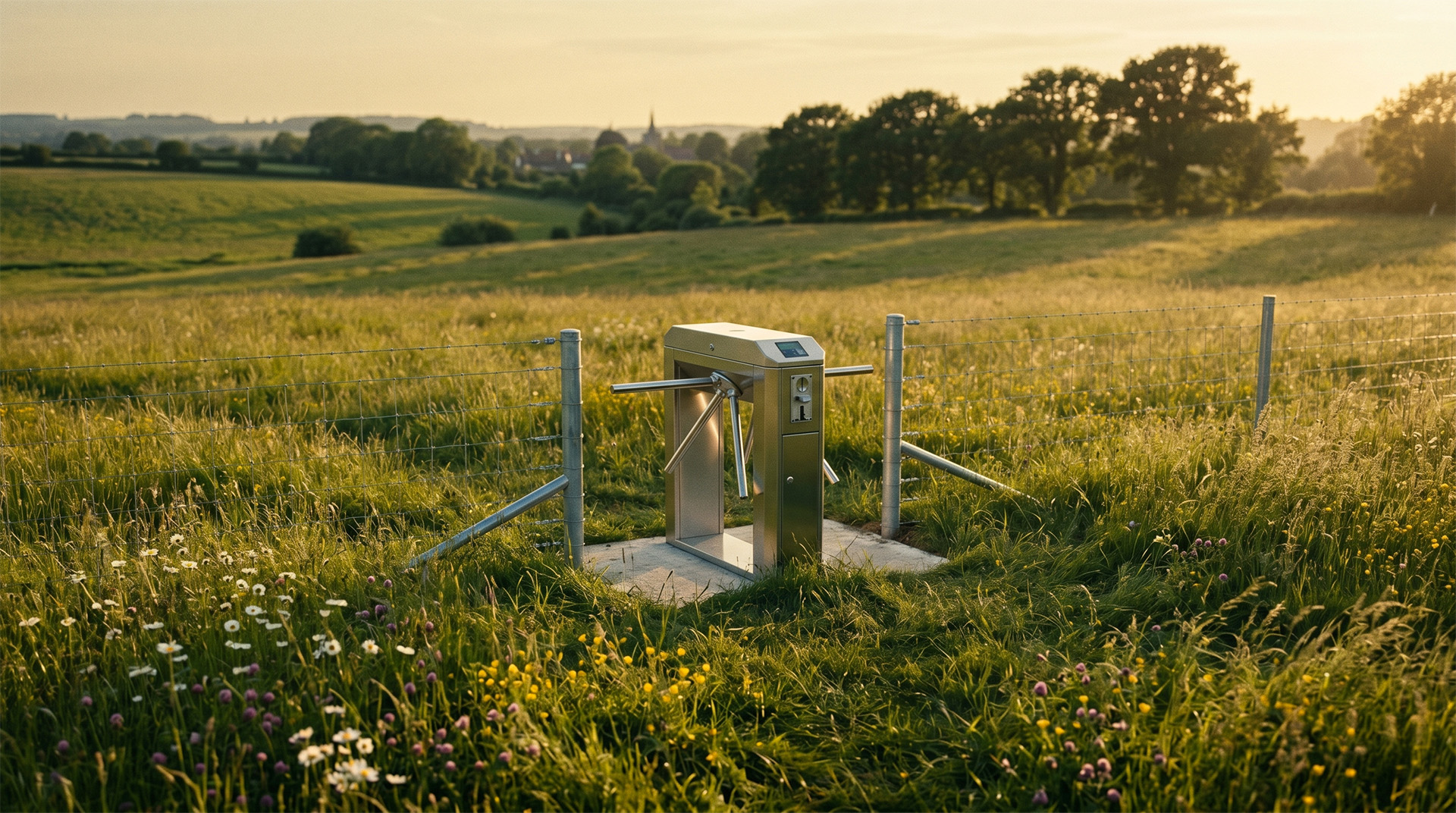
Somewhere between the reign of Henry VIII and the high Victorian age, England fenced itself in. The common land on which villagers had grazed, gleaned and gathered for centuries was steadily hedged, walled and turned into private property, a process the Inclosure Acts eventually blessed with the authority of Parliament. People who had lived off that shared ground found themselves shut out of something that had been theirs by custom, obliged to buy access to what had cost nothing the season before. The word for it was enclosure. It is worth holding on to this summer, because the country is doing the same thing again, only the common being fenced is no longer a meadow. It is the simple act of meeting a stranger.
The occasion for saying so is a story that reads, at a glance, like seasonal filler. According to Ofcom, usage across the ten largest dating apps fell by around sixteen per cent between 2023 and 2024, with Tinder shedding close to six hundred thousand users and Bumble not far behind. Meanwhile the singles night is back: speed dating, mixers and, in London, the spectacle of Date My Mate, where a friend stands up and pitches you to a roomful of strangers with a two-minute slide deck. A hundred and fifty tickets gone in five minutes. One presenter, the papers reported, sold her single friend to the room as a structural engineer with a sideline in erotic fantasy fiction. The press received all of this as a charming sign that the young have wearied of the phone and rediscovered the pub.
That reading is true and useless. It is what anyone thinks on first contact with the story, which is precisely why it is the floor and not the ceiling. The detail that turns the thing over tends to go unmentioned. These live events, sold as an escape from the platforms, are in large part funded by the platforms. Hinge has put a million dollars into in-person events across New York, Los Angeles and London. Bumble has run its own live arm since 2022. What is narrated as a market correction against the apps is, on closer inspection, a product extension of the apps.
So the pendulum is the wrong picture, comforting in exactly the way that misleads. A pendulum returns to where it began and implies that nothing was lost. Enclosure is the better word. There was a time, and not a distant one, when meeting someone was a free by-product of ordinary life: the party, the local, the friend who introduced you to another friend, the queue at the bar, the five-a-side. Nobody ran that ground. Nobody issued tickets or took a cut of the outcome. It was a common in the technical sense, a shared resource everyone drew on without it occurring to a soul to put up a gate.
The apps did not add a lane beside that common. They drained it, and not by accident but by necessity of the model, since a platform that lives on the time you spend inside it needs the free and ambient way of meeting to become residual, or it has no reason to exist. The whole liturgy of the encounter was moved indoors, behind a paywall, and within a few years the direct approach outside the gate had been made to feel awkward, faintly suspect. Picture a man of twenty-five walking up to a woman he does not know, with no match to license the move. Twenty years ago that was an ordinary Saturday night. Now the same gesture reads as an intrusion, something faintly off when not openly alarming, and the man is filed as a probable nuisance before he has opened his mouth. The common did not vanish by decree. It was left to dry out until it became unusable.
Then the loop closes. With the common degraded, the very platforms that degraded it step forward to sell a fenced version of it back. The chance meeting that was free because it was ambient returns to market as a service, with an entry fee and a brand on the door. The cycle completes, but not where it started. It completes a rung higher up the ladder of commodification, and in that rung sits a toll that did not exist before.
The thing is sharper, and a little crueller, seen from the side of those now in their twenties. For them the unmediated encounter is not a memory to recover, because they never knew it as the default. By the time they reached adulthood the fence was already up. What is being sold to them is therefore not nostalgia, which requires a memory, but paid access to something they would have had for nothing had they been born a generation earlier. You do not sell the past back to people who miss it. You sell it for the first time, at full price, to people who do not know they were enclosed out of it.
Whether the companies do this by calculated cynicism or ordinary opportunism is the least interesting question, and I leave it aside. What matters is the mechanism, which we have seen before and will see again. An industry builds its fortune by draining a resource that used to be free, then sells access to the scarcity it helped to manufacture. It happened with water and with attention. It is now reaching the most elementary of human activities, looking at someone across a room and hoping something catches.
Read as the happy ending of a fable, the digital world conceding its limits and yielding the floor to human warmth, the story has you watching the trick and applauding the magician. The digital world concedes nothing. It has opened a second window, that is all. The sign above it says real. The till behind it is the one that was always there.