The children s table
Posted on: 8 December 2025
Today in London, Zelensky meets Starmer, Macron and Merz. It is the first time the "E3+Ukraine" format convenes at head-of-state level. Official statements speak of "consolidating a common European position" and "strengthening Kyiv's negotiating hand." The Élysée described the meeting as an opportunity to "take stock of the situation and ongoing negotiations within the framework of American mediation."
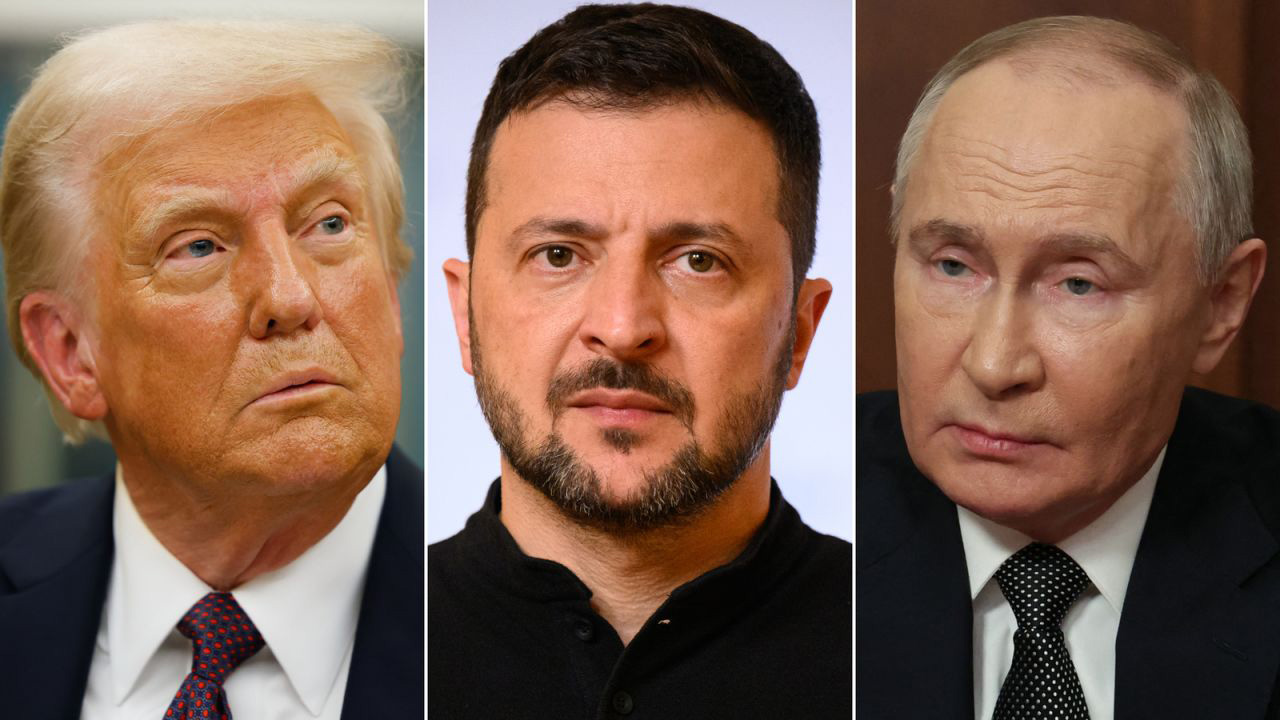
In Washington, at the same moment, Secretary of State Rubio receives British Foreign Secretary Cooper to "reaffirm joint commitment to a peace deal." In Moscow, Putin awaits the next move after hosting Witkoff and Kushner for over five hours at the Kremlin last week. In Mar-a-Lago, Trump publicly complains that Zelensky "hasn't even read the proposal," adding that "Russia is fine with it, but I'm not sure Zelensky is."
If you watch the choreography, it looks like multipolar diplomacy with Europe playing a lead role. If you examine the underlying incentive structures and the actual distribution of power, it is something else entirely.
The leak that tells you everything
Last Thursday, Der Spiegel published a leak that under normal circumstances would have remained buried in classified archives for decades. During a private call with European leaders, Macron reportedly warned Zelensky that "there is a chance that the US will betray Ukraine on territory, without clarity on security guarantees."
This is the sort of sentence a diplomat never utters aloud, let alone the president of a nation that built its post-war foreign policy on the Atlantic alliance. The fact that it leaked means one of two things: either someone wants to prepare European public opinion for what is coming, or someone wants Washington to know that Europe knows what is being cooked. Probably both. Either way, the underlying message is identical: those with access to the rooms that matter already know how this ends, and they are beginning to position themselves for the aftermath.
But the real news of the week is something else, and it received far less attention than it deserved. On Friday, the Trump administration published its new National Security Strategy. The document signals, in black and white, that the United States will no longer provide Europe with the security guarantees that have defined the post-war geopolitical architecture. It contains explicit references to the "prospect of civilisational erasure" of the European continent, language that would have been unthinkable in any official American document even five years ago.
The Kremlin welcomed it with enthusiasm. Spokesman Peskov declared the document "largely in line with Moscow's vision" and a "positive step" compared to previous administrations.
When your strategic adversary applauds the security doctrine of your principal ally, you have a problem that no E3+Ukraine meeting can solve.
The geopolitical margin call
The pattern I see here is not Yalta, though many commentators will reach for that reference. Nor is it the nineteenth-century Concert of Powers, tempting as that analogy might be for those seeking reassuring historical precedents.
It is something more specific and more brutal: a geopolitical margin call.
For 70 years, Europe has operated on leverage underwritten by American security. It built its social model, its institutional architecture, its international posture on the implicit assumption that someone else would guarantee the physical security of the continent. It invested in welfare rather than military capability. It developed extraordinarily sophisticated soft power rather than credible hard power. It created a normative architecture to manage perpetual peace, assuming perpetual peace was the natural state of affairs rather than a historical anomaly guaranteed by American nuclear deterrence.
This is not a moral criticism. It was a rational choice given the conditions of the system. Why duplicate expensive capabilities when someone else provides them for free? Why invest in muscle when you can invest in brains and let the bouncer at the door be paid by Washington?
The problem with leveraged positions is that they work magnificently until they do not. They generate superior returns, allow you to do more with less, look brilliant in hindsight. Then the margin call arrives, the broker rings and says: cover your position or I liquidate everything. And you discover you do not have the funds to cover, not in time, not without selling assets you cannot afford to sell.
Trump is the broker calling. Europe does not have the funds to cover. Not in time. And time is precisely what it lacks.
The archaeology of incentives
Consider the incentives of those sitting at the real tables, where decisions are made that others subsequently ratify.
Trump wants an exit strategy he can sell as a diplomatic victory to his base. "I did what nobody else could do, I stopped a war that was costing American taxpayers billions." Ukraine does not vote in American elections and does not fund electoral campaigns. China is the strategic priority, the only one that genuinely matters in Washington's long-term calculus. Europe has become a cost to be offloaded, an ally that consumes resources without providing proportionate strategic value.
Putin wants to crystallise territorial gains in a formal agreement recognised by the international community. He has already won on the ground what he needed, the Donbas territories and the corridor to Crimea. Now he needs recognition, something that transforms military conquest into a legitimised fait accompli. And he needs something he can present domestically as Western humiliation, proof that Russia challenged the American order and won.
Europe would like to continue supporting Ukraine. It says so in communiqués, reiterates it at press conferences, writes it in official documents. But with what instruments? Von der Leyen's declarations about "territorial integrity" are morally impeccable and strategically irrelevant if you lack the means to enforce them. You can condemn aggression all you like, but if you cannot impose credible costs on the aggressor, your words are background noise.
Zelensky is trapped, and he knows it. He knows that signing an agreement ceding territory means legitimising annexation and betraying those who died defending that land. He knows that not signing means losing American support and facing alone a Russia advancing daily on the battlefield. He knows Europe alone cannot guarantee anything concrete: no troops, no nuclear deterrence, no sufficient industrial war capacity. Trump Jr. at Doha this weekend said plainly that his father might abandon negotiations if Ukraine does not close quickly. This is not a veiled threat. It is a public ultimatum.
The reception committee
The E3+Ukraine format meeting in London today is the institutional European response to this situation. And it is precisely the kind of response that the European architecture produces when facing crises that exceed its capabilities: coordination, a common position, a joint communiqué, a promise to "continue putting pressure on Russia to force it towards peace," as Macron said this morning.
But when three medium powers convene to "consolidate a position" while the real negotiation takes place between Washington and Moscow, they are not negotiating. They are organising the reception committee for decisions already made elsewhere.
It is the children's table at Christmas dinner. You can argue animatedly all you like, elaborate sophisticated positions, produce brilliant analyses of the situation. The adults are in the next room, discussing something else.
The structural mechanism is simple and pitiless: at the grown-ups' table sit those with leverage. Leverage in this game is a combination of three elements: credible military capability, political will to use it, and decision-making autonomy to do so without asking permission. Europe lost all three when it delegated security for 70 years. You cannot rebuild them in six months while someone else decides your fate.
The falsification test
There is a way to verify whether this reading is correct or whether I am seeing patterns where none exist.
If over the next six months Europe managed to create a credible autonomous guarantee mechanism for Ukraine, European troops on the ground, French nuclear deterrence formally extended, accelerated industrial war capacity, something with teeth, this analysis would prove wrong. Europe would have demonstrated it can operate independently of the American guarantor when it truly matters.
But look at what is happening in London today. They are not discussing sending armoured divisions. They are not discussing extending French nuclear coverage to Ukraine. They are discussing how to coordinate their position regarding the American plan. They are trying to influence a negotiation in which they control no decisive variable.
It is the difference between being at the table and being on the menu.
The structural lesson
For those who manage complex organisations, and this applies to companies as much as institutions, there is a lesson here that transcends the geopolitics of the moment.
Every system that delegates a critical function to an external guarantor inherits a hidden risk on its balance sheet. It does not appear in reports, is not discussed at board meetings, does not enter risk models. But it is there, dormant, waiting. The day the guarantor changes the terms of the contract, you discover you lack the internal structures to manage that function. And building those structures requires time you do not have, capital you have not allocated, competencies you have not developed.
Europe is discovering today what many companies discover when their strategic supplier is acquired by a competitor, or their technology partner changes terms of service, or their principal market closes for political reasons they had not foreseen.
You optimised for a world that no longer exists. And aggressive optimisation is the natural enemy of adaptability.
The question they will not ask
The question that should keep European decision-makers awake at night is not "how do we save Ukraine." It is a more uncomfortable question, more fundamental, harder to voice aloud: if we cannot guarantee the security of a country that has been fighting for three years with our declared support, a country that shares our values and that we promised to protect, what exactly can Europe guarantee?
It is a question with no good short-term answers. But until it is asked explicitly, until it ceases to be the unspoken presence in the rooms of European power, the work of building those answers cannot even begin.
Today in London they will not ask it. They will speak of coordination, common positions, diplomatic pressure on Russia, solidarity with Kyiv. They will produce a communiqué reaffirming principles that no one disputes and no one can enforce.
Meanwhile in Washington and Moscow, the adults continue talking. And the fate of Ukraine, and perhaps of European security architecture for decades to come, is being decided there.
At the grown-ups' table.