Some things don t need an audience
Posted on: 8 April 2026
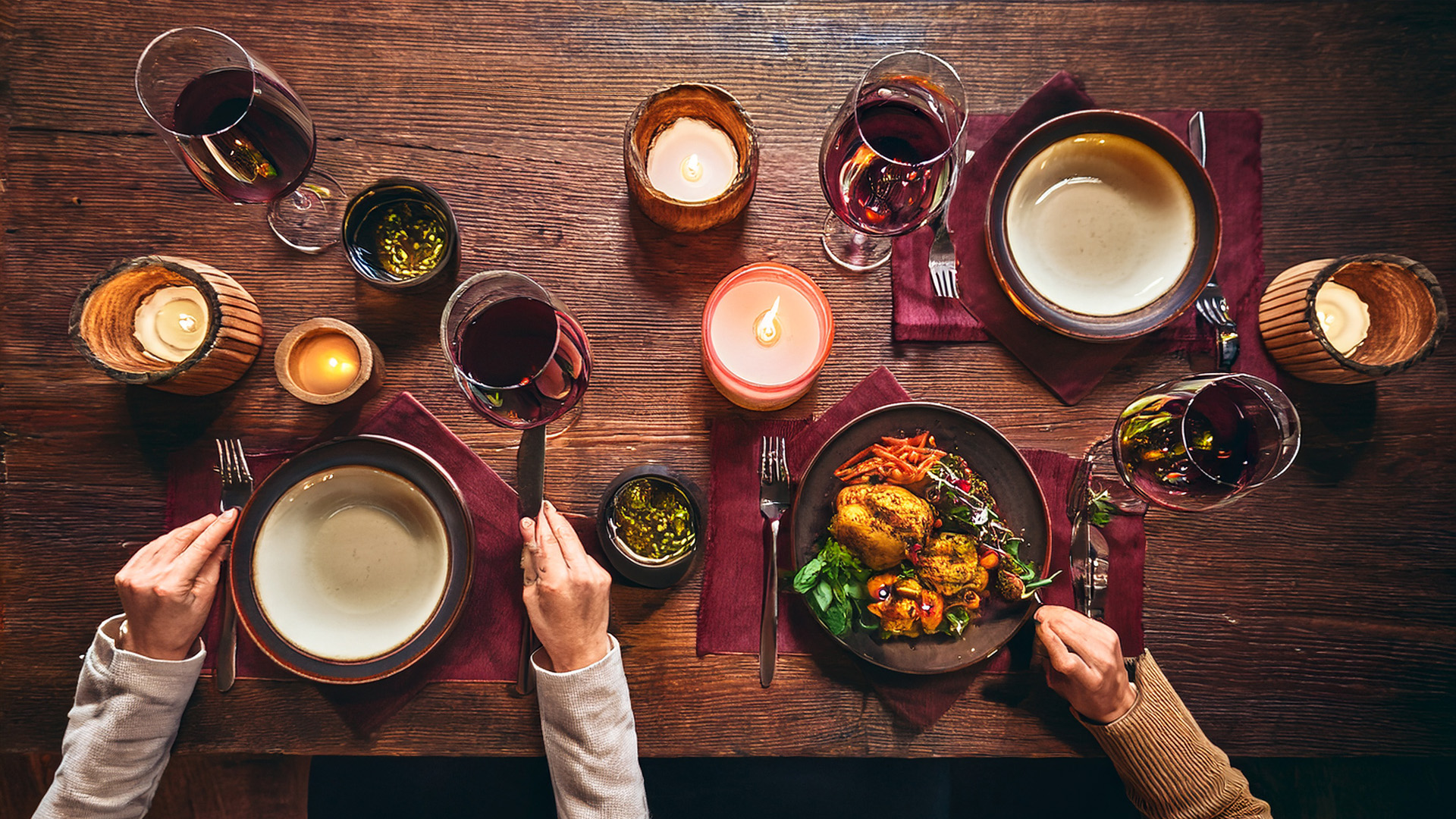
There is a specific moment, somewhere between the starter and the main course, when someone at the table pulls out their phone and photographs the food. Not a view from the window, not a person they love: the food. Angle adjusted, filter considered, the whole thing done in four seconds that are designed to look effortless. Then the phone goes face-up on the table and dinner resumes. Approximately.
I stopped wondering why a while ago. The answer is obvious enough, just slightly uncomfortable to say out loud: the photo is not for the people at the table. It is for the people who are not there.
The logic underneath is straightforward. The dinner is not quite real until someone else knows about it. The experience exists but remains somehow incomplete, hovering, until it has been transmitted to an audience that, if we are being honest, is barely paying attention. Followers scroll. They double-tap, possibly. Then they move on. The food in the photograph has gone cold.
What happens next is the part I find structurally interesting. The published image is never entirely accurate. There is always a selection, a frame that cuts out the half-empty bottle or the friend mid-chew, a light that was not quite that light. The life that appears on social media is a reconstructed version of life, produced in real time, engineered to look unconstructed. The person producing it knows this. The people watching know this. And yet the arrangement continues, because stopping would require admitting something inconvenient.
There are private photographs, the ones that sit in a folder and get looked at years later with genuine warmth. Those are not what I am describing. I am describing the compulsion to publish immediately, the need for the thing to be visible now, as it happens, as if the value of an experience were somehow contingent on its distribution.
The conversations that have actually changed something for me were not documented. Some I remember almost verbatim. Others survive as atmosphere, or as a shift in how I thought about something afterwards. They exist only inside me and inside whoever was sitting across the table. No record, no post, no trace. And yet, looking back, they are the only ones that carried any real weight.
There is something precise in this. People who have lived through things that matter do not generally feel the need for those things to matter to others as well. Not from any particular reserve: simply because the experience is already complete as it is. Nothing is missing. The external confirmation is unnecessary because the event itself was the confirmation.
The selfie at dinner, the story from the front row: signals of the same underlying condition. The experience alone is not sufficient. It requires witnesses to become real. Which is, if you look at it without flinching, a structural problem rather than a moral one. It suggests that the capacity to inhabit a moment without broadcasting it has quietly eroded, and that social media normalised the erosion so gradually that the before is now difficult to imagine.
Before 2010, nobody would have understood what it meant to "post" a dinner. Now not doing it can seem mildly eccentric.
The people who don't do it rarely explain themselves.
They don't need to.