Hardly anyone looking at the label on a shirt or a T-shirt stops to ask who wrote it. We read "American cotton" or "verified suppliers" and the phrase does the job it was printed for, which is to close the question before anyone thinks of asking it. In September 2021 the Competition and Markets Authority, the British regulator for competition and consumer protection, published its Green Claims Code, and in July 2022 it opened an investigation into the environmental claims made by ASOS, Boohoo and George at Asda, three fashion businesses that between them take more than £4.4bn a year from clothing sales in the UK. In March 2024 all three signed formal undertakings to use only accurate and clear green claims, without admitting any wrongdoing. The European Commission had looked at the same problem across the Channel in 2020 and found that 53.3 per cent of the environmental claims it examined did not stand up to scrutiny, while 40 per cent had no supporting evidence at all. The figure that strikes me most is another one, though, because by the Commission's own count half of all green labels come with weak or non-existent verification. In those cases the badge does not certify a check but the wish to be seen as a company that checks, which costs a great deal less.
On Tuesday Shein agreed to pay $100m to settle an investigation by the Federal Trade Commission, the American consumer protection agency. According to the complaint filed in a federal court in California, the company failed to keep its promises on delivery times and hid negative reviews, while on the supply side it made unsubstantiated claims about its supplier audits and about the origin of its cotton, some of which it presented as grown in the United States when it actually came from China. None of this has been tested in court and Shein admits no liability. It also disputes parts of the FTC's account, and the settlement still has to be approved by a judge. The money will go to refunding customers.
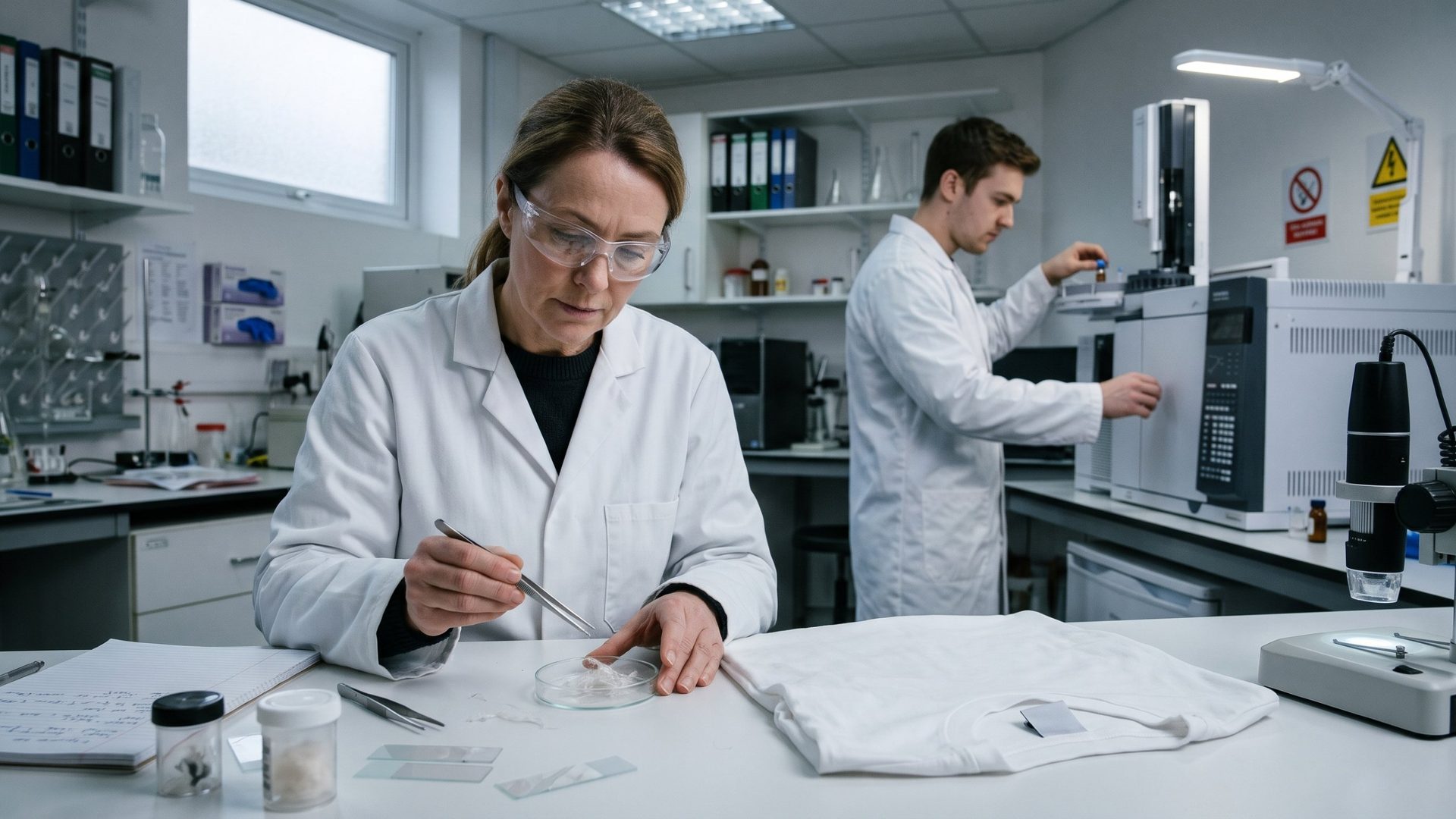
Cotton is the quietest part of the file but also the one with the longest history, which begins in November 2022, when Bloomberg had garments shipped by Shein to the United States tested in a laboratory and on two occasions the results pointed to cotton from Xinjiang, the Chinese region where according to Washington and several human rights organisations forced labour is used, a charge Beijing rejects. Since that summer a US law has presumed that any goods linked to Xinjiang are made with forced labour unless the importer proves otherwise, and an invoice is not enough to prove it. A cotton fibre carries in its chemistry traces of the water and soil in which the plant grew, so comparing it with reference samples can point back to its region of origin, whereas a certificate only tells you what the supplier decided to write on it.
Shein answered as every big buyer answers. In 2023, replying to questions from a group of US senators, it said it required its suppliers to buy cotton from Australia, Brazil, India, the United States and other approved regions, adding that it worked with Oritain, a laboratory that specialises in exactly this kind of analysis. In January 2025, while it was preparing a listing in London, Shein appeared before the Business and Trade Committee of the House of Commons and repeated that China was not among the approved regions for products sold in the United States, but it declined several times to answer MPs' questions about its use of Chinese cotton. Liam Byrne, who chaired the committee, then took his concerns to the Financial Conduct Authority, which was reviewing the listing. The London flotation eventually stalled for want of approval from Chinese regulators, and Reuters reported that the Xinjiang allegations had complicated it, so Shein went to Hong Kong instead.
The trouble is that at those volumes a promise of that kind cannot be checked batch by batch. In 2022 Shein worked with more than 6,000 Chinese suppliers and, according to Euromonitor, launched each new item with a first run of just 100 pieces, while Wired counted 1.3 million different items put on sale over twelve months against 35,000 at Zara. No laboratory can keep up with a catalogue like that, so the check inevitably becomes a sample and the rest is covered by the suppliers' contractual obligations, which means the word of the people with the strongest interest in naming the right region. According to the FTC, even the tests Shein did carry out were often inaccurate or inconclusive, yet the company used them to vouch for an origin. The checks existed, in other words, but they were working for the label rather than the other way round.
In fairness, the problem is not Shein's alone. In 2023 Oritain said it was finding prohibited-origin cotton in around 9 per cent of the general American and European market, including among well-known American brands, so what sets Shein apart is mainly scale, given that it ships close to a million parcels a day in the United States.
The rest of the file ought to interest everyone who has spent years putting Shein on conference stages as a model of data-driven growth. That story rests on review stars and fast delivery, which are precisely the two things the FTC is challenging. According to FTC records reviewed by Reuters, between January 2020 and June 2026 American consumers lodged more than 12,000 complaints involving over $11m of purchases, which Reuters could not verify one by one, while negative reviews, again according to the complaint, were being hidden. In Britain this particular habit has had a name in law since 6 April 2025, when the consumer provisions of the Digital Markets, Competition and Consumers Act came into force. Cherry-picking positive reviews and suppressing negative ones is now a banned practice, and the CMA can fine a business up to 10 per cent of its global turnover without going to court. None of this is new to the industry either, since as long ago as 2022 Fashion Nova paid $4.2m in the United States for blocking unfavourable reviews on its own website. Anyone who measures trust by counting a platform's stars should ask who decides which stars are shown, because a filtered review works exactly like a label written by the manufacturer.
The stock market had already sent its bill before the settlement. The sum is equivalent to about 44 per cent of Shein's profit for the second quarter, while its shares, listed in Hong Kong since 1 September, had already fallen 22 per cent from their debut price by early November, mainly because of the EU charge on low-value parcels. Under the proposed order, as far as the news agencies report it, Shein is required to stop making unsubstantiated claims about supplier audits and cotton traceability. It is a sensible rule, and it says a good deal about where the problem lay, because rather than obliging the company to know where every fibre comes from it forbids it to say so when it does not know.
Sources
Competition and Markets Authority, press notice on ASOS, Boohoo and George at Asda, 27 March 2024: https://www.gov.uk/government/news/green-claims-cma-secures-landmark-changes-from-asos-boohoo-and-asda
Competition and Markets Authority, case page on the fashion greenwashing investigation: https://www.gov.uk/cma-cases/asos-boohoo-and-asda-greenwashing-investigation
European Commission, press release on the Green Claims Directive proposal, 22 March 2023: https://ec.europa.eu/commission/presscorner/api/files/document/print/en/ip_23_1692/IP_23_1692_EN.pdf
European Commission, Green claims page: https://environment.ec.europa.eu/topics/circular-economy-topics/green-claims_en
Reuters, 24 November 2026: https://sg.finance.yahoo.com/news/shein-pay-100-million-settle-164218438.html
The Next Web, 25 November 2026: https://thenextweb.com/news/shein-100mn-ftc-settlement
World Today News, 25 November 2026: https://www.world-today-news.com/shein-agreed-to-100m-ftc-settlement-over-shipping-reviews-cotton-claims/
Financial Times: https://www.ft.com/content/0128d44e-8ca1-49b8-868b-b8fe0e4824c6
Bloomberg, November 2022: https://www.bloomberg.com/news/newsletters/2022-11-21/shein-s-cotton-tied-to-xinjiang-where-china-is-accused-of-forced-labor
Supply Chain Dive, 2023: https://www.supplychaindive.com/news/shein-forced-labor-supply-chain-cotton-china-Xinjiang/642557/
Reuters, January 2025 (Business and Trade Committee hearing): https://thesun.my/world-news/shein-tells-uk-lawmakers-it-does-not-allow-chinese-cotton-in-products-sold-in-us-GA13575506
Reuters, May 2025 (London listing stalls): https://finance.yahoo.com/news/exclusive-shein-working-towards-hong-071348663.html
Fortune, May 2022: https://fortune.com/2022/05/31/shein-zara-dupes-china-usa-fast-fashion-startup-genz
Alliance for American Manufacturing (Wired figures): https://www.americanmanufacturing.org/blog/shein-tik-toks-favorite-fast-fashion-brand-is-very-bad-in-so-many-ways
Oritain on the US and European market: https://www.yahoo.com/lifestyle/virginia-rep-demands-accountability-wake-141205176.html
Reuters on FTC complaints: https://kfgo.com/?p=1367251
FashionUnited on profit and share price: https://fashionunited.uk/news/business/shein-to-pay-100-million-dollars-to-settle-us-ftc-probe/2026110291139
CMS, the DMCC Act ban on fake reviews: https://cms.law/en/gbr/legal-updates/no-more-faux-five-stars-the-dmcc-act-bans-fake-reviews
FTC, final order against Fashion Nova, March 2022: https://www.ftc.gov/news-events/news/press-releases/2022/03/ftc-finalizes-order-fashion-nova-over-allegations-it-blocked-negative-reviews