Same story four realities
Posted on: 1 December 2025
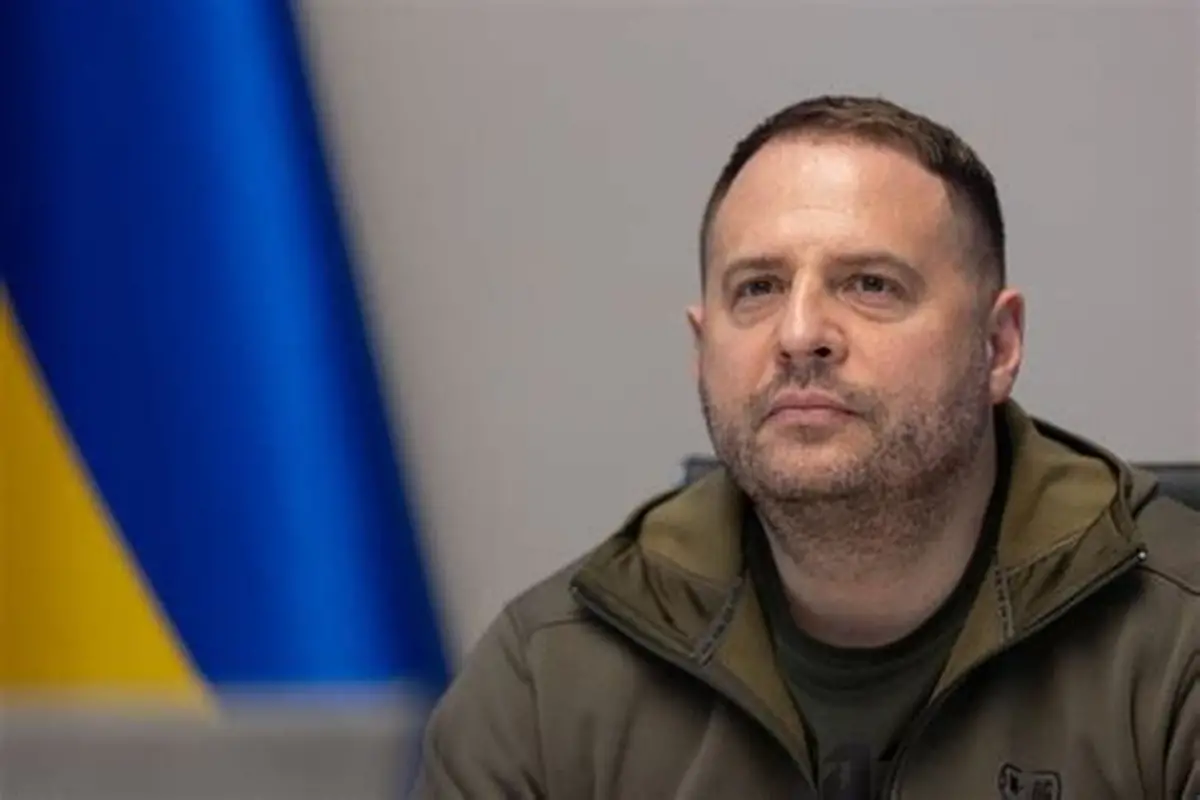
Last Friday, Andriy Yermak resigned. If you haven't heard of him, he was the head of Ukraine's Presidential Office and Zelensky's right-hand man for fifteen years. Hours before his resignation, anti-corruption investigators had searched his residence inside the presidential compound in Kyiv.
The facts are straightforward enough. There's been an investigation running for fifteen months into an alleged kickback scheme worth a hundred million dollars in the energy sector, specifically involving Energoatom, the state nuclear monopoly. The accusation is that a group was skimming ten to fifteen percent off every contract, including those for building fortifications against Russian attacks on infrastructure. This while millions of Ukrainians endure daily blackouts.
The alleged mastermind is Tymur Mindich, a former business partner of Zelensky himself, who has since fled the country. Two of Yermak's former deputies left the government in 2024 following similar investigations.
Here's the curious bit: Yermak himself wasn't formally placed under investigation. No notice of suspicion, no charges. He resigned anyway.
The timing is rather interesting. The search came the day after Yermak had been in Geneva negotiating with Trump's envoy on the Ukraine peace plan.
Those are the verifiable facts. What happens next depends entirely on who's telling the story.
The pro-Western lens
Through this filter, the story becomes a demonstration of democratic strength. Ukraine's anti-corruption institutions work. They're independent. They go after even the most powerful. Zelensky is showing leadership by sacrificing his closest ally. Ukraine is doing its homework, meeting the EU's conditions for accession. The implicit message: they deserve our support, they're not like Russia.
The European Commission spokesperson duly noted that the searches "show that anti-corruption agencies are doing their job."
The Russian lens
The same sequence of events tells the opposite story. A regime rotten to the core, where the president's inner circle pockets bribes on defence contracts while citizens die under bombardment. Western money ending up in oligarchs' pockets. Zelensky surrounded by thieves, or part of the system himself.
Kremlin spokesman Peskov commented that the scandal is "swaying Ukraine's political system in all directions" with "very negative consequences." The message: pointless to negotiate with these people.
The EU institutional lens
Brussels reads it differently again. Conditionality works. Pressure produces results. Demanding anti-corruption reforms as a prerequisite for accession is having concrete effects. The process, however slow and imperfect, is transforming Ukraine.
It's a self-legitimising narrative: our diplomatic tools work, our strategy is correct, carry on.
The sceptical lens
Here the story turns rather more cynical. Yermak as the perfect scapegoat, whose sacrifice serves everyone. Zelensky offloads responsibility. The EU can applaud without having to take awkward positions on the peace negotiations. The Americans have a clean exit if talks collapse. The Russians get confirmation of their narrative. Ukrainian MPs who were threatening to split the party got the head they wanted.
The post-Geneva timing isn't coincidental. Someone wanted this outcome precisely now. Who? Impossible to say with certainty. But the incentives converge rather suspiciously.
The point isn't which version is true
The point is that all four use the same facts. None of them lies. Each selects, emphasises, contextualises differently. And each is perfectly coherent internally.
If you get your news primarily from Western outlets, you "know" that Ukraine is fighting corruption. If you follow Russian media, you "know" that Ukraine is a failed state. If you work in European institutions, you "know" the strategy is working. If you're a cynical analyst, you "know" it's all theatre.
Four parallel realities, one sequence of events.
The mechanism underneath
What we're observing doesn't require conspiracy theories. What it requires is something we might call convergent opportunism: each actor pursues their own incentives, interprets through their own frame, communicates according to their own agenda. The aggregate result looks orchestrated but emerges spontaneously from aligned interests.
NABU investigators have incentives to demonstrate independence and justify their existence. Maximising visibility by hitting a big target at the right moment is entirely rational. Zelensky has incentives to sacrifice an ally to preserve external credibility. The EU has incentives to applaud. Russia has incentives to gloat. Nobody needs to coordinate with anyone.
This is why asking "who's behind it" is often the wrong question. The better question is: what incentive structures produce this outcome?
What this means if you want to understand
It means that media literacy today isn't about knowing "what happened." Everyone knows that. The facts are public. Literacy is recognising that every source constructs a different reality from the same building blocks, and asking yourself: what interpretive frame am I being offered? Which facts are being emphasised and which downplayed? Who benefits from this interpretation?
Not to become a cynic who believes nothing. But to avoid automatically believing the first version that confirms what you already think.
A genuine question
I don't have certainties to sell on this case. I don't know if Yermak is guilty or innocent. I don't know if the timing was orchestrated or emerged spontaneously. I don't know which of the four narratives is closest to reality. Probably none of them captures it entirely.
What I do know is that watching how the same news fragments into parallel realities is more instructive than the news itself.
What do you see? Which lens seems most convincing to you, and more importantly, why?