Preparing for the unpredictable
Posted on: 26 January 2026
Any CrossFitter knows very well this sentence, like a mantra, nut it seems that it is really universally applicable.
There is a global consensus forming that nobody is articulating publicly. You can read it in capital flows, not ministerial statements. You can see it in the charts, not the press releases. And it tells a story that contradicts the "unpredictable uncertainty" narrative that analysts and commentators use to justify their inability to read the signals.
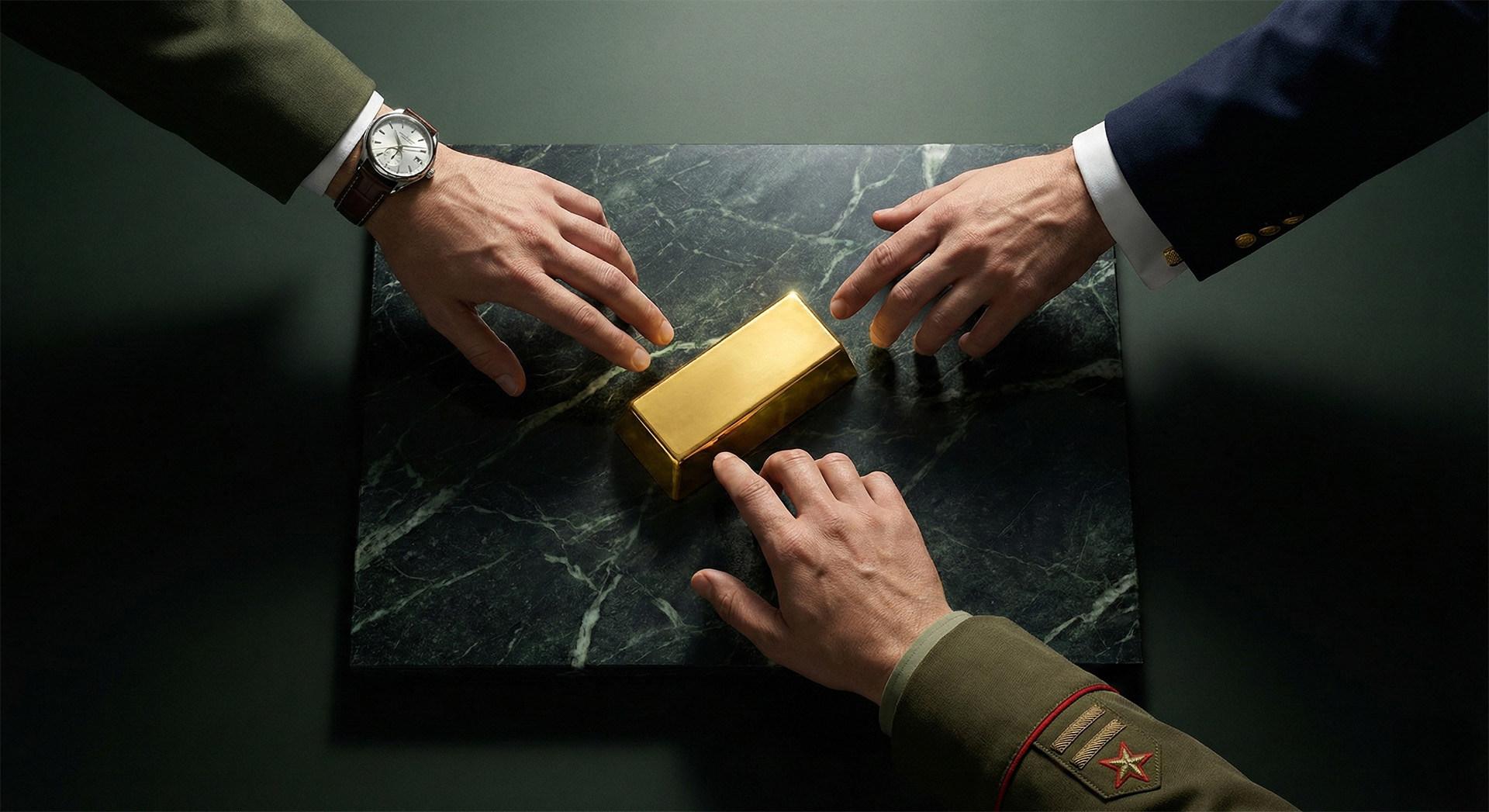
This week gold surpassed $5,100 per ounce, nearly doubling in twelve months. The Swiss franc touched 0.78 against the dollar, levels not seen since 2011. And in China, Xi Jinping had Zhang Youxia arrested: the general whose own family called him a "sworn brother", leaving the Central Military Commission with just one officer out of six still in post. Three apparently unconnected events that are in fact three symptoms of the same systemic pathology.
Robin Brooks, senior fellow at the Brookings Institution, called the precious metals rally "breathtaking and profoundly scary". The key word is the second one. What concerns the more sophisticated observers is not the magnitude of the movement, but its nature. When gold, silver, platinum and the Swiss franc move in unison, ignoring traditional fundamentals, we are not watching a trade. We are watching a vote.
The Swiss franc offers a particularly instructive case. Under normal conditions, a currency with rates close to zero should weaken against currencies with higher yields. The differential between Switzerland and Japan would suggest capital flowing out of Zurich towards Tokyo. The opposite is happening: the franc is strengthening against the yen despite Japanese yields rising and Swiss yields remaining flat. Traditional models no longer work because the dominant variable is no longer yield. It is survival.
Goldman Sachs has raised its gold forecast to $5,400 by year end, with $6,000 as a possible scenario. J.P. Morgan estimates central bank purchases at around 585 tonnes quarterly in 2026. China has extended its buying streak to fourteen consecutive months. These are not retail hedge managers chasing momentum: these are sovereign institutions systematically reducing their exposure to the dollar-based monetary system.
What are they preparing for?
The answer comes, paradoxically, from Beijing. Zhang Youxia's purge represents the culmination of a process that has seen Xi remove five of the six generals appointed to the Central Military Commission in 2022. The charges include passing nuclear secrets to the United States and systemic corruption. But the real story is not in the charges, it is in the mechanism.
Zhang was not just any official. He was the last Chinese general with real combat experience, a veteran of the 1979 Sino-Vietnamese war. He was the son of Zhang Zongxun, a comrade-in-arms of Xi's father during the Long March: the families had known each other for three generations. If Xi has eliminated him, the selection criterion is no longer competence, historical loyalty or family ties. It is something else we cannot yet define precisely, but which evidently matters more than everything else.
Analysts estimate that rebuilding the chain of command will take at least five years. Meanwhile, the People's Liberation Army operates with a decimated leadership precisely while tensions over Taiwan remain elevated and competition with the United States intensifies. Xi is creating exactly the fragility he seeks to prevent.
It is the classic paradox of autocratic autoimmunity: the regime's immune system, designed to eliminate threats, begins attacking its own vital cells. Stalin purged his generals on the eve of Operation Barbarossa. Mao devastated the officer corps during the Cultural Revolution. The result is always the same: operational paralysis at the moment when maximum capability is needed. Total control produces total impotence.
But there is an element that makes the current situation different from historical precedents. Xi is not simply consolidating power: he is dismantling the institutional architecture that would allow any successor to govern effectively. Each purge reduces the available talent pool. Each arrest generates new cascading investigations: the Wall Street Journal reports that thousands of officers linked to Zhang and Liu Zhenli are now under scrutiny, their phones seized. The system is consuming itself from within.
And this is where the threads reconnect. The China that is frantically buying gold is the same China that is destroying its own military machine out of internal fear. The behaviour seems contradictory only if one assumes Beijing is preparing for offensive action. It becomes perfectly coherent if one assumes it is preparing for a defensive scenario: a world in which international institutions no longer function, in which alliances are fluid, in which the only security is that which you can physically touch.
Gold pays no dividends. The Swiss franc yields less than inflation. Yet trillions of dollars are moving towards these assets. The question is not "what will it yield", but "will it still exist when I need it".
This is the true nature of the referendum underway. It is not a vote on Fed monetary policy or Trump's tariffs. It is a vote on the resilience of the system built after 1945, on the institutions that have guaranteed seventy years of relative global stability, on the confidence that contracts will be honoured, that currencies will hold value, that borders will remain where they are.
The signals are everywhere for those who know how to read them. Trump threatens to acquire Greenland and impose tariffs on Europe. The Federal Reserve's independence is being publicly questioned. The US government risks shutdown over a dispute in Minneapolis. Europe seeks to build strategic autonomy while its principal security guarantor becomes a source of instability. And meanwhile everyone is buying gold and Swiss francs as if the calendar had an expiry date.
The irony is that none of this is truly unpredictable. The patterns are clear to anyone who has studied historical precedents. Central bank accumulation of gold reserves before major systemic shocks is documented. Swiss franc behaviour during crises is predictable to the point of being almost tedious: after the 2000 tech bubble and after the 2008 crisis, it appreciated by roughly 70% in the subsequent three to four years. We are not observing black swans. We are observing patterns repeating with different actors and contexts.
What we call "uncertainty" is often analytical laziness. It is more comfortable to say "markets are unpredictable" than to admit we have not done the pattern recognition work. It is more reassuring to attribute movements to "sentiment" than to recognise how billions of rational decisions are converging towards the same conclusion.
The system is pricing in a transition. We do not know exactly how it will manifest, we do not know when, we do not know who will emerge better or worse. But we know it is happening because capital moves before words. Central banks accumulate before politicians admit. Prices incorporate before analysts explain.
Those managing significant assets, those making decisions with long-term consequences, those with responsibilities to others, would do well to ask themselves not "what will happen" but "what are the aggregate behaviours of those with more information than me telling me". The answer is in the gold and franc charts. It is in Beijing's purges. It is in the speed at which apparently safe assets are losing their status.
One need not predict the future. One need only know how to read the present.