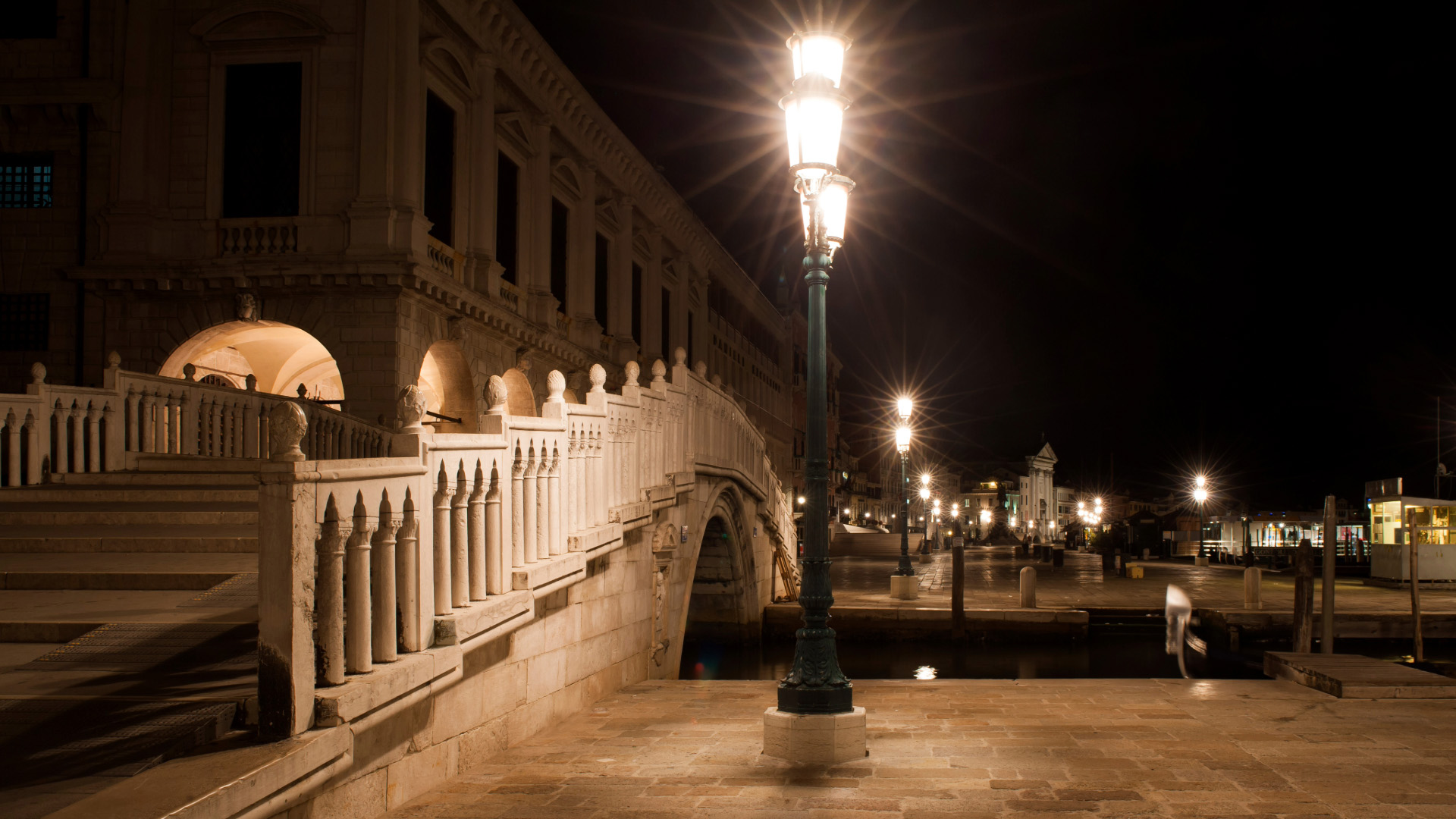
Europe is looking for its keys under the lamppost
Posted on: 3 December 2025
There is a cognitive bias known as the Streetlight Effect. It describes the tendency to search for solutions where it is easiest to look, not where they are actually found. The name derives from a classic behavioural observation: the man who searches for his keys under the lamppost not because he lost them there, but because that is where the light is.
It is a profoundly human distortion. And it explains with surgical precision what Europe is doing with frozen Russian assets.
Three hundred billion in search of a destination
Three hundred billion euros. A figure that struggles to fit inside one's head. Blocked in Western accounts since February 2022, when the invasion of Ukraine triggered sanctions. The bulk of it, approximately one hundred and ninety-five billion, sits at Euroclear in Belgium, one of the most important clearing houses on the planet. The securities have almost entirely matured into cash. They generate interest. Approximately six billion euros in 2024 alone.
The political pressure is simple and direct: let us use this money for Ukraine. The reasoning seems unassailable. Why burden Western taxpayers when we can use the aggressor's funds? Why debate budgets when the solution is right there, within reach?
But this is where the problems begin.
The European Central Bank, through Christine Lagarde, is applying the brakes. Belgian Prime Minister Bart De Wever has called confiscation "an act of war". Euroclear has warned that any plan would be perceived by the markets as equivalent to confiscation, with all the consequences that entails. In December, the European Council might reach a decision on the "reparations loan" of one hundred and forty billion proposed by the Commission. But agreement is far from certain.
Who are we actually hitting
The question no one wants to ask aloud is this: are we hitting those responsible, or are we hitting those who are reachable?
The frozen assets do not belong to Vladimir Putin. They belong to oligarchs, to financial holding companies, to the Russian Central Bank. They are reachable because they are in the West. Putin does not have a current account in Brussels. His money, assuming any of it is traceable, is elsewhere. In opaque structures. In jurisdictions that do not respond to our sanctions.
So we hit who we can hit. The Streetlight Effect in action.
The problem is that many of these oligarchs are not loyal Kremlin proxies. Some compete with Putin for spheres of influence. Some are in exile, more or less voluntary. Some collaborate with the regime purely for survival, because the alternative is the tenth-floor window. Treating them all as direct emanations of Putin is convenient on the communicative level, but wrong on the analytical level. And above all counterproductive on the strategic level.
Indiscriminately hitting anyone with a Russian passport and a Swiss account produces three predictable effects. First: it reinforces the Kremlin narrative that the West hates Russians as such, not the regime. Second: it eliminates potential internal allies, people who would have an interest in regime change and who now find their assets frozen regardless of their political position. Third: it is perceived as unjust because, in fact, it is.
The precedent we should remember better
The pattern has a historical precedent we should remember better.
In the 1990s, following the first Gulf War, the United Nations imposed a devastating sanctions regime against Iraq. The declared objective was to force Saddam Hussein to comply with international resolutions. The actual effect was a humanitarian catastrophe. Estimates vary, but we are talking about hundreds of thousands of deaths, mostly children, from malnutrition and treatable diseases. The "Oil for Food" programme was a belated attempt to mitigate the damage, and ended up mired in a corruption scandal of its own.
Saddam remained in power until 2003, when it took a military invasion to remove him. Sanctions had not touched him. They had hit those who could not protect themselves.
It was precisely the Iraqi experience that generated the concept of "smart sanctions". The idea was simple: instead of strangling entire economies, surgically target the decision-makers. Freeze dictators' personal accounts. Ban regime members from travelling. Block supplies of strategic goods. Spare the civilian population.
Thirty years later, we have returned to the previous model. Broad, indiscriminate sanctions hitting entire economic sectors and anyone unfortunate enough to find themselves on the wrong side of the border. With the difference that this time the targets are not voiceless Iraqi farmers, but oligarchs with lawyers in London. The legal resistance will be fierce. And the systemic consequences potentially worse.
The invisible infrastructure of trust
Because here comes the second level of the problem.
The ECB is not obstructing out of caprice. It is protecting something that politicians struggle to see: the infrastructure of trust upon which the entire European financial system rests.
The euro is not backed by gold. It is backed by the certainty of law. It exists as a global reserve currency because the rest of the world believes, or believed until yesterday, that the Eurozone is a system based on certain rules. That contracts will be honoured. That assets deposited in Europe are safe regardless of the depositor's political sympathies.
If Europe uses frozen sovereign assets as collateral for loans to third parties, knowing that those loans will effectively be repaid by liquidating those same assets, it is executing confiscation with intermediate steps. The message to every central bank on the planet is clear: your money is safe with us, as long as we do not disagree with you.
China is watching. Saudi Arabia is watching. India is watching. Brazil is watching. Not out of solidarity with Moscow, but out of pure risk calculation. If the euro becomes a political weapon, these countries will seek alternatives to protect their reserves. The process is already underway. De-dollarisation and de-euroisation are not conspiracies; they are prudent risk management by rational actors.
Two time horizons, no owner
The friction between Frankfurt and Brussels is not a conflict between good and bad actors. It is a conflict between different time horizons.
The political objective is to finance the war today without budget impacts. The ECB's objective is to maintain the euro's credibility tomorrow. Both are right from their own point of view. No one owns the whole problem. And when no one owns the whole problem, the problem is not solved. It is shifted.
Institutional entropy: the enemy within
But the inability to manage external complexity is only half the picture. There is a principle that links the Russian assets question to the state of European institutions: institutional entropy. It is the process by which systems designed for a specific context progressively degrade when that context changes. The instruments remain nominally functional, but lose the capacity to address actual reality.
Europe finds itself simultaneously managing two forms of complexity it cannot process: external geopolitical flows and internal illicit flows. And on both fronts, it deploys inadequate instruments.
The case of Didier Reynders is the empirical demonstration of this principle.
Reynders was European Commissioner for Justice from 2019 to 2024. The guardian of the Union's institutional integrity. In October 2025, he was charged with money laundering. Approximately one million euros, according to the investigation. Seven hundred thousand euros deposited in cash into his personal account between 2008 and 2018. Another two hundred thousand laundered through a method that reveals a systemic failure.
The bug no one spotted
The method was simple: buy lottery tickets with cash, deposit the winnings as legitimate income. For almost a decade. While Reynders was the minister responsible for the Belgian National Lottery.
The temptation is to dismiss the affair as grotesque. A former Justice Commissioner laundering money with scratch cards. But stopping at the surface means missing the underlying mechanism.
The right question is not "how could he do it". The right question is "why did no one stop him".
Reynders was a Politically Exposed Person, a PEP in anti-money laundering terminology. International regulations mandate enhanced controls on this category. Banks must monitor transactions, flag anomalies, apply more stringent verification procedures. On paper, the system was watertight.
In reality, ING Belgium is now under investigation for failing to report blatantly anomalous cash deposits for years. The National Lottery identified the suspicious pattern and communicated it to authorities in March 2022. Prosecutors did not respond until August 2023. Eighteen months of silence. Investigators then waited until the end of Reynders' European mandate, December 2024, to proceed with searches. Only in October 2025 did the formal charge arrive.
The compliance system did not fail through incompetence. It failed because it was designed to function on normal subjects, not on those who write the rules. When the controller is also the controlled, verification mechanisms become ceremonial.
When corruption becomes consequence
It is the same pattern as Qatargate, the bribery scandal that engulfed the European Parliament in 2022. Suitcases full of cash, NGOs used as screens for the passage of funds, MEPs selling influence to foreign governments. Three years later, the trial has not yet begun. Fifteen people charged, no convictions. An ethics body created in 2024 with no real investigative powers.
The return on investment for transgression is high. The risk of being caught is low. Punishment, when it arrives, is late and uncertain. When you design a system with these characteristics, corruption is not an anomaly. It is a consequence.
Thirty years of implicit trust
Europe built its institutions over the last thirty years starting from an implicit assumption: that all participants shared a certain ethic. That the world was moving towards normative convergence. That rules would be respected because respecting rules was in everyone's interest.
Today that assumption meets reality. The war in Ukraine. The aggressiveness of emerging powers. State actors using money as an extension of diplomacy. Open systems designed for cooperation finding themselves exposed to predation.
In Frankfurt, we discover that we cannot use our currency as a weapon without destroying the trust on which it is based. In Brussels, we discover that we cannot have institutions open to the world without protecting them with adequate control mechanisms. In both cases, fragility hides at the points of contact between different systems.
When a rigid system, designed for stability, meets a fluid and unscrupulous system, the rigid system suffers. Either it breaks, or it gets infiltrated.
The solution is not moral indignation. Indignation is a sentiment that clouds the view. The solution is to redesign the architecture. To move from a design based on implicit trust to a design based on continuous verification. To assume bad faith as a standard operating condition, not as a scandalous exception.
But this requires admitting that the previous design was wrong. That thirty years of "end of history" produced institutions unfit for the world that has since emerged. That adding an ethics committee or a transparency register is not enough to solve structural problems.
For now, Europe continues to look for its keys under the lamppost. It hits who it can hit, not who it should hit. It debates legal technicalities while the problem escapes. It expresses outrage at corruption while the system that produces it remains intact.
When you look for your keys where there is light instead of where you lost them, you do not find them. But at least you can say you were looking.