Eleven days without flow
Posted on: 7 March 2026
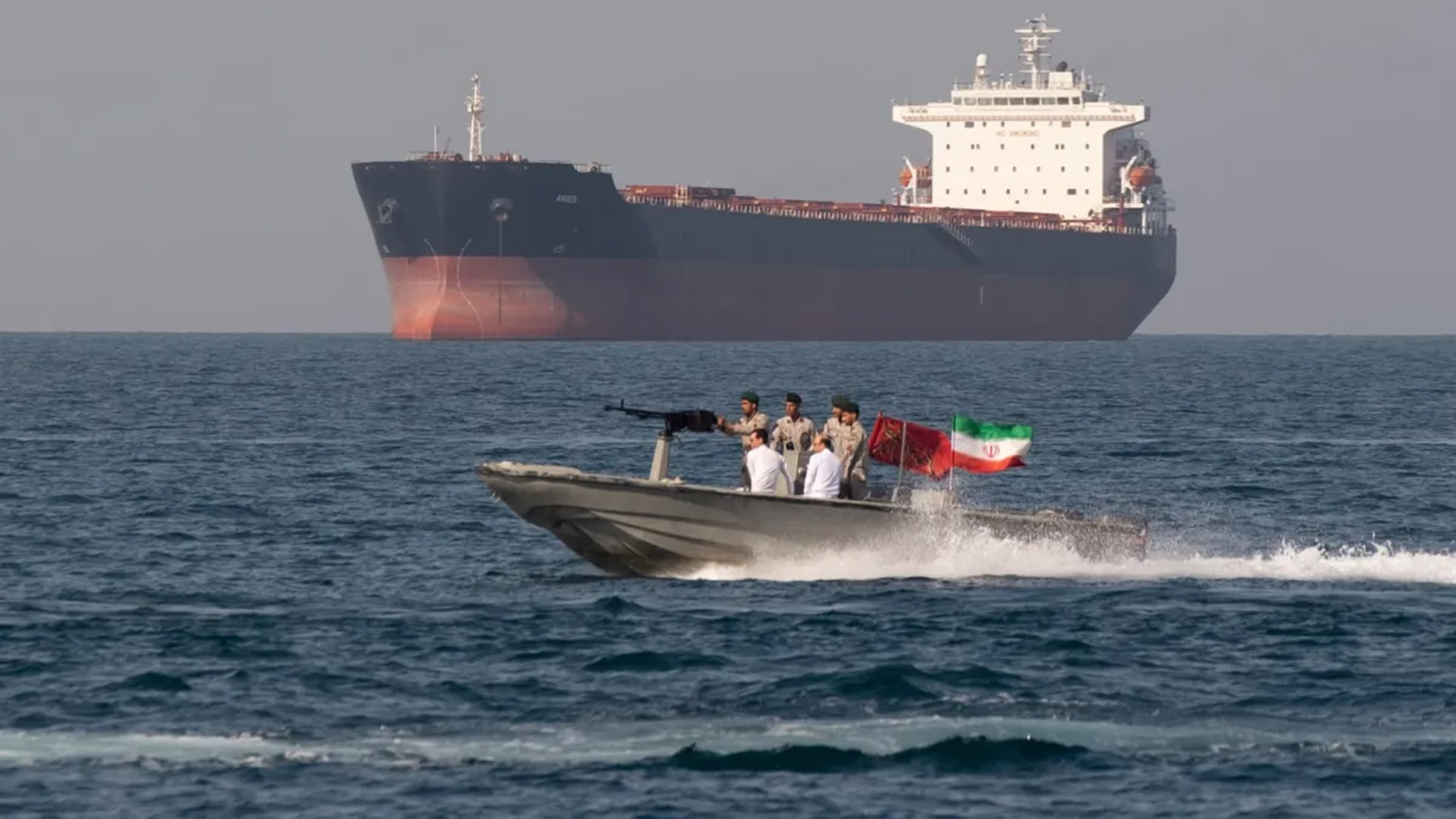
Eleven days of de facto closure of the Strait of Hormuz. Not a formal blockade with Iranian frigates firing on anything that moves: a closure by insurance withdrawal, more elegant and equally effective. Iran did not need a naval cordon. A handful of drone strikes in the vicinity of the strait was sufficient to persuade underwriters and shipping companies that transit was not worth the risk. The practical result is identical. Tankers do not pass. Gas does not arrive.
What is absent from the European debate is a precise accounting of the damage. Governments speak of "energy impacts", of "price pressures", of "supply risks". These are circumlocutions. The concrete numbers, disaggregated by sector and by country, tell a more specific and more uncomfortable story.
Begin with gas, which for Europe is the most acute problem. One fifth of the world's LNG supply transits through the strait, and thirty percent of Europe's jet fuel either originates from or passes through that corridor. Qatar is the critical supplier: Europe receives between twelve and fourteen percent of its LNG from Doha, all of it via Hormuz. That is not the majority share, but it is the marginal share, and in energy markets it is the marginal barrel that sets the price. Qatar Energy has already suspended production of several derivatives following drone strikes on some of its installations. This is not a total interruption, but it is a signal of how thin the margin is before it becomes one.
European gas markets priced this in immediately. TTF futures, the European benchmark, have already incorporated part of the risk, but Kpler data indicates that closures lasting more than one week push spot LNG prices up between fifty and seventy percent. We are on day eleven. The week has been comfortably exceeded. Companies buying on spot markets rather than on long-term contracts are already feeling the difference in real energy costs. Energy-intensive industries without guaranteed multi-year supply agreements are renegotiating in deteriorating market conditions.
But gas is only the most visible component. Roughly one third of the world's fertilisers, including sulphur and ammonia, travel through the strait. For Europe, which imports fertilisers for agriculture, the impact arrives with a lag of several weeks but it does arrive. Around thirty percent of global ammonia production is involved in or exposed to this conflict. The cost of European food production is beginning to move, quietly, in the weeks when public attention is fixed on missiles and Iranian succession.
The second asymmetry that governments are not mapping concerns the distribution of damage across European countries. Not everyone pays the same. Italy, Greece, Spain, Poland and Belgium depend on the Strait of Hormuz for imports or for refining. Northern Europe, with direct access to the North Sea and Norwegian terminals, is structurally less exposed. Norway still produces around two million barrels per day: for those who can source from there, the crisis is a cost increase. For those dependent on the eastern Mediterranean supply chain, it is a physical availability problem.
This creates a quiet fracture inside the EU over how to respond to the crisis. Nordic countries can afford more graduated positions. Southern European countries, already structurally more exposed by geography, have a direct interest in rapid de-escalation that is independent of foreign policy principles. When Madrid refused to open its bases to American aviation, there was this calculation inside that decision alongside the international law principles Sanchez cited publicly. The fracture is not ideological. It is geographic.
The third asymmetry concerns time. Oil companies can absorb a slowdown of one to two weeks. Beyond that threshold, the damage changes in kind. Iraq, a major producer, is already closing some of its largest fields because without the ability to export via Hormuz there is nowhere to store extracted crude. When producers shut wells for lack of outlets, reopening them takes weeks. The market does not rebalance on the day the strait reopens: structural damage accumulates faster than it repairs.
Alternatives exist but are partial. The Saudi East-West pipeline has a theoretical capacity of five million barrels per day to Yanbu on the Red Sea, with the possibility of extending to seven million by repurposing parallel infrastructure. But the Red Sea is only accessible if the Bab el-Mandeb strait remains open, and the Houthis have already announced the resumption of attacks on commercial shipping along that route. Closing Hormuz while leaving Bab el-Mandeb open is technically possible but operationally unstable: they are two vectors of the same conflict. The Cape of Good Hope adds weeks of transit and significant costs, but only works for oil not already trapped inside the Persian Gulf. For the tankers anchored and waiting inside the Gulf, no alternative route is available until the strait reopens.
There is a final effect that almost nobody is analysing. The crisis is structurally improving Russia's competitive position in oil markets. With Middle Eastern barrels disrupted by logistics, India and China have strong incentives to increase purchases of Russian crude, abandoning the moderation of recent months applied under Western diplomatic pressure. Europe, which built an architecture of energy sanctions against Moscow at considerable political cost, finds itself in a paradoxical position: the war its principal allies chose to fight is indirectly strengthening the economic resilience of the country those sanctions were designed to weaken.
This is not an intended consequence. It is a structural one. When you design a war without accounting for the interactions between energy, financial and geopolitical systems, the unintended consequences tend to exceed the intended ones.
Hormuz is not simply a tactical lever that Iran threatens or the United States can defend. It is a transmission belt between regional war and the global economy. Eleven days demonstrate this with numbers, not metaphors. The question European governments are not asking directly enough is how long before "energy cost" becomes "industrial crisis". The answer depends on the duration of the closure, and the duration depends on which side, Washington or Tehran, decides first that the price is too high.
So far, neither has.