On 10 May 1975 Sony put the Betamax on sale in Japan, a cassette video recorder designed for families, with a tape that recorded for an hour at most. Sony was convinced that was enough, because an hour had always been the unit of television programming, and in most other respects the product had plenty to boast about, starting with a slightly sharper picture and a cassette more compact than its rivals'. The following year Japan's JVC launched VHS, which recorded for two hours and so fitted a whole film or an American football game on a single tape. Sony was left with nothing but the advantage in quality, the market decided to reward something else, and within a few years Betamax had become the textbook case of the better product that loses.
Fewer people remember what happened next. On 7 August 1982 Sony launched Betacam, a system for broadcasters that used the same cassette as Betamax, identical in size, but recorded the signal in a completely different and incompatible way. News crews, who until then had lugged around U-matic recorders with three-quarter-inch tape, finally had a camera with the recorder built in, light enough to run after a story. Betacam became the most widely used format in news gathering, and with its later versions, up to Digital Betacam in 1993, Sony held a near monopoly on professional video until tape disappeared from the studios. I used it myself when I worked in television, where for a long time it was simply the everyday tool, and curiously the professionals accepted the very flaw that had doomed Betamax at home. A cassette that held about three hours on a domestic recorder took only half an hour of Betacam footage, but what they cared about was picture quality far more than running time. In the home, meanwhile, nothing survived. Sony stopped making Betamax recorders in 2002 but kept selling the cassettes until March 2016, fourteen more years, for anyone who still had one switched on in the living room. What had moved from the sitting room to the television studio was the container rather than the product, together with a new customer who valued different things.
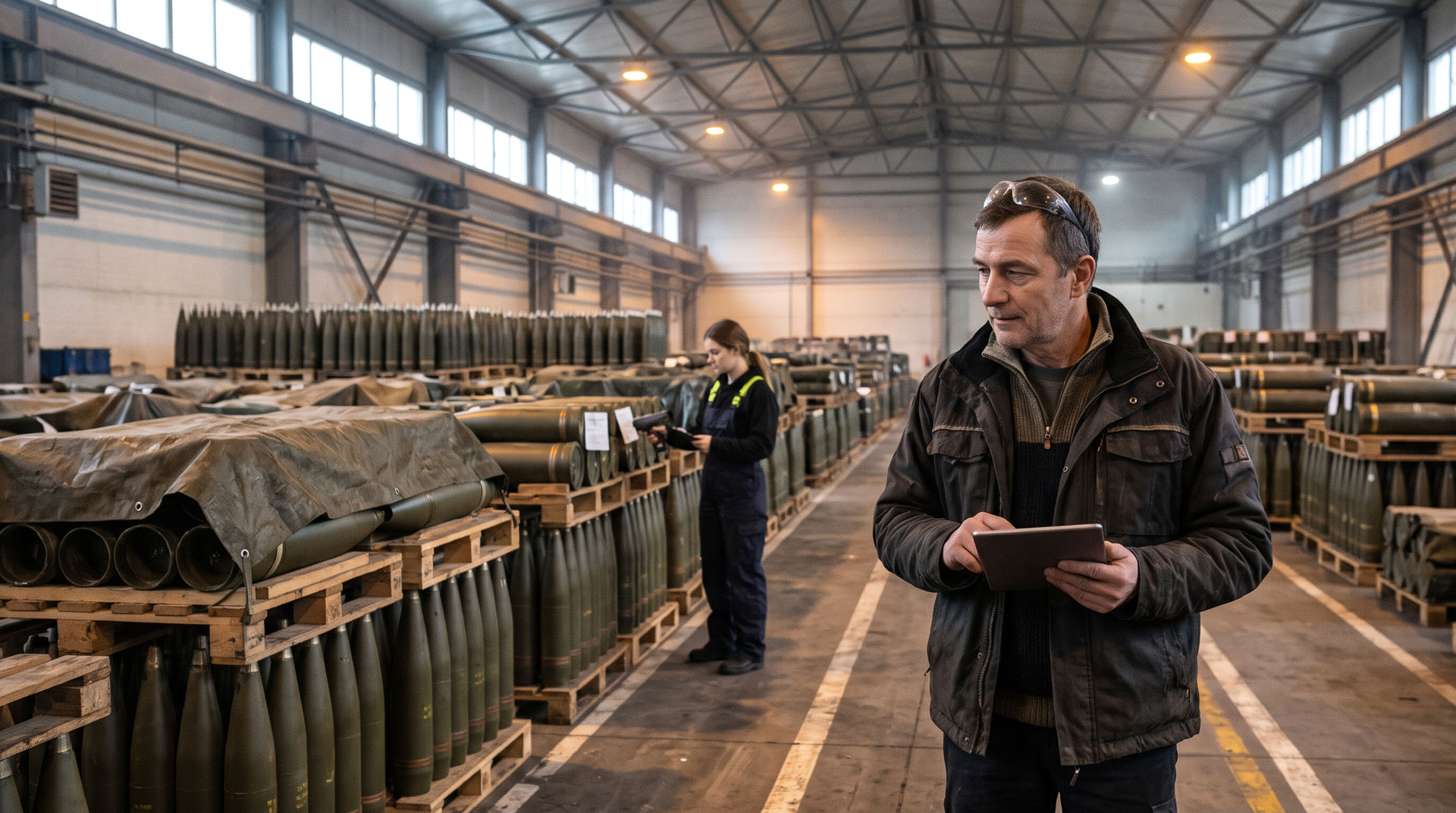
This story came back to me while reading the analysis the Financial Times published yesterday on Europe's ammunition makers. In the early stages of Russia's full-scale invasion of Ukraine, according to estimates by Agency Partners, an independent research provider, Europe could produce perhaps 465,000 rounds of 155mm a year, the standard NATO artillery calibre, while in early 2023 the Ukrainian army was firing about 5,000 a day. Anyone with a production line could sell everything they made, so governments and industry set about building factories at a pace the continent had not seen in decades. Since then European capacity has risen by 160% and could more than double again after 2028.
In the meantime the war has changed. At the end of January Volodymyr Zelensky said that in 2025 drones had carried out more than 80% of Ukraine's strikes on enemy targets, and in March the Institute for the Study of War, the American think tank that follows the conflict day by day, reported that Ukrainian drone units had shifted their attacks away from Russian infantry towards artillery, logistics and the operators of enemy drones. A gun that fires close to the front line gets found, so it has to pull back, and from further away it needs extended-range rounds, which are more complex to make and more expensive. The drone has not taken work away from artillery. It has pushed it back and changed its price list.
On 11 November CSG, the Czech defence group run by its chairman and chief executive Michal Strnad and listed since January, showed in its quarterly figures what that means. In the third quarter it speeded up sales of standard-range rounds from inventory at lower prices than in the past, because demand had shifted towards long range, then cut its expected operating margin for the year to about 21% from the 24-25% it had previously indicated. Almost all the ammunition it made in-house in the same quarter was already extended-range, and its stated goal is to reach 100% by the end of 2027, producing its own explosives and propellants as well. After the announcement the shares fell by as much as 23% during the session. According to the FT, CSG's valuation, which approached €33bn on its first day of trading, has been cut by almost 70% since March on analyst estimates collected by S&P Capital IQ.
Rheinmetall, the German group that in recent years has opened or started building ammunition plants across half of Europe, is not doing much better. Its weapons and ammunition division is still growing fast, but third-quarter sales and profitability came in below consensus forecasts, according to analysts at Bernstein, and its forward price-to-earnings ratio, the gauge the market uses to measure its faith in a company's future, has more than halved since the start of the year. Over the past six months, according to Visible Alpha, analysts have trimmed a quarter off their estimates of Rheinmetall's operating profit for 2030 and a fifth off CSG's, while for Britain's BAE Systems, France's Thales and Italy's Leonardo, which are less exposed to ammunition and sell mainly complex equipment with long delivery times, the same estimates have edged up.
The FT puts two problems together that I think need separating, because they will end differently. The first is the inventory, where the standard rounds already made are the Betamax recorders of this story, objects that work perfectly well but that the main customer no longer wants at the old price, so they are sold off cheaply, as CSG has just done. The second is the plants, which look more like the cassette. The extended-range shell is often built from the body of the standard one, redesigned with a more aerodynamic profile and with a base bleed unit screwed onto the bottom, a small gas generator that reduces air drag and lengthens the trajectory by 20-35%, while the rest of the distance comes from a longer barrel and a more powerful propelling charge. What is really in short supply is the powder. According to the European Policy Centre, a Brussels think tank, in June 2025 Europe's handful of nitrocellulose producers, nitrocellulose being the raw material of propellants, could make between 4,500 and 10,000 tonnes a year against a need of close to 20,000. Among the main ones are France's Eurenco and Nitrochemie, controlled by Rheinmetall, which also has a plant at Wimmis in the Swiss canton of Bern. Anyone who judges an ammunition maker today by the number of shells it can turn out in a year is counting cassettes, while the value has moved to whoever controls what goes inside them.
Sony's story teaches something else as well, and it is less comfortable for those who invested. Seven years passed between Betamax and Betacam, and it took a deliberate decision to design a new product around an old object and go looking for a customer who had not existed before. None of it happened by itself. Europe's factories were sized for a single consumer with an exceptional appetite, Ukraine at war, while on 10 and 11 November in Abu Dhabi Russian and Ukrainian negotiators sat down together for the first time in nine months, with American mediation. Nobody knows how it will end, but a ceasefire would leave those plants mainly with the demand from European armies that need to rebuild their own stocks.
If standard 155mm still has a new customer to find, the way Sony's cassette found the news crews, that is where it should be looked for, among buyers who care more about the cost of each round than about how far it travels. There is plenty of room to fill, given that when it announced its listing CSG put Europe's 155mm stockpiles at 10% of the level NATO requires. What remains to be seen is whether an arsenal filled with the round the front has stopped wanting is a reserve or simply a warehouse moved somewhere else.