An italian satisfying lesson in game theory
Posted on: 28 November 2025
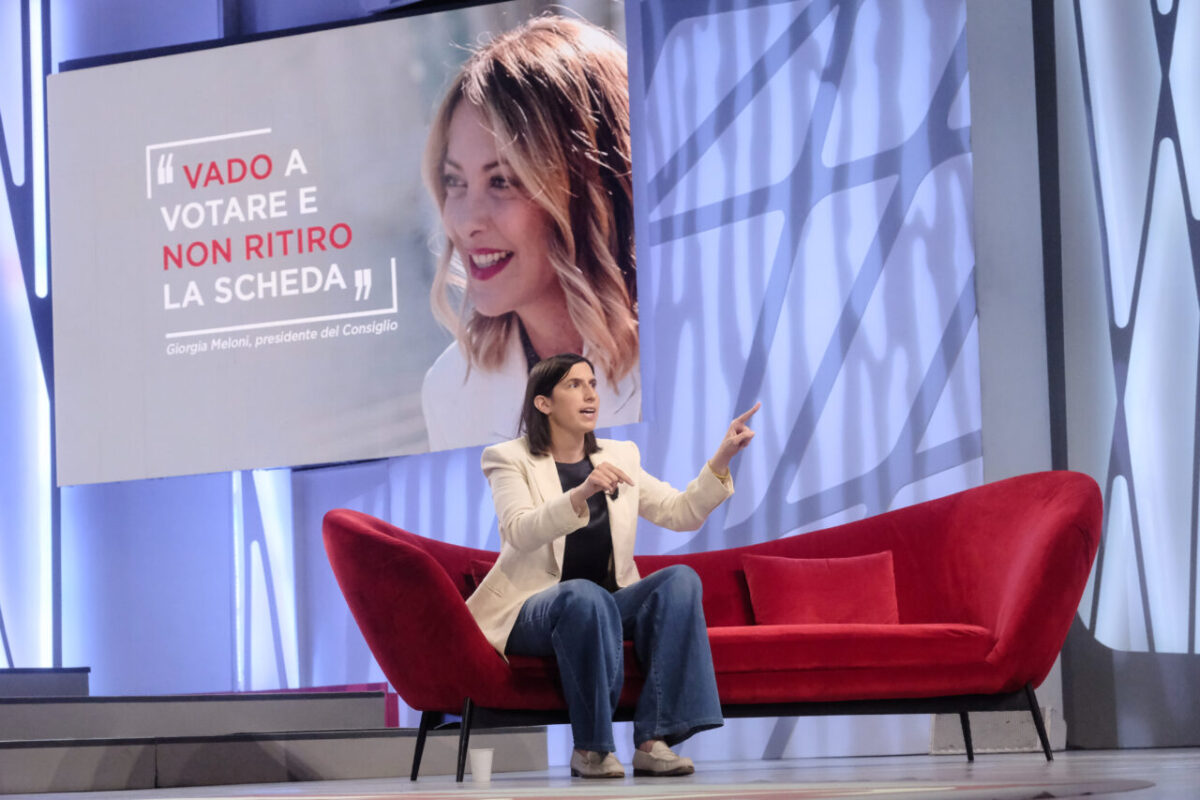
Wednesday evening, Schlein agrees to attend Atreju, but only if Meloni faces her in a head-to-head debate. Thursday evening, Schlein is "the one who refused the confrontation."
Twenty-four hours. Complete frame reversal.
It's not magic. It's not luck. It's pure mechanics. And if you watch it without supporting either side, you can see exactly how it works.
What happened between Wednesday and Thursday over the Atreju affair is a perfect case study. Not because anyone won or lost morally. But because it shows precisely how certain mechanisms operate when you observe them without bias.
The players
For those unfamiliar with Italian politics, here's what you need to know.
Giorgia Meloni is Italy's Prime Minister, leader of Fratelli d'Italia, the right-wing party that won the 2022 elections. She's been in politics since age fifteen, served as a minister at twenty-nine, and has thirty-three years of continuous political experience.
Elly Schlein leads the Partito Democratico (PD), Italy's main centre-left opposition party. She became party leader in 2023, has eleven years in politics, and has never held an executive government role.
Giuseppe Conte leads the Five Star Movement (M5S), Italy's second opposition force. A law professor with no political background, he became Prime Minister almost by accident in 2018, then party leader after leaving government. Seven years in politics total.
Schlein and Conte are nominally allies — both oppose Meloni's government. But they're also competitors. Both want to be the centre-left's candidate for Prime Minister in 2027. This matters.
Atreju is Fratelli d'Italia's annual political festival, held in Rome. It's become a significant event where the governing party invites speakers from across the political spectrum — a show of confidence and openness.
Now you have everything you need.
The sequence of events
Wednesday 26 November: Fratelli d'Italia invites Schlein to Atreju. Schlein accepts, but sets a condition: "I'll come only if there's a direct confrontation with Meloni."
Thursday 27, 7pm: Meloni responds with a social media post. She accepts the debate, but adds Conte. Two explicit reasons. First: "Conte, unlike Schlein, has attended Atreju in the past without imposing any conditions." Second: "It's not for me to determine who should be the leader of the opposition, when the opposing camp hasn't yet chosen one."
Forty minutes later: Conte accepts. "I'm always happy to engage in dialogue."
Thursday evening, on the talk show Piazza Pulita: Schlein refuses. "It's ridiculous. She wants a coalition debate? Then bring Salvini too."
End of story. Donzelli, FdI's head of organisation, closes the matter: "We're sorry Schlein has declined. When the opposition has a single recognised leader, we'll be happy to arrange the debate."
All within thirty hours.
What actually happened
Let's look at the mechanics, not the statements.
Schlein wanted something specific: to be recognised as leader of the opposition by the leader of the majority. A one-on-one confrontation with the Prime Minister, at the Prime Minister's festival, in front of the Prime Minister's audience. Symbolic coronation.
Meloni responded by denying exactly that, without appearing discourteous. "I'm ready to engage with the opposition" — not with Schlein. "It's not for me to determine who the leader is" — translation: I don't recognise you in that role.
And then the decisive move: adding Conte.
Why does it work? Because it forces Schlein to choose between two losing options.
Option A: accept the three-way format. In that case, she implicitly admits she's not the sole leader, shares the stage with Conte, risks being overshadowed by someone with more television experience.
Option B: refuse. In that case, she becomes "the one who ducked the debate" — precisely the accusation she wanted to level at Meloni.
Schlein chose B. And the headline became: "Schlein refuses the confrontation."
The timing tells you everything
There's a detail worth noting. Meloni responded forty minutes after Conte had already signalled he would accept. Not before. After.
This means she already knew how it would play out. She waited for Conte to commit, then published her post knowing the sequence would be: Meloni proposes, Conte accepts, Schlein has to decide.
If Conte had refused first, Meloni could have proposed a different format. But Conte accepted. And at that point, Schlein was trapped.
Thirty-three years in politics versus eleven. You can see it in the details.
Conte: the third player who wins?
While Schlein and Meloni were squaring off at a distance, Conte played his own game.
He accepted immediately, without conditions. He reminded everyone he'd already requested a debate in the past and been told no. He positioned himself as the reasonable one, available, collaborative.
He didn't attack Schlein. He didn't need to. He let her be the one who looked difficult.
The implicit message, for those who can read it: "I'm ready. It's Schlein who creates problems."
Conte and Schlein are allies on paper. But in this affair, they acted as competitors. Because they are. Both want to be the centre-left's candidate for Prime Minister in 2027. Every move by one is a threat to the other.
Meloni didn't create this dynamic. She simply exploited it.
Language as signal
It's worth comparing the tones.
Meloni: "Atreju has always been a house open to dialogue, even with those who think differently." Institutional register. The tone of a hostess welcoming guests.
Schlein: "It's ridiculous." "She's running away again." "Perhaps I'm more frightening now after the regional elections."
Who appears in control of the situation? Who appears to be reacting emotionally?
It's not a question of who's right. It's a question of how you appear to those watching from outside. And those watching from outside see one person calmly making a proposal and another person agitatedly refusing.
The phrase "perhaps I'm more frightening" is particularly revealing. Those who truly have power don't feel the need to declare it. Power is exercised, not claimed.
What this tells us about the structure
This affair isn't important for who won the round. It's important for what it reveals about the underlying structure.
First: the opposition has no recognised leader. If Schlein were the undisputed leader, Conte wouldn't have accepted a format that places him on equal footing with her. But Conte accepted, because he knows the contest for leadership is still open.
Second: Schlein and Conte compete with each other more than with Meloni. Within twenty-four hours, they found themselves on opposite sides of a tactical question. Not due to ideological differences. Due to calculations of reciprocal positioning.
Third: those who govern can afford to wait. Meloni was in no hurry. She let the others move, then responded when the picture was clear. Those in opposition must constantly prove something. Those in government can simply manage the situation.
Fourth: ultimatums only work if you have more power than the other party. Schlein set a condition thinking it would put Meloni in difficulty. But when you don't have enough negotiating leverage, the ultimatum backfires.
The question that matters
Does this affair change anything in the trajectory towards 2027?
No. It confirms it.
The mechanism we've seen in these twenty-four hours will repeat itself. Every opportunity for unity will become an opportunity for fracture. Every proposal from one will be read by the other as a threat. Every move by Meloni will be able to exploit this structural division.
Not because Meloni is a genius or Schlein and Conte are incompetent. But because the incentives are constructed this way. Schlein's success within the PD doesn't require Conte to win. Conte's success within M5S doesn't require Schlein to win. They can both "win" in their parties and lose the election together.
As long as the incentive structure remains this way, the mechanism produces this result.
A methodological note
Some might read this analysis as "pro-Meloni." It isn't. It's pro-observation.
Meloni played this hand well. But "playing well" doesn't mean "being right" or "being on the right side." It means understanding the game and moving accordingly.
Clinical analysis doesn't take sides. It observes mechanisms. And the mechanism here is clear: an actor with more experience and aligned incentives exploited a situation in which two actors with less experience and misaligned incentives found themselves competing with each other rather than with her.
It happens in politics. It happens in business. It happens wherever there are power dynamics.
Next time you see a political move, ask yourself: what are the real incentives? Who benefits if the other accepts? Who benefits if the other refuses? What's the move that puts your opponent in front of nothing but losing choices?
Twenty-four hours of Italian political news. A semester's worth of applied game theory.