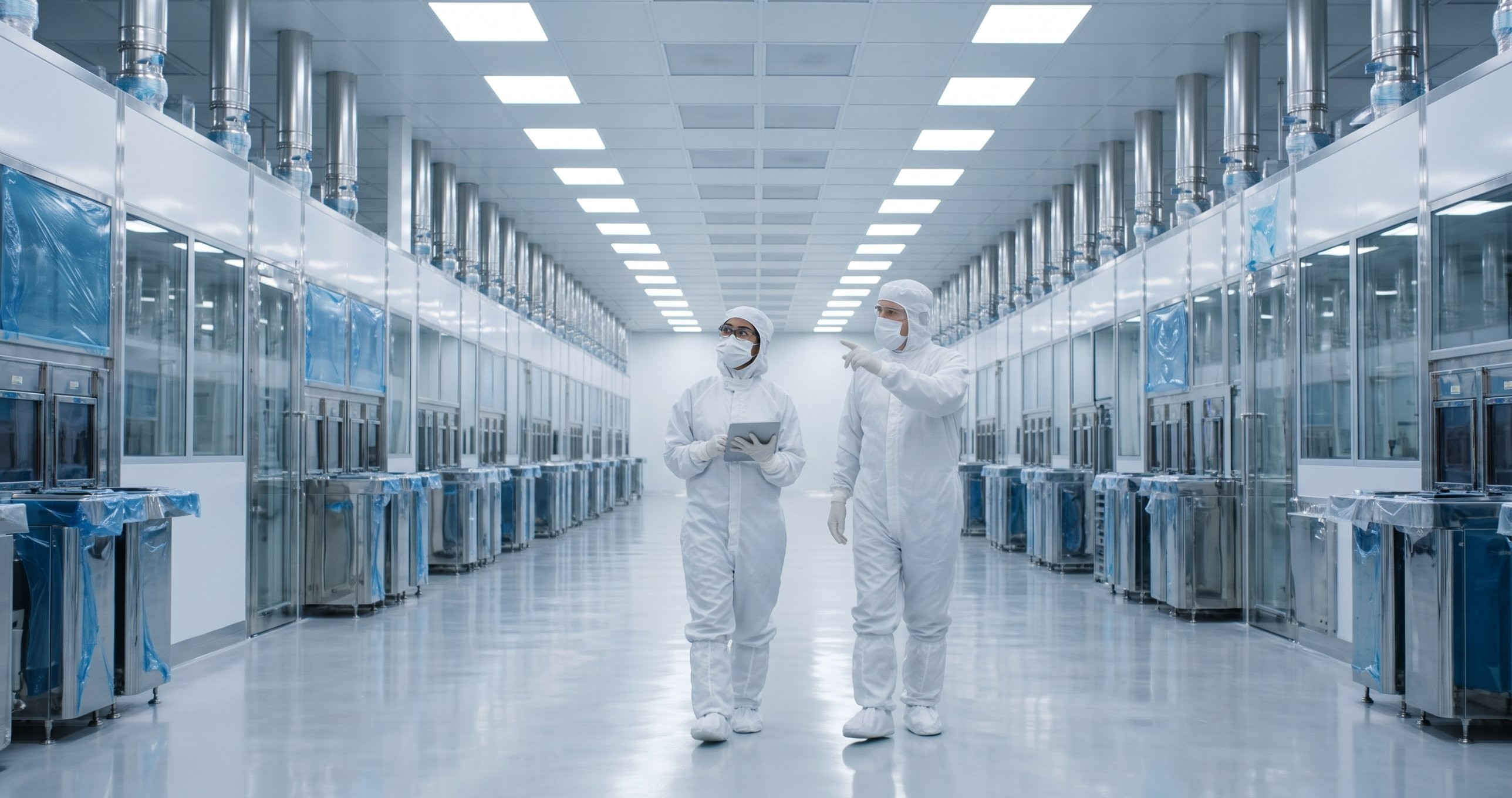
In October 2023 three Malaysian public funds paid about €400m for a newly completed building in the Kulim Hi-Tech Park, in the north of Malaysia. The seller was ams Osram, an Austrian semiconductor group, which kept the equipment and undertook to lease the building back for at least ten years. Nothing has been produced in it since. Inside the company it is known as Kulim II.
ams Osram came into being in 2020, when the Austrian sensor maker ams completed its takeover of Osram, the old German light-bulb brand that had by then become a maker of LEDs. In 2022 the combined group began an investment programme of around €1bn, of which roughly €800m was earmarked for a second plant at Kulim, next to the one opened in 2017. It was meant to make microLEDs, which are LEDs so small that each one becomes a single point of light on a screen, working on eight-inch wafers, larger than usual, in order to bring the cost down. ams Osram never said who they were for, but the trade press always pointed to Apple, which wanted the screens for its watch. An analyst at the research firm Yole estimated that Apple and its suppliers were investing more than $2bn between them to get them into production.
To pay for the plant and tidy up the debt left by the Osram acquisition, in September 2023 the group presented a €2.25bn financing plan. It included a rights issue of about €800m and bonds paying coupons of 10.5 per cent in euros and 12.25 per cent in dollars, as well as the sale of the Kulim building this story began with. In effect the group was paying the interest rates of a company in difficulty and had sold its own factory in order to rent it back, so as to be ready on the day the customer asked for volume.
On 28 February 2024 ams Osram announced that a cornerstone project in its microLED programme had been unexpectedly cancelled. It warned of impairments of between €600m and €900m while its shares fell 45 per cent that day, the steepest drop in their history. In April the group decided to get out of microLED manufacturing at an estimated cost of around €700m, which left Kulim II finished and empty, tied to a lease signed a few months earlier.
Apple had done something very similar ten years before. In November 2013 it signed an agreement with GT Advanced Technologies, a New Hampshire company, for synthetic sapphire it planned to use on iPhone screens, prepaying up to $578m for the furnaces of a plant in Mesa, Arizona. That prepayment had to be repaid over five years from January 2015, while Apple was under no obligation to buy any sapphire at all. In September 2014 the iPhone 6 came out with ordinary glass and on 6 October GT filed for Chapter 11, the American bankruptcy protection procedure, so what had looked from the outside like a commitment from Apple turned out to be a loan secured on the supplier's machinery.
In both cases the supplier had sold the customer an option, the right to use capacity built specifically for it for as long as that suited it and to leave it idle the moment it no longer did, without charging anything for it. In Arizona as in Malaysia the option was exercised at the cost of an announcement, while the losses stayed with whoever had built the plant, which at ams Osram meant the shareholders who had put money into the rights issue and the investors who had bought the bonds. Saying that ams Osram should have avoided depending on a single customer does not help much, because in microLED the buyers capable of filling a plant like that can be counted on one hand. What made the supplier fragile was the price of the option, which was zero.
On Wednesday 25 November ams Osram announced that Samsung Display, the screen-making arm of the Korean group, will invest €210m for about 9 per cent of its capital. The two companies will jointly develop very small microLEDs for displays and production will take place at Kulim II. The shares, which had been under pressure for weeks, rose as much as 25 per cent in early trading before settling at a gain of around 18 per cent, at €15.50, while the chief executive, Aldo Kamper, told the German business daily Handelsblatt that it was a very important strategic step and the beginning of a long-term partnership. The price per share has not been disclosed, although industry sources quoted by the paper observe that a group this heavily indebted can do with an anchor shareholder.
Samsung Display has made this kind of move before. In 2021 it became the second-largest shareholder in Corning, the American glass group it has worked with on screens for fifty years, with a 9 per cent stake it had promised back in 2013 not to exceed and undertook to hold until at least 2028. It is a minority stake in a partner it depends on, large enough to count and too small to control, tied to a long-term industrial agreement.
The difference from 2024 is that this time the customer is putting money into the capital, so if it left it would be leaving part of its own investment on the table. How much that is worth can be seen in Britain. Imagination Technologies, a Hertfordshire company, designed the graphics technology inside the iPhone and the iPad, and Apple's licence fees and royalties, £60.7m in the year to April 2016, made up half its revenue. On 3 April 2017 Imagination announced that Apple would stop using its technology within 15 months to two years because it was developing its own graphics chips, and the shares fell more than 70 per cent in a day. By September the company had agreed to be sold for £550m to a vehicle of Canyon Bridge, a private equity firm backed by a Chinese state-owned fund, and in January 2020 Apple signed a new licence with the company it had dropped, which by then was no longer in British hands. When Apple announced it was leaving, it owned about 8 per cent of Imagination. Whatever it stood to lose on that stake was small next to what it expected to gain from designing its own chips, so the stake held nothing in place.
Samsung's €210m is about a quarter of what Kulim II cost and arrives after shareholders and bondholders have already absorbed most of the losses, so Samsung is coming in at a price set by the crisis rather than by a negotiation between equals. Anyone building for a single large customer can rarely afford to find others, but can decide how much it would cost that customer to leave, whether through a purchase commitment written into the contract or through a stake in the business, as long as the cost is large next to what leaving would save. At ams Osram that price was set by the crisis, and Samsung has paid €210m for a seat Apple occupied for nothing. Apple had a seat at Imagination too.
Sources
Handelsblatt, 25 November 2026
ams Osram, press release on the sale and leaseback of Kulim, 30 October 2023
MicroLED-Info, buyers of the Kulim building
Optics.org, rights issue and bonds, 21 November 2023
Optics.org, cancellation of the cornerstone project, February 2024
Compound Semiconductor, expected impairments
Bloomberg, 29 February 2024
Optics.org, exit from microLED manufacturing, 30 April 2024
GT Advanced Technologies, SEC filing, March 2015
Columbia Business School, GT Advanced Technologies case
Bloomberg, 6 October 2014
Asia Economy, Samsung Display and Corning, April 2021
SamMobile, Samsung Display and Corning agreement
Fortune (Reuters), Imagination shares crash, 3 April 2017
Fortune, Apple's 8 per cent stake in Imagination, July 2017
Fortune, sale to Canyon Bridge, September 2017
Verdict, Canyon Bridge and its Chinese state-owned backer
MacRumors, Imagination's new licence with Apple, 2 January 2020