Abu dhabi cashes out
Posted on: 3 May 2026
When the United Arab Emirates announced its departure from OPEC and OPEC+ on the 1st of May, after fifty-nine years of membership, most of the British weekend press treated it as a Gulf story. The Sunday papers led instead with what looked more pressing: an IATA warning that European jet fuel stocks could trigger flight cancellations from late May, with IEA estimates putting reserves at roughly six weeks. The two stories sit on different pages. They are the same story.
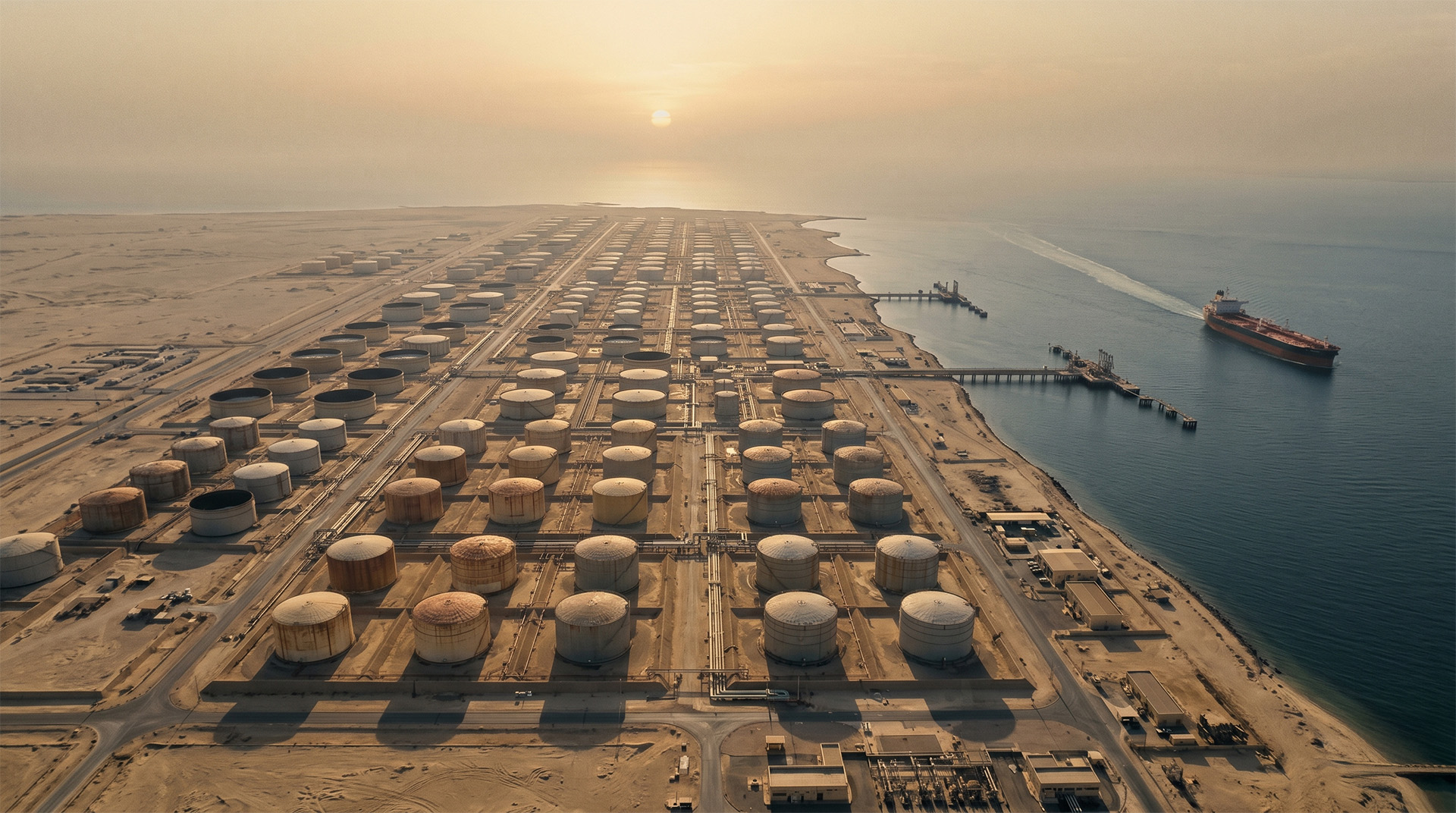
The numerical anatomy is straightforward. Abu Dhabi has spent some $150 billion bringing its production capacity up towards 5 million barrels a day by 2027, against actual output of around 3.4 mb/d before the Iran conflict began. That gap, between what the country can produce and what it has been allowed to produce under OPEC discipline, is the single most informative figure in the energy economy at the moment. It describes a state that has invested heavily for a future in which the cartel restraint no longer pays.
OPEC was, structurally, a deal across time. Members accepted output below capacity now in exchange for a higher price tomorrow. Abu Dhabi has stopped believing in the tomorrow. Kingsmill Bond, energy strategist at the think tank Ember, put it with the directness analysts are permitted when ministers are not: the UAE is positioning for a world in which oil demand is structurally falling and OPEC's pricing discipline is structurally weakening. Translated into trader's English: sell while there is still a buyer, because reserves depreciate faster than the cartel can defend them.
The fiscal arithmetic explains why this calculation looks different from Riyadh and Abu Dhabi. The IMF's 2026 estimate puts Saudi Arabia's fiscal break-even at roughly $80 a barrel, with Bloomberg Economics putting it nearer $94 once Vision 2030 spending is included. The UAE breaks even at around $65. That asymmetry, which was always there beneath the surface of OPEC unity, becomes decisive once future demand is uncertain. A producer with a high break-even has every incentive to defend the price, even at the cost of pumping less. A producer with a low break-even prefers volume, even at modest prices. Skin in the game, in the Talebian sense: the consequences for Riyadh and for Abu Dhabi are not the same, and so the rational strategies diverge.
This is where European jet fuel arrives. Some 40% of Europe's imported jet fuel transited the Strait of Hormuz, now closed. The Gulf refineries that produce more than 10% of global kerosene cannot ship. KLM has cancelled 160 flights, Lufthansa Cityline is closing early, Cathay Pacific has raised its surcharge by 34%. The conventional reading treats this as a logistical hiccup that resolves when the Strait reopens. The clinical reading is different: it is the first stress test of a global energy system in which the OPEC coordination is losing credibility while European dependence on that coordination has not changed.
The pattern has a name. Adverse selection in a cooperative system under stress. Once a cartel begins to lose its capacity to discipline the market, the members with the best reserves and the most divergent incentives leave first. Their departure accelerates the loss of credibility, which prompts further departures. Indonesia exited in 2008 and again in 2016. Qatar in 2019. Ecuador in 2020. Different surface stories, identical structural mechanism. When the coordinating institution loses its future, the good members go before the bad, because they have most to lose by staying. A market for lemons turned upside down: the cherries leave the stall, not the lemons.
The cleanest empirical case is, paradoxically, the drug cartels of the 1980s and 1990s. Medellín fragmented from within through Los Pepes; the Mexican system after 2006 broke up under Calderón's kingpin strategy. The consequence was not less cocaine in circulation but greater volume, more price volatility, and a productive geography that progressively decoupled from the distributive geography. Centralised coordination institutions, in high-stakes markets, have the same structural life cycle whether they trade in cocaine or in barrels. This is not a moral observation. It is a structural one.
For Europe the reading is uncomfortable. The jet fuel shortage is not an isolated logistical accident. It is what happens when an energy system built on decades of stable OPEC coordination encounters, simultaneously, a regional war and the structural erosion of that coordination. The summer will, somehow, be navigated through higher prices, some cancellations, redirected flows. What will not survive is the assumption that orderly energy markets are a fact of nature rather than the product of specific institutional arrangements that can decay.
There is a smaller detail worth noting, because it tells you the operating temperature of OPEC at the moment. The UAE energy minister, Suhail al-Mazrouei, confirmed that the decision to leave was taken without prior consultation with any other Gulf producer. In undiplomatic English: the Saudis read about it in the papers. The cartel that exists, in Robin Mills's phrase quoted in Al Jazeera, to keep prices "neither too high nor too low", has just lost its third largest producer without the courtesy of a phone call. That is the working condition of the coordination mechanism in May 2026.
The signal worth tracking over the next eighteen months is not the spot price of Brent. It is whether other producers with strong reserves and low break-even prices follow Abu Dhabi's lead. If they do, OPEC will gradually convert from a price cartel into a club of high-break-even members coordinating defensively to avoid collapse. If none follow, the UAE will have made a solitary bet on structural demand decline, and the next five years will say whether the bet was correct.
For Europe the deeper problem is not this summer's jet fuel. It is that the security of energy supply, beyond the diversification of sources that has been discussed for years, also depends on the stability of the supply-side coordinating institutions. Those institutions, just now, are creaking quietly while the front pages talk about cancelled flights.