When the King speaks to Congress and the President chooses not to be there
Posted on: 29 April 2026
A note to the reader before we begin. The piece that follows runs longer than usual, around two and a half thousand words, and the length is deliberate. A British monarch addressed a joint meeting of Congress for only the second time in history, after Elizabeth II in 1991, and what unfolded yesterday afternoon was one of the more sophisticated exercises in political rhetoric and the engineering of power that the Western system has produced in recent decades. Beneath thirty minutes of bipartisan applause sits a diplomatic architecture built on three superimposed levels, and reading it carefully repays the time. For those who have twenty minutes, what follows tries to do justice to it. I will admit that admiration for the King's bearing made the writing slower than I expected, and I had to rework several passages to keep the analysis honest rather than reverential.
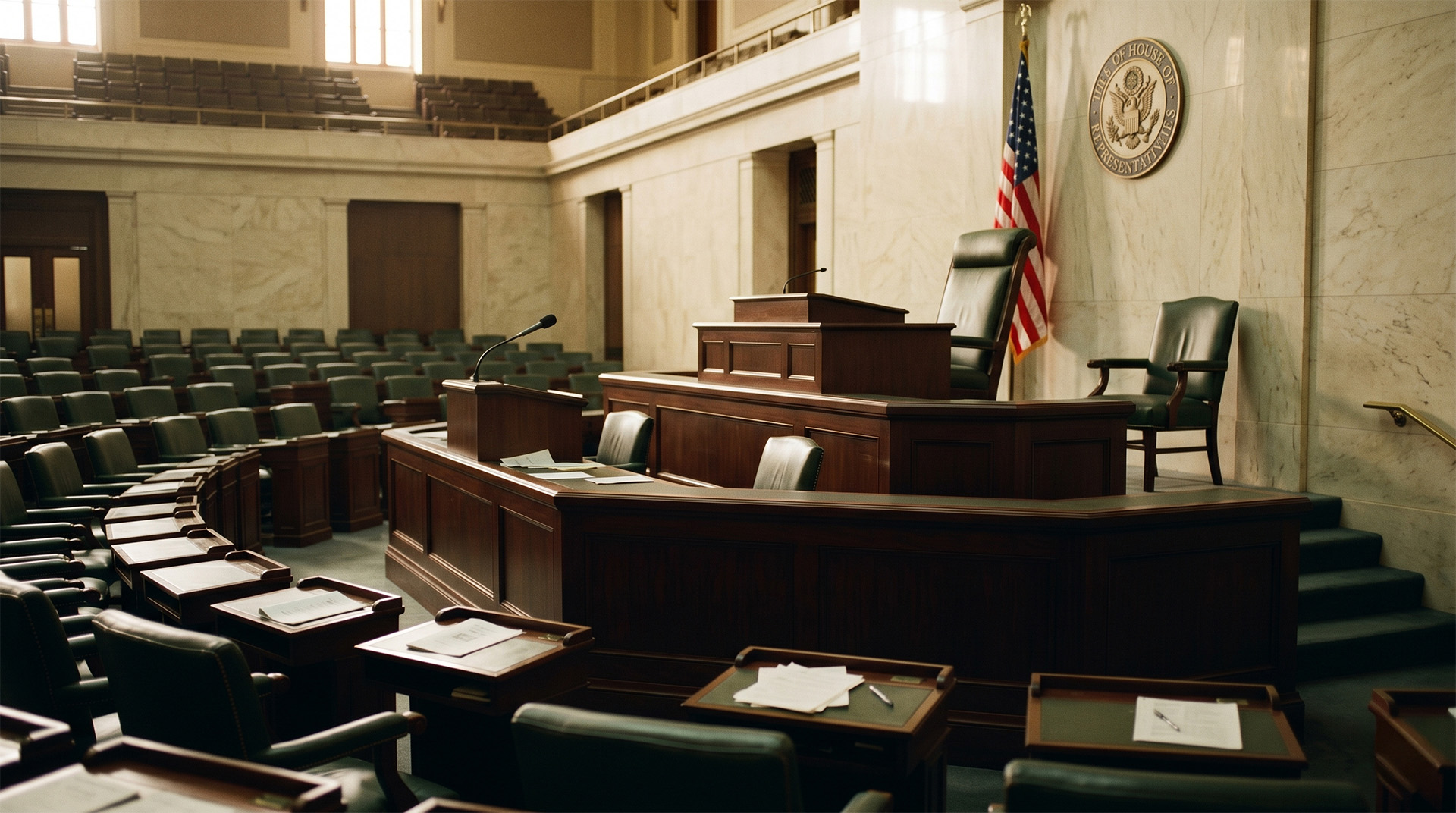
Donald Trump told reporters in the morning that he would have liked to attend. "He's going to be addressing Congress and I'm going to be watching. I was thinking of going but they said, 'I don't know, that might be a step too far'. I would love to go." The "they" who counselled against his presence was his own staff, who had grasped what Trump had not yet seen that morning: at 3.09 in the afternoon of 28 April 2026, as King Charles III took the rostrum of the House of Representatives, the British government was about to deliver to the American Congress a political act of which the President would be neither co-author nor active interlocutor, merely implicit recipient. Protocol gave Trump cover to absent himself from a scene he could not control. Vance and Mike Johnson stood on the dais, applauded the King as he entered the chamber under a bipartisan standing ovation, and from that moment for roughly thirty minutes the American legislature became the direct addressee of a diplomatic communication that deliberately bypassed the executive. What happened in those thirty minutes deserves to be read as one of the most accomplished acts of parliamentary diplomacy through monarchical channel of the last fifty years, and the fact that the press is reporting it as a "speech of unity" is precisely the sign that the choreography worked.
Begin with the engineering of the speech, because that is where the Foreign Office's first signature lies. The briefed length was twenty minutes; the actual length was closer to thirty, indicating that the text grew in the hours before delivery and that the multiple ovations stretched it. Four principal standing ovations, each calibrated on a politically distinct theme, each cut-and-paste ready for the British and American press as a self-contained signal. The first on the opening, an extended bipartisan welcome, the moment of host legitimation. The second on the line "executive power is subject to checks and balances", arrived at through the erudite mediation of Magna Carta as the foundation of one hundred and sixty Supreme Court decisions since 1789. CBS noted that Democrats applauded "more loudly" than Republicans, and Mike Johnson on the dais kept his applause measured and contained. The third on Ukraine, broad, with Schumer turning to applaud Shaheen, a gesture the cameras caught and which carries more weight than any Senate Minority Office release. The fourth on NATO, where Charles recalled that the only time in history Article 5 had been invoked was after September 11, in defence of America. Four themes, four ovations, four discrete signals. This is not pure oratory. It is media engineering calibrated on what Thomas Schelling would call focal points: nodes onto which the press is structurally compelled to converge because the imagery speaks for itself.
The content, read in this light, reveals its true nature. The King's Speech of 28 April was no generic institutional address on the bilateral relationship; it was a political motion articulated in five distinct points, each directed at a specific position of the American President which the British monarch had decided to contest in a register only a king can deploy. The first point, the separation of powers as the historical foundation of the Anglo-American relationship, is an explicit pushback against the unitary executive theory the Trump administration is attempting to consolidate. The second, NATO as a living and functioning security architecture, is a pushback against a presidency that has threatened American withdrawal from the alliance in recent weeks. The third, Ukraine deserving the same "unyielding resolve" allies displayed through two World Wars and Afghanistan, is a pushback against the suspension of military aid to Kyiv ordered by Trump in January 2025. The fourth, the reference to the "disastrously melting ice caps" of the Arctic, is a pushback against the "drill, baby, drill" doctrine and the structural climate denialism of the current White House. The fifth, the King's recollection of his own service in the Royal Navy "with immense pride", is a personal pushback after Trump and Hegseth had derided British aircraft carriers as "toys" in the preceding weeks. Five rebuttals, each disguised as historical reflection, each applauded across the aisle, each delivered with the President of the United States outside the chamber on grounds of "protocol".
More clinically, the most sophisticated rhetorical move of the speech arrived through a manoeuvre few commentators have read for what it was: a quotation. Charles, speaking of the bilateral relationship, directly quoted Donald Trump, reminding Congress that the American President himself, during the British state visit of September 2025 at Windsor, had pronounced the words "the bond of kinship and identity between America and the United Kingdom is priceless and eternal. It is irreplaceable and unbreakable." The Foreign Office had held that sentence for seven months, waiting for the right moment to return it publicly to its author. The right moment was this one: Trump absent on protocol, Congress applauding its own institutions before a foreign monarch, the King uttering the President's words as retrospective testimony to the contradiction between those words and the subsequent behaviour of his administration, from the "loser" hurled at Starmer to the mockery of the Royal Navy. It is rhetorical judo at the highest level, binding the adversary to his own statements before the audience that matters, while he cannot reply because he is not on stage.
There is then a second level, and here enters the observation that struck those who watched the BBC coverage in the early British evening. The speech is not merely a Foreign Office text handed to an institutional executor. Charles co-produced the text, as he has with all his public addresses since the 1970s, and one can identify with some precision the passages bearing his personal signature against those bearing the government's. The government's signature is in the hard policy passages: NATO, Ukraine, AUKUS, Magna Carta as the foundation of checks and balances. The King's personal signature is in the stylistic and thematic choices the Foreign Office would never have placed in a King's Speech. The adverb "disastrously" applied to ice caps is Charles entirely, an intensifier a cautious government would have softened but which the monarch who has championed climate concern since the 1970s insisted on preserving, to give his own environmental doctrine the dignity of the King's Speech. The reference to "the mountains of Scotland and Appalachia were one, a single continuous range, forged in the ancient collision of continents", geologically true and politically metaphorical, is equally Charles, the kind of passage that requires the sensibility of someone who genuinely believes in the unity of nature as a foundation of human commonality, not someone hunting for an applause line. The Oscar Wilde joke ("everything in common except language"), which drew laughter from the chamber, is Charles, possessed of that aristocratic intellectual humour the Foreign Office would never have written in that form. The reference to the American "designated survivor" tradition compared to the British custom of holding a member of Parliament "hostage at Buckingham Palace" is Charles, because only a seventy-seven-year-old monarch with that dry sense of humour could have turned a constitutional footnote into a shared comic moment.
The compound diplomacy that emerges is something neither the Starmer government nor the British Crown could have produced separately. Starmer alone lacked the symbolic authority to address Congress, and after the rupture with Trump had also lost the government-to-government channel. The King alone lacked the democratic mandate to conduct foreign policy in such explicit terms. Together, within the constitutionally binding frame of the King's Speech, they delivered an act no British Prime Minister could have spoken with the same historical authority, and no constitutionally neutral monarch could have signed with the same political specificity. Two distinct nodes producing, in combination, something greater than the sum of their parts. It is the principle of compound intelligence applied to high diplomacy, and the fact that the British constitutional system permits this synthesis is one of the residual but not negligible structural advantages London still possesses over polities organised around a strong presidency.
There is, however, a further level the international press is missing because it requires familiarity with the historical mechanics of the British monarchy to recognise. The King's Speech, in any of its forms, from the State Opening of Parliament to state addresses abroad, has always been a negotiated space between the government drafting the text and the monarch delivering it. British constitutional history records decades of sub-negotiations in which the Crown, while accepting to read the government's text, has imposed inflections of phrasing, shifts of tone, lexical choices that functioned as signals to the government itself without breaching the constitutional fiction of monarchical neutrality. Elizabeth II employed this technique systematically with Prime Ministers she found less congenial, from Wilson to Blair, and those at Whitehall trained to read the signals knew that certain adjectives, certain pauses, certain syntactic choices were the voice of the Palace speaking beneath the voice of the government. Charles applied the same technique yesterday to the American Congress, with the result that several passages of the speech operate simultaneously as a rebuke to Trump and as a more discreet but recognisable rebuke to the Starmer government.
When the King says "executive power is subject to checks and balances", the line read as criticism of the Trump administration is obvious, but read in British register it is also a reminder to his own Prime Minister, who in recent months has exercised executive power without full respect for the traditional consultative channels between Downing Street and the Palace, particularly in the handling of the Andrew Mountbatten-Windsor crisis where the Lord Chancellor's public interventions on the question of titles trespassed on royal prerogative. When the King speaks of "generosity of spirit" and a "duty to foster compassion" as the foundation of British character, the moral reference to the Winter Fuel Payments cuts imposed on pensioners and the tightening of disability benefits is impossible to miss for anyone who has watched those decisions land in Westminster. When the King recalls his own service in the Royal Navy "with immense pride", the rebuke read as a response to Trump's "toys" jibe is only half the message: the other half is directed at the British government, which has just trimmed the Navy's budget and delayed delivery of the new Prince of Wales-class units. The Foreign Office, which drafted the text in the preceding weeks, knew exactly what it was signing off. It accepted the sub-negotiation because the strategic gain of having the King at Congress was worth the price of allowing through the messages the monarch wanted delivered to his own ministers. Charles used an American platform to say to his own government things he could not have said in London with the same latitude, because in London he must maintain the constitutional fiction of neutrality towards the government of the day, while in Washington he could deliver them under cover of the anti-Trump message. It is precisely the mark that the British monarchy still functions as an institution of internal equilibrium, not as the ceremonial puppet of the elected government, and this capacity for sub-negotiation is one reason the Westminster system has survived three centuries of pressures that have demolished monarchies elsewhere.
At this point enters the third movement, which is bearing. Those who watched Charles in the chamber did not see the executor of a text; they saw a man who inhabits his role with a naturalness the American press registered as personal charisma but which is in fact a structural feature of the British monarchy. Walter Bagehot, the Victorian constitutionalist, drew in 1867 the distinction between "the dignified part" of the constitution, the monarchy, and "the efficient part", the government. The strength of the dignified part is that it does not need to justify itself. Trump operates within a system where power is won through elections and must be reaffirmed daily through continuous public performance, because American presidential legitimacy derives from the popular vote and erodes without constant reconfirmation. Charles operates within a system where power is inherited and represented, and therefore need not be demonstrated. Faced with a Trump who needs to be seen, to give a military salute during the anthem, to deliver the elaborate compliment about the tree planted by Charles's mother, a King who simply stands on stage with his arms by his sides during the "Star Spangled Banner" produces an asymmetry of register the press registers as "naturalness" but which is the structural difference between authority earned and authority inherited. The American public, who have lived through nine years of presidential performative hypertrophy, saw in Charles something they were not trained to recognise and which disarmed them precisely for that reason. The phrase that best captures what the watching public felt is: let the President perform, I am the King, I am another thing entirely. It is not arrogance, it is institutional ontology, and it is precisely the kind of diplomatic asset a strong-presidency system cannot produce by definition.
The fourth movement is the reaction of Congress, which deserves clinical reading because it reveals something about the American political system that the European press has not yet brought into focus. CNN noted, during the speech itself, that the American Congress was giving Charles "something unusual in this bitterly divided Congress: a warm and bipartisan welcome", a far cry from the receptions American Presidents now receive in their own State of the Union addresses, where in recent years one has seen taunting, heckling, silent and not-so-silent protest, and the occasional ejection from the chamber. The question to ask is not why Charles received bipartisan applause, the easy answer being "because he is a foreign monarch and easy to applaud". The correct question is: why did politically specific passages, separation of powers, NATO, Ukraine, receive bipartisan applause in a Congress where the same themes, delivered by an American President or party leader, would have produced rigidly partisan response? The clinically correct answer is that the British monarch functioned as a ceremonial release valve. He allowed Democrats to applaud a position almost indistinguishable from their own, and allowed moderate Republicans to applaud the same position without appearing as traitors to the presidential line, because applauding a foreign monarch is not applauding the leader of the opposition. The Foreign Office exploited this dynamic with surgical precision, constructing a speech that allowed moderate Republicans to break party discipline under cover of ceremonial respect. This is inter-parliamentary diplomacy through monarchical channel, and it was conceived months before the visit.
What remains to be reckoned with, and here the clinical reading turns uncomfortable, is the long-term price of this operation. The compound diplomacy that worked so well yesterday rests entirely on a constitutional fiction that British theory calls royal neutrality: the King stands above politics and precisely because he stands above politics he can represent the whole nation in a manner free of controversy. Each time the fiction is activated to perform political work, it erodes by a degree. Charles can today say to the American Congress things Starmer could not say, because the American and British publics still see in him the neutral monarch representing the entire United Kingdom. If the monarchical channel is activated systematically to substitute for the governmental channel, sooner or later someone will notice that the King is doing politics, and at that point his authority as neutral stabiliser begins to fade. Britain has its own recent archive on this point, and the archive is uncomfortable. The prorogation crisis of 2019, when Boris Johnson sought to suspend Parliament and the Queen found herself drawn into a constitutional controversy that culminated in the unanimous Supreme Court ruling that the prorogation had been unlawful, demonstrated in real time what happens when the elected government uses the Crown to do work that the political system itself ought to be doing. The Queen emerged from that episode visibly diminished, and the institution she represented carried for years afterwards a faint scorch mark of partisanship it had not previously borne. Yesterday's exercise was infinitely more elegant than 2019, and the skill of the Foreign Office in choreographing it cannot be denied. But the underlying mechanism is structurally identical: a government that no longer functions through ordinary diplomatic channels offloads its work onto an institution constitutionally designed to do something else, and the institution, however gracefully it performs the task, accumulates wear with each performance.
The question London ought to be asking itself now, with the speech delivered and the applause banked, is what happens the next time the Starmer government needs to address Washington and Trump is even more closed to ordinary channels. Will the monarchy be activated again? And the time after that? At what point will the American Congress and British public opinion register that the real bilateral diplomatic channel is no longer the elected government but the hereditary monarch, and at that point what remains of the Westminster classical model that separates symbolic representation from political decision? The day of 28 April 2026 will be remembered, in my view, not as the moment when the British King delivered a great speech to the American Congress, but as the moment when the British political system revealed, through the operational reality of its own conduct, that its international projection now depends more on the quality of its monarch than on the quality of its Prime Minister. It is an observation the BBC will not make in the terms in which I am making it here, because inside the system it is uncomfortable. But it is the lens that anyone observing Western political systems from the outside, over many decades, ought to use to understand what really happened yesterday afternoon in the House of Representatives. Trump was not in the chamber, on protocol. Charles was there, on constitutional duty. The elected British government spoke through the voice of a man who does not answer to elections, and this was the best form British diplomacy still had at its disposal. The spectacle was magnificent. The system is in crisis.